
How to Mulch a Vegetable Garden
Spread 2–4 inches of organic mulch over your vegetable beds and you’ll cut irrigation frequency by roughly 50%, block enough sunlight to suppress up to two-thirds of weed growth, and buffer soil against the temperature swings that stress roots.
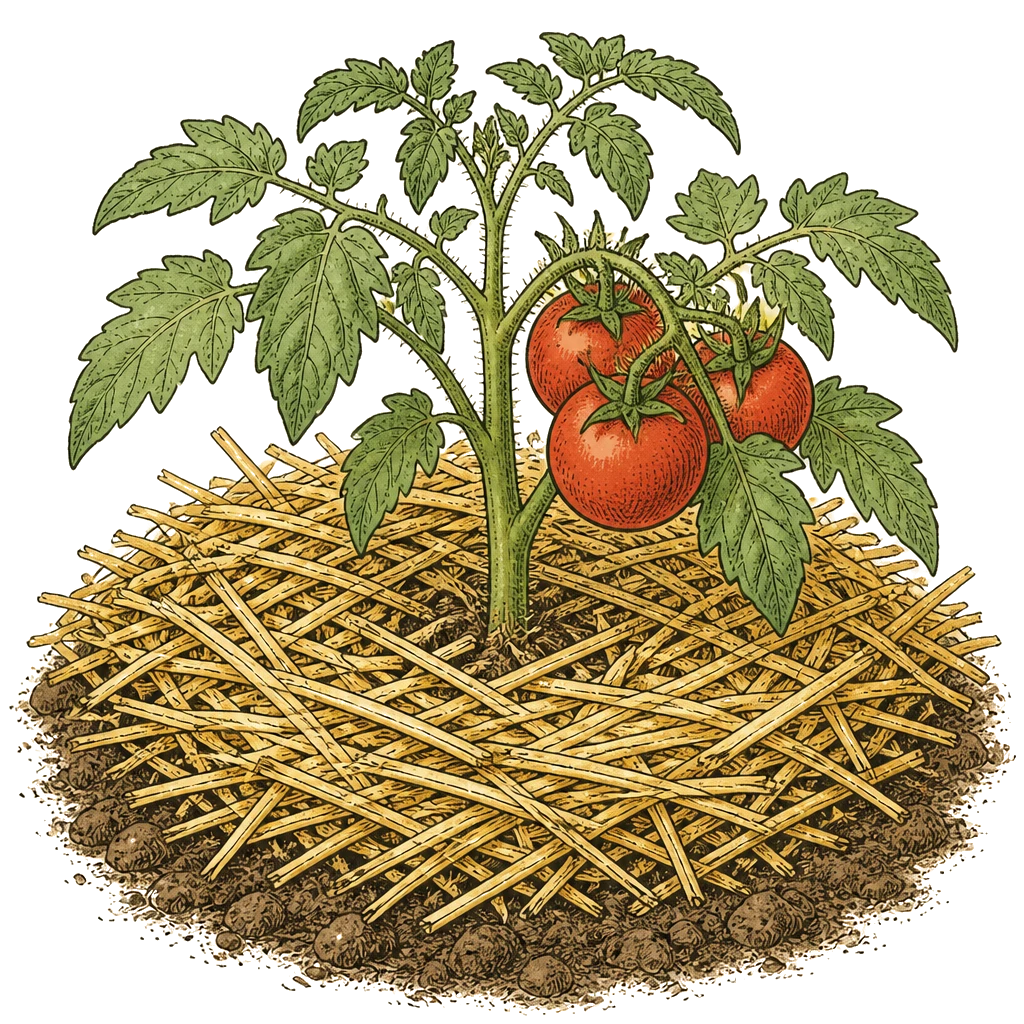
How it works
Mulch limits evaporation from the soil surface, keeps sunlight off weed seeds, and dampens temperature swings all at once. University of Minnesota Extension documents that mulch can cut irrigation need by roughly 50%. The same layer suppresses weed germination by up to two-thirds because most weed seeds cannot germinate without light reaching them.
The temperature effect is large and depends sharply on material. LSU AgCenter research shows straw mulch can lower soil temperature by 20–25°F compared to bare soil on a hot day — a direct benefit for cool-season crops like lettuce and spinach when summer heat sets in. Black plastic mulch operates in the opposite direction: it absorbs heat and raises soil temperature by several degrees, useful for warming the root zone for heat-loving crops like peppers, melons, and eggplant in cool-summer climates.
Organic mulches decompose over time and add organic matter as they go, feeding soil biology and improving structure. That decomposition rate is also why you cannot apply once and forget: check depth each season and replenish when it drops below 2 inches.
What to do
Depth depends on material density. Fine materials — sawdust, grass clippings, compost — go on at 1–3 inches; laid thicker, they compact or mat and block water from reaching soil. Coarser materials like bark, straw, and shredded plant debris can go 3–6 inches because their structure stays open enough to pass rain and irrigation through. When mixing materials or using something unfamiliar, 2–4 inches is a practical default.
Material-specific guidance from the cited extension sources:
- Straw: excellent insulator, resists matting, decomposes quickly. Reapply each season.
- Shredded leaves: free and effective for moisture retention; shred before applying or whole leaves shed water.
- Grass clippings: apply in layers no more than 1/4 inch thick and let each layer dry before adding more — thick fresh clippings mat, heat up, and block water penetration.
- Wood or bark chips: long-lasting (3–5 years without replacement), best for pathways between beds. Use as surface mulch only; digging them into soil temporarily ties up nitrogen.
- Compost: apply 1–2 inches as a mulch layer; it adds nutrients as it breaks down.
One rule applies regardless of material: keep mulch clear of plant stems. Pulling it up against the stem traps moisture and creates conditions for rot and pest harborage. Leave the stem base exposed and keep a clear gap around it. For direct-seeded crops like carrots, beans, and beets, wait until seedlings are well up before mulching, then keep that same gap around the stems — mulch laid over un-emerged seed blocks the light it needs, the same way it blocks weeds. In gardens with heavy slug, snail, or cutworm pressure, check under organic mulch periodically; the moist layer can shelter all three, a disadvantage Colorado State’s Garden Notes lists.
Apply organic mulch after the soil has warmed in spring, roughly late May through June in most zones, so you are not locking in cold soil temperatures from winter. In warm-winter zones (8–11), where soils never lock in cold, mulch at transplant time instead. For cool-season crops planted earlier in spring, you can mulch at transplanting time to keep roots cool as temperatures climb later. If that spring window has already passed, a mid-summer layer is still worth laying for moisture retention, though you miss the early-season weed suppression.
If you log that you have applied a fresh mulch layer in Arbor, that note is there alongside your watering tasks — useful context when deciding how often your beds actually need water given the reduced evaporation.
For guidance on irrigating mulched beds, see how to water a vegetable garden. To coordinate mulching with feeding cycles, see how to fertilize a vegetable garden.
Zone and season notes
In hot-summer zones (8–11), mulch earns its keep immediately after transplanting, when young roots are most exposed to heat stress at the soil surface. Straw and shredded leaves are the better choices here — both cool the soil and hold moisture through extended dry spells. In arid climates, the 50% reduction in irrigation demand documented by Minnesota Extension is especially impactful where water is limited or expensive.
In cool-summer zones (4–6), heat-demanding crops need warmer soil, not cooler. Black plastic mulch laid before transplanting warms the soil enough to extend the effective growing season for peppers and melons. Switch to organic mulch for the cool-season crops in those same beds — they need the opposite treatment.
Year-round mulching is practical in zones 9–11, where the soil never freezes and decomposition continues through winter. In zones 4–7, the mulch layer breaks down more slowly but still depletes; plan an annual check at the start of each season and top up whatever has decomposed to maintain effective depth.
Sources
- University of Minnesota Extension — Mulching for Soil and Garden Health
- Colorado State University Extension — Mulches for the Vegetable Garden
- Colorado State University Extension Garden Notes #715 — Mulches for the Vegetable Garden
- Texas A&M AgriLife Extension — Easy Gardening: Mulching
- University of New Hampshire Extension — Garden Mulches
- UC Master Gardeners of Placer County — Mulching Your Garden
- LSU AgCenter — Combatting Extreme Temperatures with Mulch