
How to Water a Vegetable Garden
Most vegetables need 1 inch of water per week from rain or irrigation combined. That inch penetrates the root zone to a depth of 6 to 8 inches which is deep enough to reach roots and encourage downward growth. Translated to volume, an inch across a 4×8 raised bed is about 20 gallons; across 100 square feet it is roughly 62 gallons. Skip the fixed schedule and check the soil instead; weather and soil type vary too much for a calendar to be reliable.
How it works
Which crops go dry first depends on how deep their roots reach, and that changes the order you check beds in. Shallow-rooted crops — lettuce, corn, radish — dry out first, so check that bed before any other; it’s your early warning for the whole garden. Beans, carrots, cucumbers, peppers, and summer squash root into the middle range. Tomatoes, watermelon, asparagus, and winter squash root deepest and are the last to show stress, which is why a bed that looks fine at the tomatoes can already be dry at the lettuce. Once a deep-rooted crop sets fruit, though, it stops tolerating gaps (see the fruiting-crop note below).
Your soil sets how much of that inch you can apply at a time. Sandy soil drains too fast to hold a full inch without runoff. University of Minnesota Extension (the state university’s public gardening-advice service) puts sandy beds on twice a week at a half-inch per application: about 10 gallons on a 4×8 bed, or 31 gallons per 100 square feet. Clay and loamy soils absorb a full inch in one go, and once a week is usually enough. You don’t need a soil test to know which side you’re on: apply an inch, then check 2 inches down partway through the week. If the bed is dry again already, split the week into two half-inch waterings.
Both overwatering and underwatering cause real harm well below the leaves. Roots deprived of oxygen rot and collapse, cantaloupes and watermelons watered too heavily lose flavor, and cucumbers and squash stressed during flowering drop fruit or produce misshapen crops. Underwatered plants produce small, tough fruit; greens bolt and turn bitter. If you’re seeing those symptoms rather than wondering how to water correctly, see the companion guide on overwatering vs. underwatering for diagnosis.
What to do
Check your soil first. Remove the mulch and push a trowel into the bed beside the plant, a few inches down — the top inch dries out fast and tells you nothing. If the soil is dry about 2 inches below the surface, water now; if it’s still damp there, wait and recheck in a day or two. Don’t water just because rain isn’t forecast or just because it’s Saturday.
If a plant is already wilting, check the soil, wilting could be a lack of water or just a hot day.
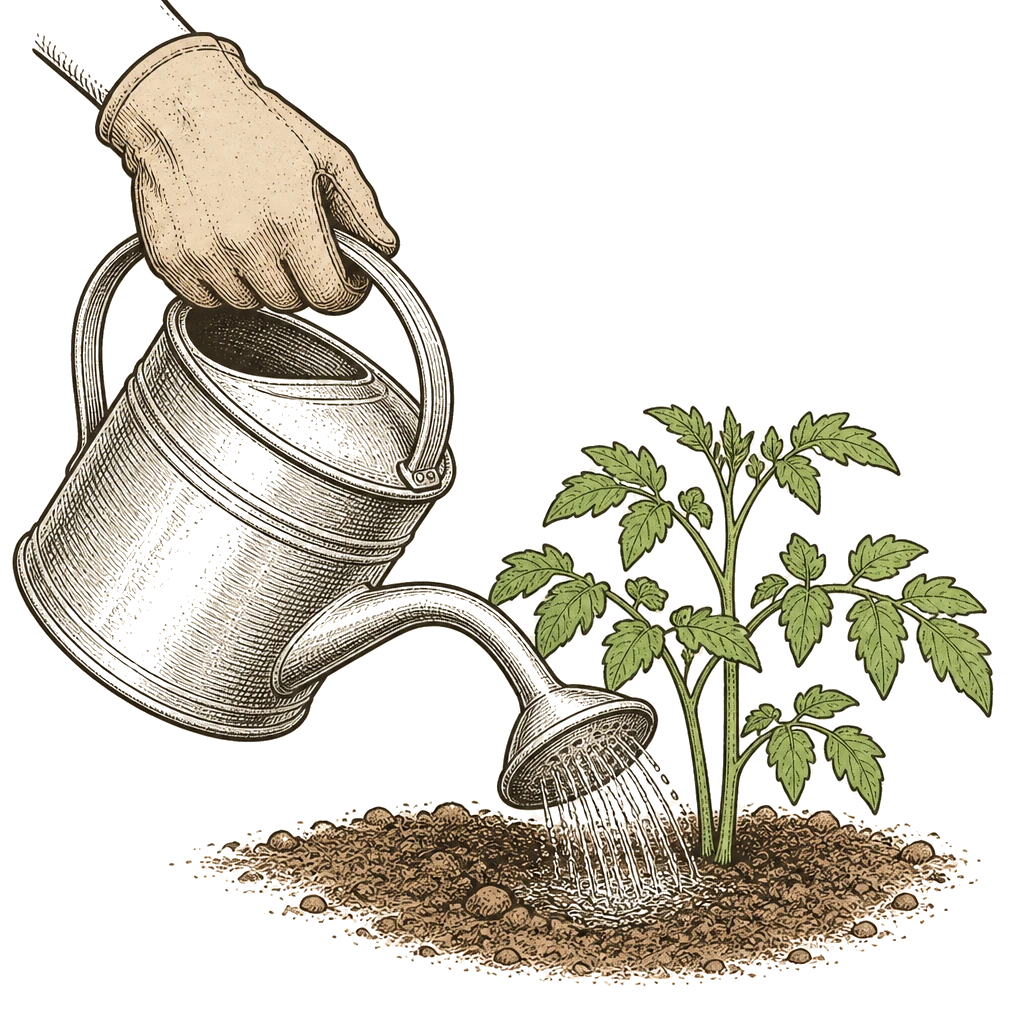
Apply slowly and at the base. Drip irrigation (sometimes sold as trickle irrigation) and soaker hoses are the most efficient delivery methods, since they put water where roots are and keep foliage dry. Whatever you use, apply slowly enough that the water soaks in rather than puddling and running off. Hand-watering with a plain hose end works too; a wand attachment, the long nozzle that softens the stream, only makes it easier. Calibrate the hose once and you won’t have to guess at minutes again: time how long it takes to fill a 5-gallon bucket at the pressure you actually use. A 4×8 bed takes about four of those fills, 100 square feet about twelve. Then dig afterward and confirm the soil is moist at 6 inches.
Overhead watering is workable when drip isn’t an option, but it wets leaves, which raises the risk of leaf disease. If you water overhead, do it early in the morning as foliage left wet overnight is the condition leaf diseases want.
A layer of straw, shredded leaves, or other organic mulch slows evaporation and cuts how often you need to water at all.
Once cucumbers, squash, eggplant, peppers, and tomatoes start flowering, consistent moisture matters more than at any other point in the season. Hold them at 1 inch per week through the entire fruiting period, right up to harvest.
Arbor generates watering tasks from your local weather data and the plants you have set up, so the task on your list reflects recent rainfall and upcoming heat.
Zone and season notes
In warm-winter zones (9–11), warm-season crops run through periods when cold-climate gardens have already shut down. Longer growing seasons mean water needs extend well past the dates that northern gardeners use as reference points. More significantly, heat and wind pull water out of soil and leaves faster. Through a run of hot, dry, or windy days — or a drought — 1 inch a week can fall short of what the bed is losing, so check soil more often during heat spikes.
In cold climates, spring moisture in clay soils can fool gardeners into skipping irrigation too long into the season. Start the 2-inch trowel test in spring, it is just as valuable in early spring as it is in August heat.