The Learn library
64 guides written from university extension research — the same sources a county agent would hand you. When Arbor flags trouble in your garden, these are the pages it opens.
Seed to harvest for the crops in your beds — sun, spacing, water, and timing.
Cantaloupe stops ripening the moment you pick it. Here's how to plant, manage vines, water correctly, and nail the full-slip harvest test every time.
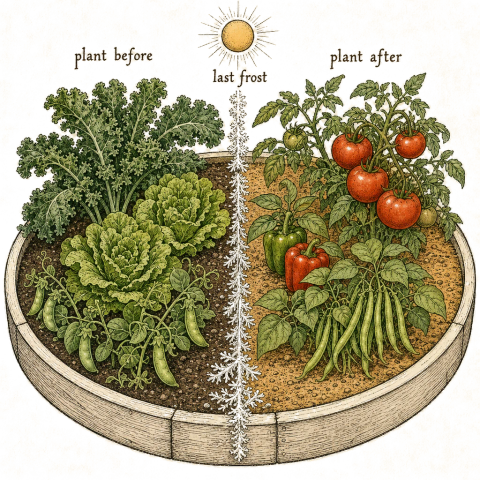
Read the guide →Kale tastes best after frost, not before it. Transplant 2 weeks before last frost in spring or sow 6–8 weeks before fall frost. Space 18 inches apart.
Read the guide →These four herbs die from wet soil, not drought. Extension-sourced guide to planting, pruning, and overwintering thyme, rosemary, oregano, and sage.
Read the guide →Pole beans produce all season from one planting if you harvest every 5–7 days. Trellis first, soil at 60°F, and no added nitrogen — they fix their own.
Read the guide →Spinach matures in about 40 days but bolts when days top 14 hours. Sow 6 weeks before last frost, succession-plant, and harvest before heat arrives.
Read the guide →How often you feed depends on the fertilizer, not the crop: granular every 4–6 weeks, liquid every 1–2. Here's the schedule, with extension sources.
Read the guide →Basil dies at 40°F and turns bitter when it flowers. Get timing, pinching technique, and storage right — here's what extension sources say.
Read the guide →Beets are a cool-season crop that delivers two harvests—roots and greens. Direct-sow 4 weeks before last frost, thin to 4 inches, harvest at 50–60 days.
Read the guide →Direct sow 2 weeks after last frost, space 6 inches apart, and water at the base — bush beans need less fertilizer than almost any other vegetable.
Read the guide →Grow straight carrots by loosening soil to 12 inches, choosing the right variety for your soil type, and direct sowing 4 weeks before last frost.
Read the guide →Chives are cold-hardy perennials in zones 3–9. Cut leaves to 1–2 inches from soil, never the tips, and divide every 3–4 years to keep them producing.
Read the guide →Cilantro bolts above 80°F and its taproot makes transplanting fatal. Direct-sow 4 weeks before last frost, succession-sow every 2–3 weeks to stay ahead.
Read the guide →Soil temp, spacing, watering, fertilizing, and harvest timing for cucumbers — from University Extension research.
Read the guide →Direct-sow dill for fronds in 40 days — transplants bolt fast. Succession sow every 2–4 weeks, keep it away from fennel, and harvest before flowers open.
Read the guide →Eggplant needs a long warm season. Start indoors 8 weeks before last frost, transplant 3 weeks after, and protect young plants from flea beetles.
Read the guide →Garlic is planted in fall, not spring. Pick the right type for your climate, then remove scapes promptly — leaving them on costs up to 48% of bulb size.
Read the guide →Timing, spacing, watering, and harvest for lettuce — cool-season basics from University Extension research to grow spring and fall crops.
Read the guide →Mint spreads aggressively via underground rhizomes and is nearly impossible to eradicate once established. Here's how to contain it and grow it right.
Read the guide →Onions bulb by day length, not calendar days. Pick the right variety for your latitude, set transplants correctly, and cut nitrogen before bulbing starts.
Read the guide →Soak parsley seeds overnight before planting — germination takes 2–4 weeks. Cut outer stalks to keep plants producing. Spacing, types, and zone tips.
Read the guide →Peas are a cool-season crop: direct sow 6 weeks before last frost and expect pods in 60 days. They stop producing above 85°F — here's how to time it.
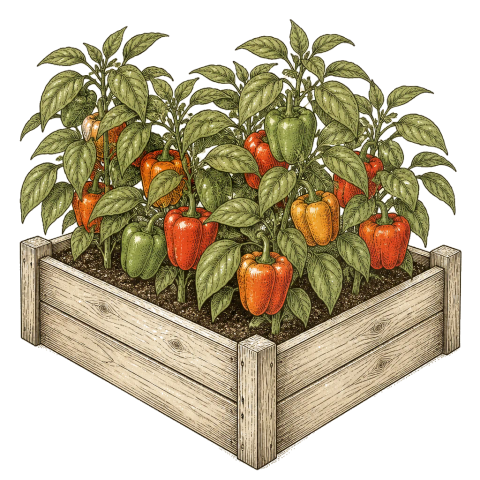
Read the guide →Start peppers 8 weeks indoors, transplant 2 weeks after last frost into warm soil, keep moisture steady. Extension-sourced guidance from seed to harvest.
Read the guide →Certified seed potatoes, 50°F soil, and consistent hilling are the three moves that separate a good potato crop from a poor one. Here's the full guide.
Read the guide →Radishes are ready in 21–35 days — the fastest vegetable you can grow. Sow every 7–14 days and pull promptly before roots turn pithy and hot.
Read the guide →Plant corn in a block of four short rows, not a single line. Side-dress nitrogen at knee height, water through silking, and harvest at the milk stage.
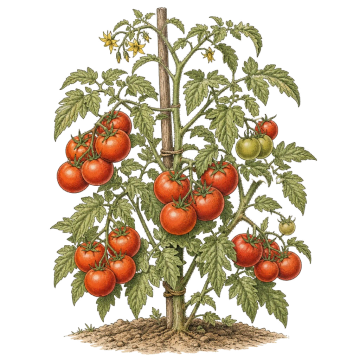
Read the guide →Tomatoes need at least 6–8 hours of direct sun, consistent soil moisture, and deep planting. Extension-sourced guidance from seed to harvest.
Read the guide →Watermelon won't ripen after harvest. Extension guide to planting, spacing, watering, and the four harvest indicators you need.
Read the guide →Pick variety by days to maturity, not by name. Cure butternut at 80–85°F for 10–14 days — but skip curing for acorn and delicata entirely.
Read the guide →Soil temp, spacing, watering, pollination, and harvest timing for zucchini — from University Extension research.
Read the guide →What it is, whether it matters, and what actually works — least drastic step first.
A hard spray of water and patience beat most aphid outbreaks. Insecticidal soap if needed. Broad-spectrum sprays usually make it worse — here's why.
Read the guide →Three diseases go by 'blight' in vegetable gardens — early, late, and southern — and they need different fixes. Here's how to tell them apart fast.
Read the guide →That sunken black patch on your tomatoes isn't a soil calcium shortage — it's uneven watering. Keep moisture steady and skip the eggshells and sprays.
Read the guide →Bolting is irreversible once the stalk forms. Delay it with bolt-resistant varieties, steady moisture, shade, and timing, then harvest at the first sign.
Read the guide →Colorado potato beetles attack eggplant, tomatoes, and peppers—not just potatoes. Learn thresholds, row cover timing, and resistance-aware controls.
Read the guide →The chewing isn't the danger: cucumber beetles spread bacterial wilt, which has no cure. Cover seedlings with row cover at emergence; pull it at flowering.
Read the guide →Seedlings rotting at the soil line is damping-off. There's no cure — prevention is the whole game: clean trays, fresh mix, warm soil, no cold sowing.
Read the guide →Those bullseye spots on your lower tomato leaves are early blight. Most plants tolerate it without losing fruit — airflow and sanitation beat spraying.
Read the guide →Flea beetles riddle leaves with tiny shotholes, but established plants shrug it off. Cover seedlings with row cover and skip the spray on mature plants.
Read the guide →Japanese beetles skeletonize leaves and damage corn silk. Learn which controls work, why pheromone traps backfire, and when to treat grubs.
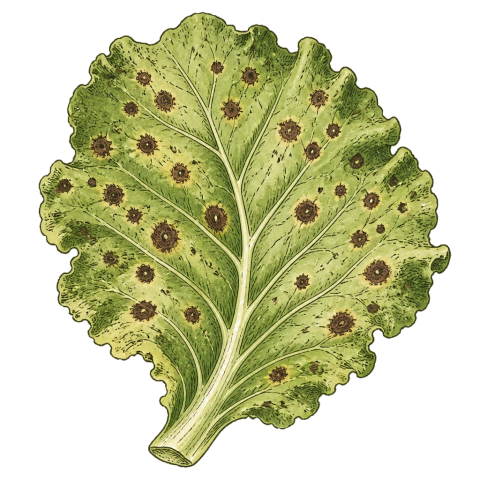
Read the guide →Round spots with a target ring are fungal; angular water-soaked ones are bacterial. You often can't tell, and it barely matters — sprays don't cure either.
Read the guide →Both make plants wilt and yellow. The leaves won't tell you which — the soil will. Dig 2–3 inches into the root zone before you reach for the hose.
Read the guide →That white dust on your squash leaves spreads in dry heat, not rain. Potassium bicarbonate kills it on contact; here's the full extension-backed playbook.
Read the guide →Plants wilting and yellowing in soil that's still wet usually means root rot, not thirst. The fix is less water and better drainage, not more.
Read the guide →Rust on vegetables shows as gritty reddish-brown pustules on asparagus, beans, and corn. Extension-backed controls to stop the spread fast.
Read the guide →No single trick clears snails and slugs — stack habitat cleanup, night trapping, copper barriers, and iron-phosphate bait. Skip the salt and eggshells.
Read the guide →Spider mites explode in hot, dry, dusty weather. A strong water spray to leaf undersides is the first move; staying irrigated prevents most outbreaks.
Read the guide →Squash bugs are beaten by timing, not sprays. Scout leaf undersides weekly, crush the bronze egg clusters, and handpick into soapy water.
Read the guide →Sunscald is sunburn on the fruit, not a disease, so shade is the fix. It strikes above 100°F or when pruning and storms suddenly expose shaded fruit.
Read the guide →Handpick them — it's the only control most gardens need. Look for large black droppings on leaves first, then find the caterpillar nearby.
Read the guide →Most curling tomato leaves are harmless leaf roll that won't hurt your yield. The cases that matter, herbicide and virus, show up on new growth first.
Read the guide →Most garden whitefly problems arrive on greenhouse transplants. Inspect before you buy. Insecticidal soap and natural enemies beat broad-spectrum sprays.
Read the guide →Yellow leaves rarely mean 'add fertilizer.' Ask which leaves and what pattern, then rule out water and pH before you feed — here's the decision tree.
Read the guide →Five causes — heat, drought, overwatering, bacterial wilt, Fusarium/Verticillium. Match your symptoms to the cause, then go to the right fix.
Read the guide →The recurring jobs — starting seeds, transplanting, watering, pruning, harvesting.
A weekly 10-minute walk through the garden — done right — catches most pest problems before they get out of hand. Here's the method extension programs use.
Read the guide →Direct sow the right crops at the right soil temperature. Step-by-step guidance on depth, spacing, moisture, and which vegetables prefer direct seeding.
Read the guide →Hardening off takes 7 to 14 days of graduated outdoor exposure. Skip it and seedlings suffer wilting, sunburn, and stunted growth — here's the process.
Read the guide →Most gardeners harvest too late. Learn the visual cues, timing, and technique that maximize flavor and keep fruiting crops producing all season.
Read the guide →Lay 2–4 inches of organic mulch, keep it clear of stems, and cut irrigation need by roughly half. Material-by-material depth guide.
Read the guide →Most vegetables don't need pruning. Indeterminate tomatoes do — weekly sucker removal keeps them productive. Here's what to do and what to skip.
Read the guide →Set up stakes and cages at transplant time, not later. Covers tomato stakes, wire cages, cucumber trellises, pole bean tepees, and pepper support.
Read the guide →Timing, containers, grow lights, and damping-off prevention — everything you need to start vegetable seeds indoors with strong transplants.
Read the guide →Thin direct-sown seedlings at 1–2 inches tall. Cut at soil level, never pull. Spacings: carrots 2–3 in, lettuce 4–8 in, radishes 2 in, beets 3 in.
Read the guide →Move seedlings to the garden without transplant shock. Timing, depth, watering, and which crops to never transplant — extension-sourced.
Read the guide →Most vegetables need 1 inch of water per week — about 62 gallons per 100 sq ft. Here's how to check soil, time your watering, and apply it correctly.
Read the guide →Trouble in the garden right now? Arbor turns a note like “holes in the kale” into an urgent card with first steps — and links the right guide from this library.Try Arbor →