
Powdery Mildew on Vegetables: Treatment That Holds Up
The white, talcum-powder patches on your squash or cucumber leaves are powdery mildew, and the playbook is short: cut off the worst-affected leaves, improve airflow around the plants, and spray the rest with potassium bicarbonate or sulfur. Potassium bicarbonate is the standout for an organic garden — it works on contact, killing mildew already on the leaf rather than only preventing new infection. Then plant resistant varieties next season, which is the only fix that doesn’t require a sprayer.
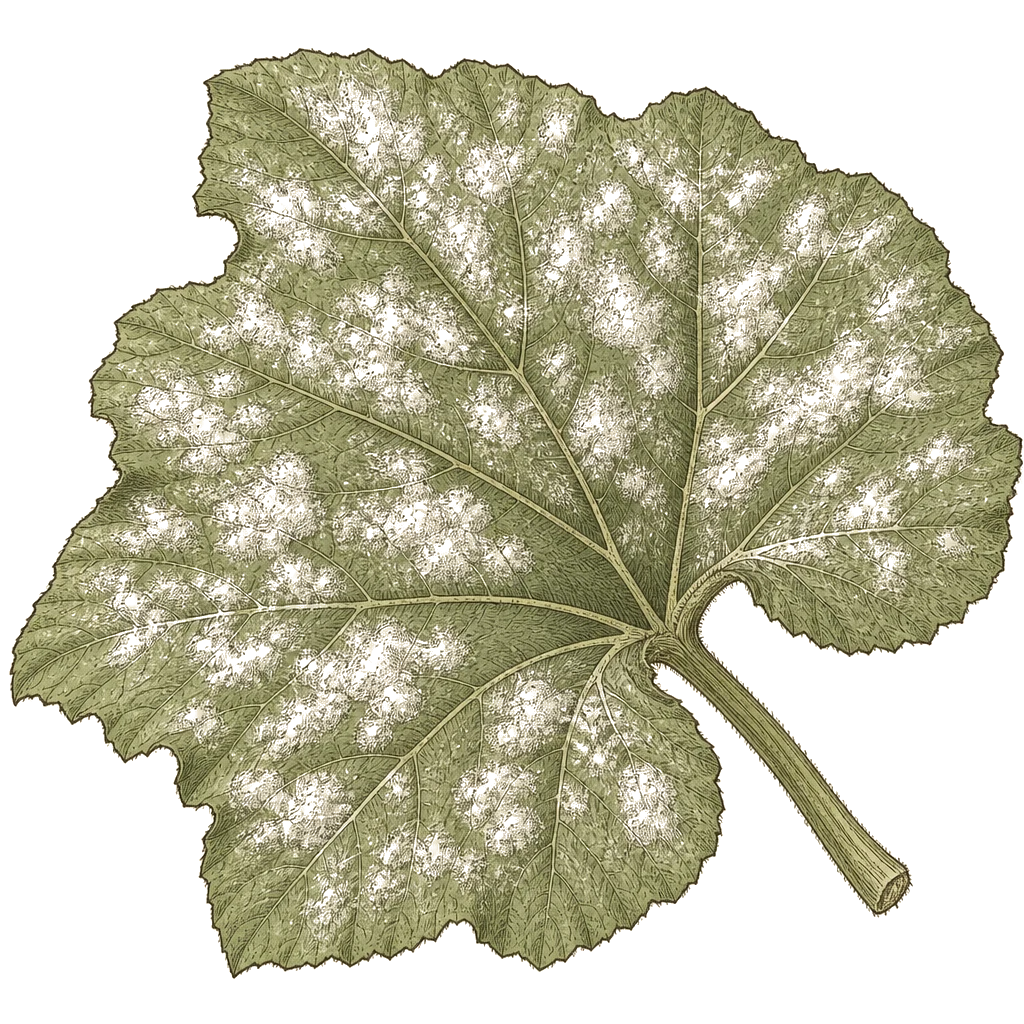
What’s actually happening
Powdery mildew breaks the rule you know about fungal disease. Most leaf diseases need wet foliage; this one doesn’t. Its spores germinate on a dry leaf, so what it wants is a run of warm, rainless days with humid air around the plant — the muggy pocket under a crowded, shaded canopy. That’s why it shows up in late summer when everything else about your watering is right, and why “I must be getting the leaves wet” is the wrong self-diagnosis.
It won’t jump to unrelated crops. The roughly 700 species of powdery mildew fungi are host-specific: the one on your zucchini can move through the rest of the squash family — squash, cucumbers, melons — but it can’t infect your tomatoes, your peppers, or your roses. An outbreak on the squash stays a squash-family problem.
It’s also rarely a killer. On mature plants it reduces photosynthesis, drags down vigor and yield, and can stress fruit into sunscald — sun-damaged patches that show up once the leaves that shaded the fruit are gone. A late-season zucchini with mildewed leaves will usually keep producing for weeks.
What to do
Remove the worst leaves first. Any leaf that’s mostly white is a spore factory, and clipping it does more than spraying it. Take all of them in one pass; the worst are usually the older, shaded leaves low on the plant, which were contributing least anyway. Bag the clippings instead of composting them — a home pile rarely runs hot enough to kill the fungus.
Open up airflow next. In a bed that’s already planted, that means pruning: take out overlapping leaves and stems until air moves between the plants. Opening the canopy raises the light inside it and drops the humidity, which is the part that matters. Next season it’s a siting decision — put susceptible crops in full sun and keep them out of low, shady corners.
Spray what remains. Two organic options:
- Potassium bicarbonate (sold as Kaligreen, First Step, and similar): a contact fungicide that kills active mildew, with no lasting protection left behind once it dries. Coat both leaf surfaces. There’s no single mixing rate across brands, so mix a hand-pump sprayer at the rate printed on the bottle you bought.
- Sulfur: effective and cheap, but it burns foliage in heat, and squash and cucumbers are among the easiest plants to damage. Injury starts showing up when it’s applied above 80°F, and above 90°F it’s a bad bet, so spray early in the day or wait out the heat. Sulfur and oil sprays also don’t mix: never put sulfur on a plant you’ve treated with horticultural oil (or the other light oils sold for garden pests), and never spray oil on a plant you’ve treated with sulfur.
One spray doesn’t end an outbreak. Reapply every 7 to 14 days while conditions still favor the disease — repeat applications are the difference between treatment and theater. That’s the kind of thing Arbor keeps on your list: log the outbreak once and the repeat treatments get scheduled for you.
The baking-soda home remedy deserves a straight answer: the Cornell mix of baking soda and horticultural oil is still experimental, and potassium bicarbonate is the better-supported version of the same chemistry. Buy that instead.
Buying resistance next season is the cheapest control you’ll ever apply, and it outranks any spray. Squash, pumpkins, melons and cucumbers all have resistant or tolerant varieties, and so do beans, carrots and tomatoes. The resistance is printed on the seed packet or the plant tag, so it’s a claim you can check in the shop.
When to worry and when not to
A few white spots on late-season squash: manageable, maybe ignorable if harvest is nearly done. Mildew racing across young plants mid-season, or hitting peas before pod set: treat now, because the yield cost compounds. Either way, this disease costs you leaves and yield, not the whole plant.
Zone and season notes
In hot, dry-summer climates and the arid Mountain West, powdery mildew is the signature late-summer disease precisely because the dry heat suppresses everything else. Expect it on squash, cucumbers and melons from midsummer on, and buy resistant varieties by default. In the low desert it’s present most of the year; at higher elevations it turns up on new spring foliage and runs into late fall.
In humid and cold-winter regions the trigger is the planting more than the climate. Warm days in the 75 to 85°F range with humid evenings are all it needs, and the damp shade inside a crowded bed supplies the rest — which is why it usually turns up once the bed fills in and the canopy closes over. Spacing at planting time and thinning the canopy afterward do more of the work there than any spray does.