
How to Grow Cucumbers
Cucumbers reach first harvest 50–70 days after planting, but the first two weeks — soil temperature, spacing, trellis choice — decide whether you pick every 2–3 days through summer or fight bitter, misshapen fruit on a vine that quits early. Soil must be at least 60°F before you plant; wait for 70°F and germination improves dramatically.
How it works
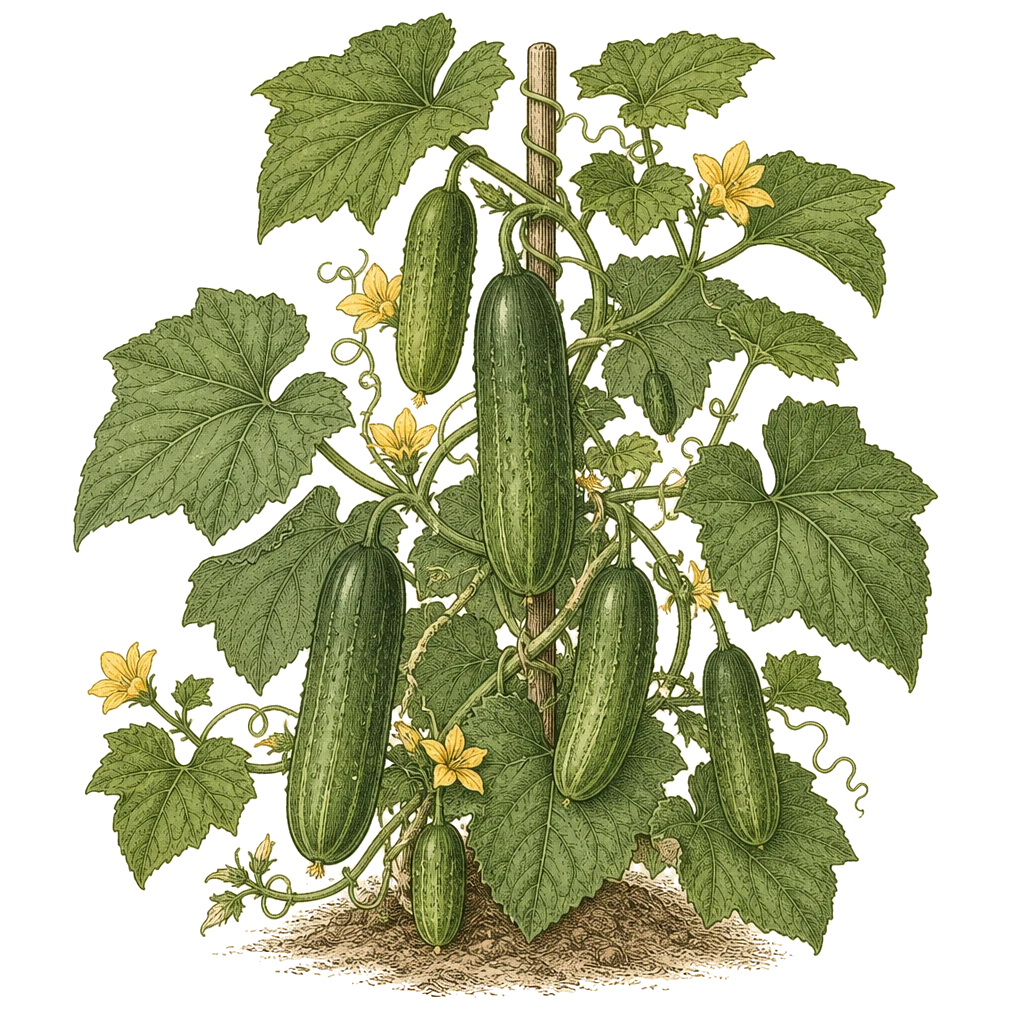
Cucumbers are warm-season crops that stall in cold soil and turn bitter under heat stress. They produce cucurbitacin compounds — natural bitter chemicals concentrated in leaves, stems, and roots — that migrate into the fruit when the plant is drought-stressed or overheated above 85°F. Most varieties are monoecious, meaning separate male and female flowers grow on the same vine. Male flowers appear first and will drop off without producing fruit; this is normal, not a sign of disease or poor nutrition. Female flowers open later and carry a small swollen ovary at the base. Bees must transfer pollen from male to female, and University of Maryland Extension notes it takes 8–12 bee visits per female flower to produce a straight, full-size fruit.
Early-season flower drop gets misread as a pollination failure, but those first 10–20 flowers on any cucumber plant are male — the vine is sequencing, not failing. Gynoecious varieties produce mostly female flowers from the start, setting fruit earlier and more uniformly; their seed packets include a few monoecious seeds for pollen. Parthenocarpic varieties set seedless fruit without any pollination, useful where bee access is limited.
What to do
Soil and site. Target a pH of 6.0–6.5 in well-drained soil with at least 6 hours of direct sun per day, with 8–10 hours preferred. Work in 1–2 lbs of 10-10-10 fertilizer per 100 square feet before planting if you have no recent soil test, or use 5-10-10 at 3 lbs per 100 square feet.
Timing. Wait until soil temperature reaches at least 60°F at 1-inch depth before direct seeding. Germination is poor at 50°F and reliable above 70°F. If you seeded into cold soil and nothing emerges after 10–14 days, resow into warmed soil rather than waiting — cold-planted seed often rots before it sprouts. That puts direct seeding after your last frost date: late May in Minnesota, mid-May in central Iowa (a week earlier in the south of the state, a week later in the north). Start transplants indoors no more than 2–4 weeks before your last frost date — earlier and they become root-bound and set back badly. Harden them outdoors for a few days before planting. If you want to push the season, black plastic mulch warms soil and allows earlier establishment, but do not apply straw or compost mulch until soil is reliably above 75°F, since those materials slow soil warming.
Planting. For hill planting, sow 4–5 seeds per hill at 1-inch depth, spacing hills 3–5 feet apart for standard types (5–6 feet for large vining varieties). Thin to 2–3 plants per hill after emergence. For rows, sow seeds 6 inches apart and thin to 15–18 inches, rows 4–5 feet apart. If you are trellising — which keeps fruit clean and eases harvest — space plants 9–12 inches apart in rows 30–36 inches apart, on a trellis 4–6 feet tall.
Watering. Cucumbers need 1 inch of water per week from rain or irrigation, soaked deep enough to wet the soil to 6 inches. Once fruit is setting, raise that to 1–1.5 inches per week and check moisture every 2 days in hot weather. Use drip or soaker hose rather than overhead sprinklers — wet foliage increases disease risk, and Iowa State Extension notes that picking fruit when vines are wet also spreads disease. On sandy soil, apply about 0.5 inch every 3–4 days rather than 1 inch weekly, so more reaches the roots instead of draining past them.
Fertilizing. On top of the pre-plant fertilizer, cucumbers want a nitrogen boost once flowering begins: side-dress with 1 lb of 33-0-0 per 100 square feet, applied 4–6 inches from the plant stem. Repeat 3 weeks later if growth looks sluggish. Avoid excess nitrogen — it pushes vine growth at the expense of fruit set.
If you used row covers to keep beetles off young plants, pull them the day blossoms open so pollinators can reach the flowers. If you need to apply pesticides during the bloom period, do it in the early morning or late evening when bee activity is low. Log your first open flower in Arbor and it puts the row-cover removal and the first side-dress nitrogen on the same week’s task list, since both jobs key off that day.
Harvest. Most slicing varieties are ready at 6–8 inches long and 1.5–2 inches in diameter while still dark green and firm. Pick pickling types at 2–4 inches long. Check vines every 2–3 days once production begins — fruit develops fast, and over-mature cucumbers left on the vine suppress further set. Do not let them reach a yellowish stage; bitterness increases sharply and vine production drops. To remove, turn the fruit parallel to the vine and snap it free, or cut the stem 0.25 inch above the fruit.
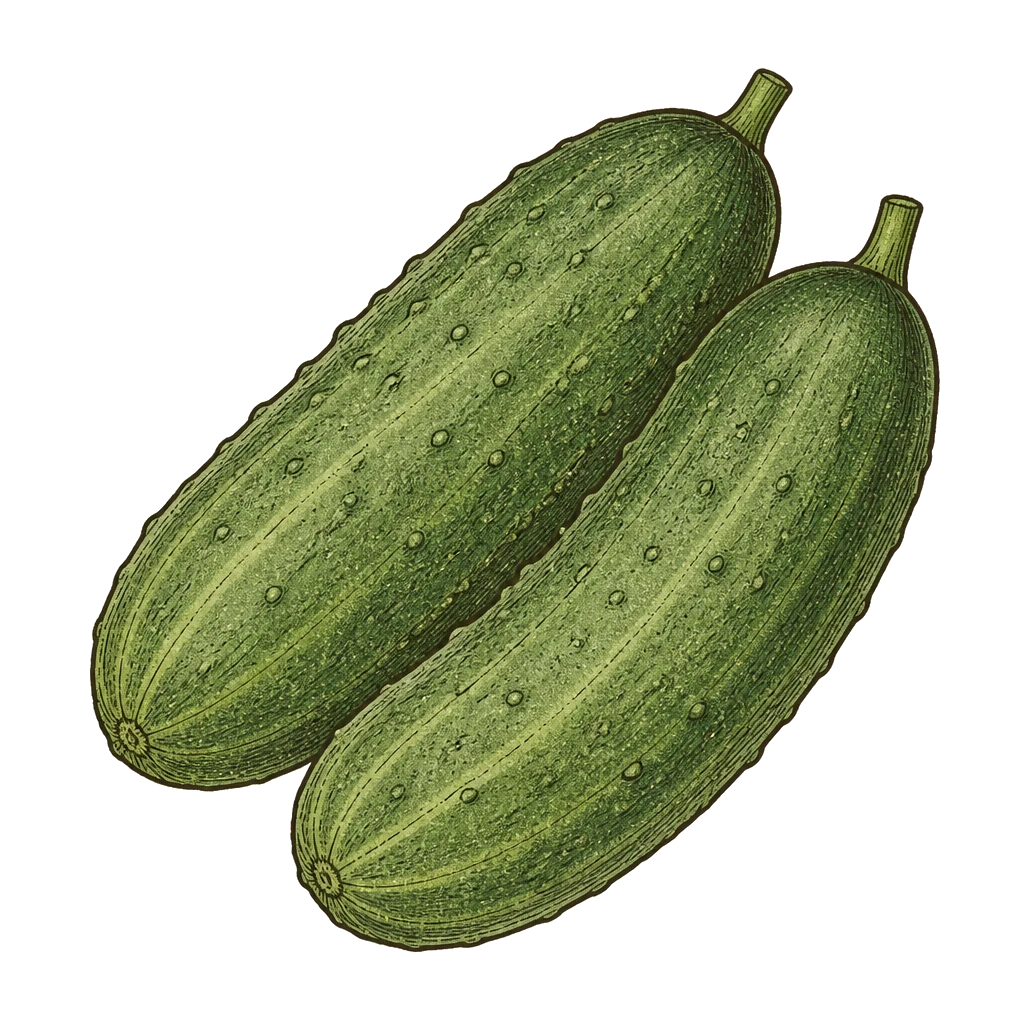
Storage. Cucumbers store best at 50–55°F with 90–95% relative humidity. Temperatures below about 50°F cause chilling injury — colder than most home refrigerators can manage — so a cool basement can outperform a refrigerator. At optimal conditions they keep 10–14 days.
Zone and season notes
Cold zones (3–6). Soil temperature is the hard constraint: in Minnesota and Iowa, reliable 60°F soil typically arrives late May, and earlier seeding produces stunted starts. Transplants give you a 2–3 week head start without the gamble. The last practical direct-sowing date in Iowa is July 10.
Hot and humid zones (7–10). Heat above 85°F stresses the vine and drives cucurbitacin production, making bitter fruit the dominant late-summer complaint. Consistent irrigation is the primary mitigation — drought is what triggers bitterness, not heat alone. In the Southeast, a fall crop often tastes better than a spring one: Clemson Extension puts South Carolina’s fall planting window at August 1 through September 30 in the Piedmont and August 1 through August 30 on the Coast. Powdery mildew pressure is also higher in warm, humid climates; trellising improves airflow and reduces infection sites.
Pollinator-limited or pesticide-heavy environments (all zones). Where pollinator access is uncertain — a rooftop bed, a high-spray operation, low bee activity — gynoecious or parthenocarpic varieties are a practical hedge. Cold, rainy, or cloudy stretches reduce bee activity in any zone, which is why a run of overcast weather at bloom often produces a flush of misshapen or nubbined fruit.
Sources
- University of Minnesota Extension — Growing cucumbers in home gardens
- Clemson Cooperative Extension HGIC — Cucumber
- Iowa State University Extension — Growing Cucumbers in the Home Garden
- University of Maryland Extension — Growing Cucumbers in a Home Garden
- University of Georgia Extension (CAES) — Growing Cucumbers in the Home Garden
- Penn State Extension — Cucumber Pollination