
How to Direct Sow Vegetable Seeds
Direct seeding works best for crops that dislike root disturbance — carrots, beets, parsnips, radishes, peas, beans, squash, and corn. For these, skipping transplants isn’t a shortcut; it’s the right method. The key to a reliable stand is matching sow date to soil temperature, not calendar date.
How it works
Soil temperature, not air temperature and not the date on the calendar, governs germination. University of Wisconsin–Extension recommends measuring with a soil thermometer at a 2-inch depth on 3 consecutive mornings around midday and averaging the readings. A single warm afternoon tells you nothing reliable.
Two categories of crops follow different temperature rules. Cool-season crops — lettuce, spinach, peas, carrots, beets, radishes — can germinate in soil as cold as 40–45°F. Warm-season crops — beans, corn, cucumber, squash, melons — need at least 55–72°F before they’ll germinate reliably. Beans are a common casualty here: cold soil doesn’t just slow them, it causes the seed to rot before it sprouts. Wisconsin Extension sets the practical outdoor minimum for beans at 72°F; the physiological floor is lower, but germination rates at 60°F are poor enough that you’ll see patchy, uneven stands.
Root crops specifically need direct seeding because transplanting disrupts the taproot and produces forked or misshapen roots regardless of how carefully it’s done. Penn State Extension is direct on this: beets, carrots, parsnips, radishes, rutabagas, and turnips belong in the ground from seed. Iowa State Extension adds peas, beans, squash, and melons to the list of crops that “resist transplanting” — transplants in these cases often languish for weeks before recovering, if they recover at all.
What to do
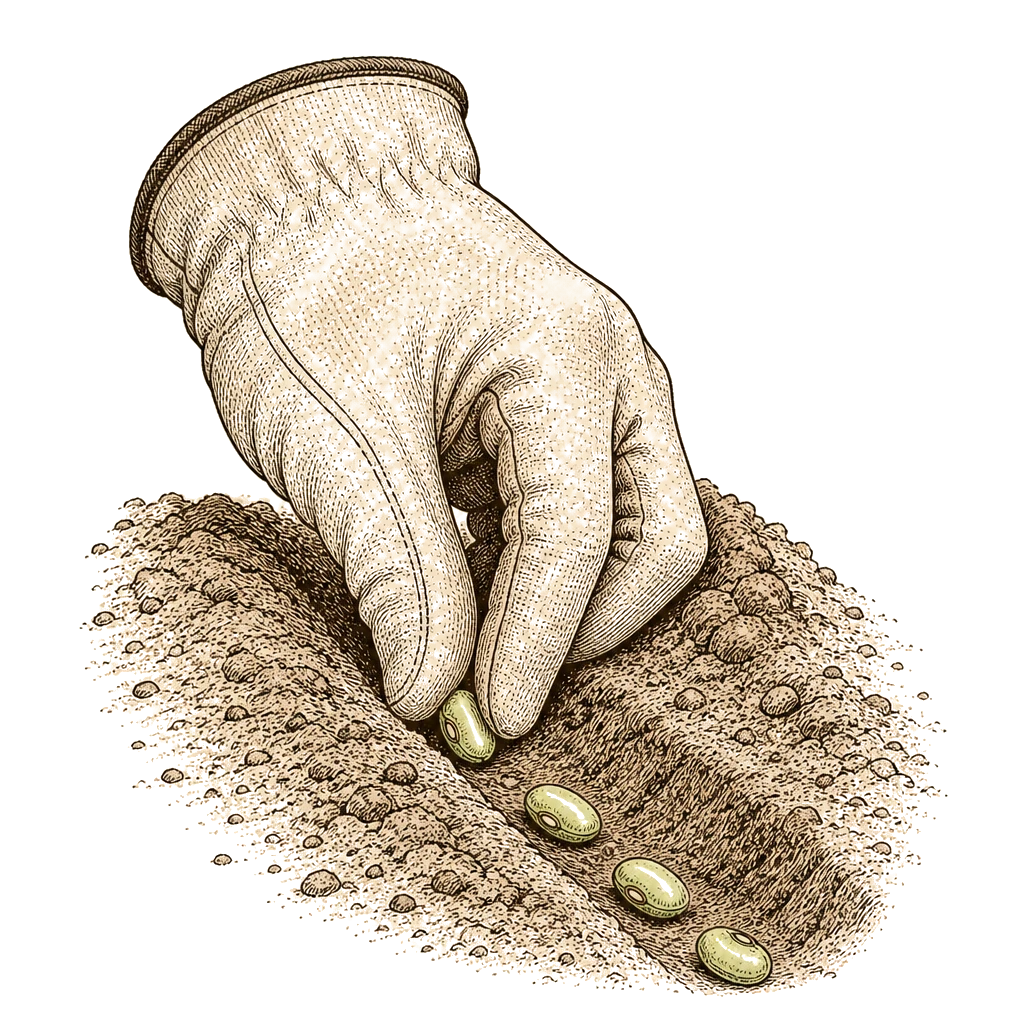
Prepare the seedbed. Seeds need firm, fine-textured soil, not clods. Rake the top 2–3 inches until the texture is loose and crumbly. On soils that crust — heavy clay especially — lay a narrow band of fine compost or vermiculite over the row after placing seeds. This holds moisture and makes it easier for seedlings to break through the surface.
Sow at the right depth. The University of Maryland Extension rule: sow seeds 2–3 times deeper than the seed’s width. For fine seeds like carrots and beets, that works out to roughly ¼–½ inch; for large seeds like corn and beans, 1 inch or deeper. In clay soils, plant more shallowly; in sandy soils, plant deeper. When in doubt, shallower is safer for small seeds.
After covering seeds, firm the soil down with a flat board, the back of a rake, or your palm — good seed-to-soil contact speeds germination.
Keep the seedbed moist until germination. Seeds need consistent surface moisture while they’re absorbing water and breaking dormancy. Water gently with a fine rose head or misting nozzle; a hard stream from an open hose displaces seeds and can seal the soil surface into a crust. In warm weather, newly planted beds dry quickly — University of Maryland Extension recommends laying boards or row covers over the bed, checking daily, and removing them the moment sprouts appear.
Thin to final spacing. Large seeds like corn and beans can be placed at their final spacing from the start. Small-seeded crops — spinach, lettuce, carrots, beets — are usually sown more thickly, then thinned after germination to the spacing on the seed packet. For non-root crops, excess seedlings can be transplanted elsewhere rather than discarded. For root crops, thin in place by snipping with scissors to avoid disturbing neighbors.
Check the stand, and re-sow if nothing comes up. If no seedlings have emerged after two full expected germination windows, take a soil temperature reading again. If it has dropped below the crop’s minimum, wait for it to recover before re-sowing. If the soil is warm enough and the window has passed with bare ground, re-sow and lay a row cover over the bed to hold warmth and moisture.
When you log a sow date in Arbor, it calculates the expected germination window and adds a follow-up task to check for stands — so gaps in emergence get caught before they become wasted weeks.
Zone and season notes
Cool-season crops tolerate cold soil and should go in 2–3 weeks before warm-season crops. In the mid-Atlantic and Midwest, that means peas and spinach as early as late March, while beans and corn wait until May or later when soil hits 55–72°F. Row cover over a freshly sown bed buys a few extra degrees if a late cold snap follows an early sowing.
In zones 9–11, the calendar flips. Warm-season crops get their first direct sow in late winter or early spring before heat arrives. Cool-season crops like lettuce and spinach do best direct-seeded in fall through early spring; summer temperatures cause them to bolt before producing.
Cucumbers, melons, and squash strongly prefer direct seeding, but in zones 4–5 with short seasons the growing window may not give them enough frost-free days to mature from seed. Starting them indoors 3–4 weeks before transplanting is the practical exception — just transplant before roots become rootbound, and disturb the root ball as little as possible.
Lettuce is particularly flexible: in northern gardens (roughly zones 5–7), successive sowings from April through around August 1 keep a continuous harvest going, with each round timed a couple of weeks apart to stagger maturity. Push the final sowing earlier in colder zones so plants finish before hard frost. See succession planting for how to time those rounds by soil condition instead of the calendar alone.
Sources
- University of Maryland Extension — Sowing Vegetable Seeds in the Garden
- Iowa State University Extension — Direct Seeding Vegetables and Annuals: Preparation and Care
- University of Wisconsin–Extension — When Is the Right Time to Plant Vegetable Seeds? Check Soil Temperature
- Alabama Cooperative Extension System — Soil Temperature Conditions for Vegetable Seed Germination
- Penn State Extension — Starting Your Summer Vegetable Garden: Seeds or Transplants?