
Damping-Off: Why Seedlings Collapse and How to Stop It
Damping-off is the disease that rots seedlings at the soil line and topples them overnight, or kills the seed before it ever breaks the surface. You can’t cure it and infected seedlings almost never recover so everything that works is prevention, and it comes down to denying the pathogens the cool, wet conditions they need. Use clean containers and fresh seed-starting mix, keep the mix at 70–75°F and on the drier side of moist, and give the seedlings 12 to 16 hours of light once they’re up. Outdoors, don’t sow until the ground has reached that crop’s minimum temperature. Do that and the fungi already in the mix never get a foothold.
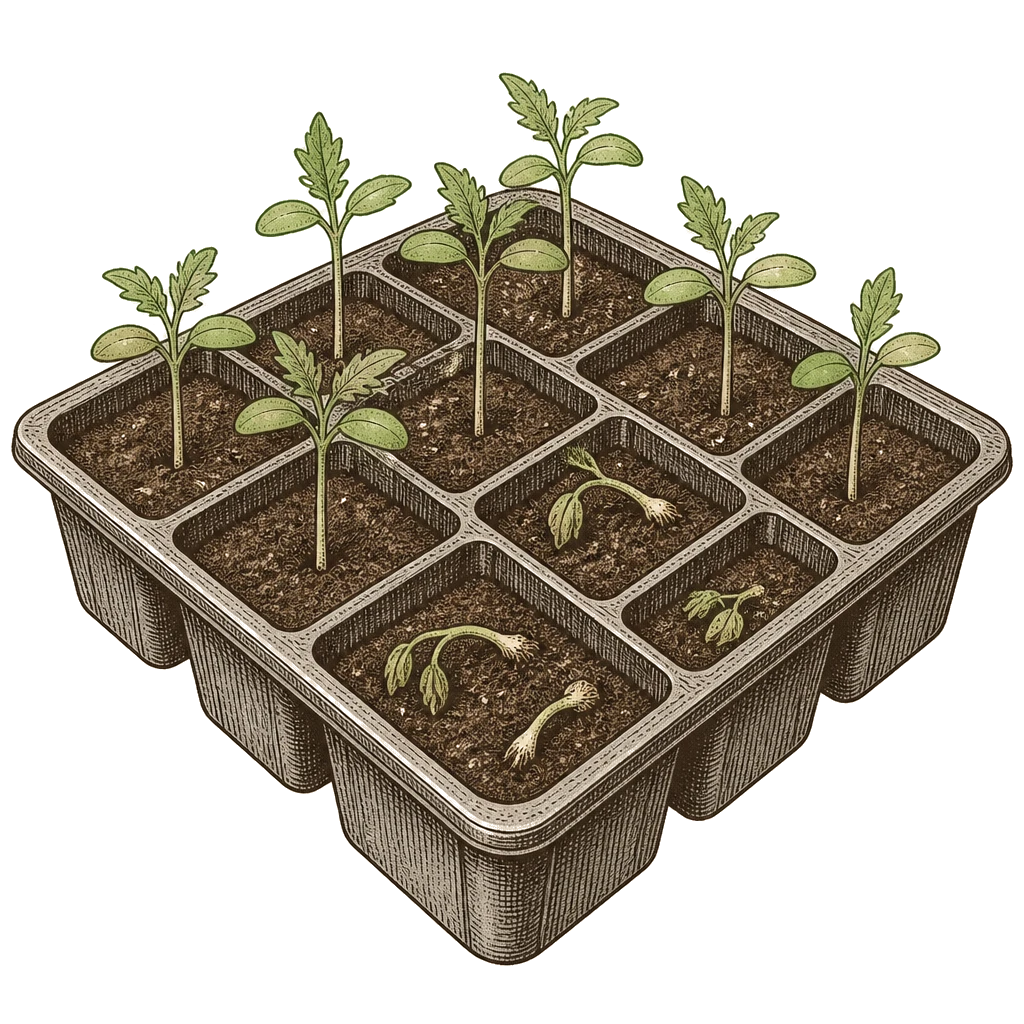
What’s actually happening
A handful of soilborne fungi and water molds cause it — most often Pythium, Rhizoctonia, and Fusarium — and they live in almost any soil, waiting on conditions that slow a seedling down. They strike two ways. Pre-emergence, they rot the seed or sprout before it clears the surface, so you blame “bad seed” for a row that never came up. Post-emergence, the seedling comes up fine, then the stem goes water-soaked and thread-thin right at the soil line and the plant flops over, often with a foot-wide patch of the flat going down together. The stem is the giveaway: soft and wet where it meets the mix, not dry and firm. In humid conditions you’ll sometimes see white cobweb-like growth on the casualties.
Damping-off is a conditions disease, the pathogens are already in the mix. What decides the outcome is whether the seedling is growing fast and strong or sitting cold and waterlogged. Anything that slows early growth raises the risk, and the usual suspects are cool soil, overwatering, low light, and salt from fertilizing too soon. Cool and wet is the classic setup, so keeping the mix warm and on the drier side of moist is the core of prevention. The best control is to avoid it altogether: once it’s running in a flat, it’s hard to stop.
What to do
Start clean. Sterilize any reused pots or trays by soaking them for 30 minutes in a 10 percent bleach solution — one part household bleach to nine parts water — and fill them with fresh seed-starting mix. Reused mix, garden soil and compost all carry the pathogens straight in.
A heat mat holding the mix at 70–75°F gets seeds up fast and through the vulnerable stage quickly. Water with clean, room-temperature water around 68–77°F; cold 50°F water slows growth. Keep the mix moist but never soggy, and let the surface dry slightly between waterings.
Seedlings also need real light. Twelve to sixteen hours under a grow light or shop light beats any windowsill, which leaves seedlings stretched and weak, exactly the state that invites trouble. Hold off on fertilizer until the seedlings have a few true leaves (the second set to appear, shaped like the adult plant’s). Then mix it at a quarter of the rate printed on the label or skip it entirely if the bag of mix already lists a starter fertilizer.
For direct sowing, it all comes down to soil temperature. Seed sitting in ground that’s too cold germinates slowly and rots while it waits. Wait for each crop’s minimum: peas can go into 40°F soil, sweet corn wants at least 50°F, and cucumbers, squash, and melons should not go in below 60°F. Treat those as floors. Cucumber, squash and melon seed germinates best closer to 95°F, so the warmer the ground when you sow, the faster the seed clears the stage where damping-off can take it.
A sowing task in Arbor is keyed to the crop’s planting window rather than a fixed calendar date, so it points you at the part of the season the crop can actually handle. It also logs what you sowed and when, so next spring you can see whether that early planting that rotted out was worth repeating.
If it’s already in your tray
You can’t save the collapsed seedlings, but you can protect the rest by drying things out: get air moving across the flat, take off any humidity dome or plastic cover, move it somewhere warmer, and water less until the survivors firm up. There’s a finish line, too. Once seedlings have mature leaves and a well-developed root system, they resist these pathogens far better. For tomatoes it’s specific: past the two-to-three-leaf stage they no longer catch Pythium or Rhizoctonia.
Zone and season notes
Indoor seed-starting is the same job in Minnesota and Arizona, because the variable is your bench, not your zone. The real climate split is in direct sowing, and it’s a timing mirror. Cold-zone gardeners get burned rushing peas and greens into 40-something-degree spring soil; warm-zone gardeners get burned pushing heat-loving squash and cucumbers into 55–60°F March soil that feels like spring but reads like winter to a squash seed.
When to worry and when not to
A whole tray collapsing is a total loss for those seedlings, but it’s not a verdict on your garden: start a fresh batch and you’ll usually get a clean run. If only part of the tray went down, the survivors can stay where they are once you’ve dried things out, and the clean containers and fresh mix are for the batch you start next. Watering a struggling tray harder only feeds the problem. Fungicide for damping-off goes onto the seed before it’s sown, so by the time a tray is collapsing that choice has already passed. And a direct-sown row that never came up in cold spring soil is often this same disease rather than bad seed — check the soil temperature before you spend more seed on it.