
Overwatering vs. Underwatering: How to Tell the Difference
You can’t reliably tell overwatering from underwatering by looking at the plant — both cause wilting, yellowing, and leaf drop. The diagnosis lives in the soil, not the leaves. Dig down 2 to 3 inches into the root zone next to the struggling plant: bone-dry means underwatered; soggy, smelly, or wet days after the last watering means overwatered. That one check settles it in thirty seconds.
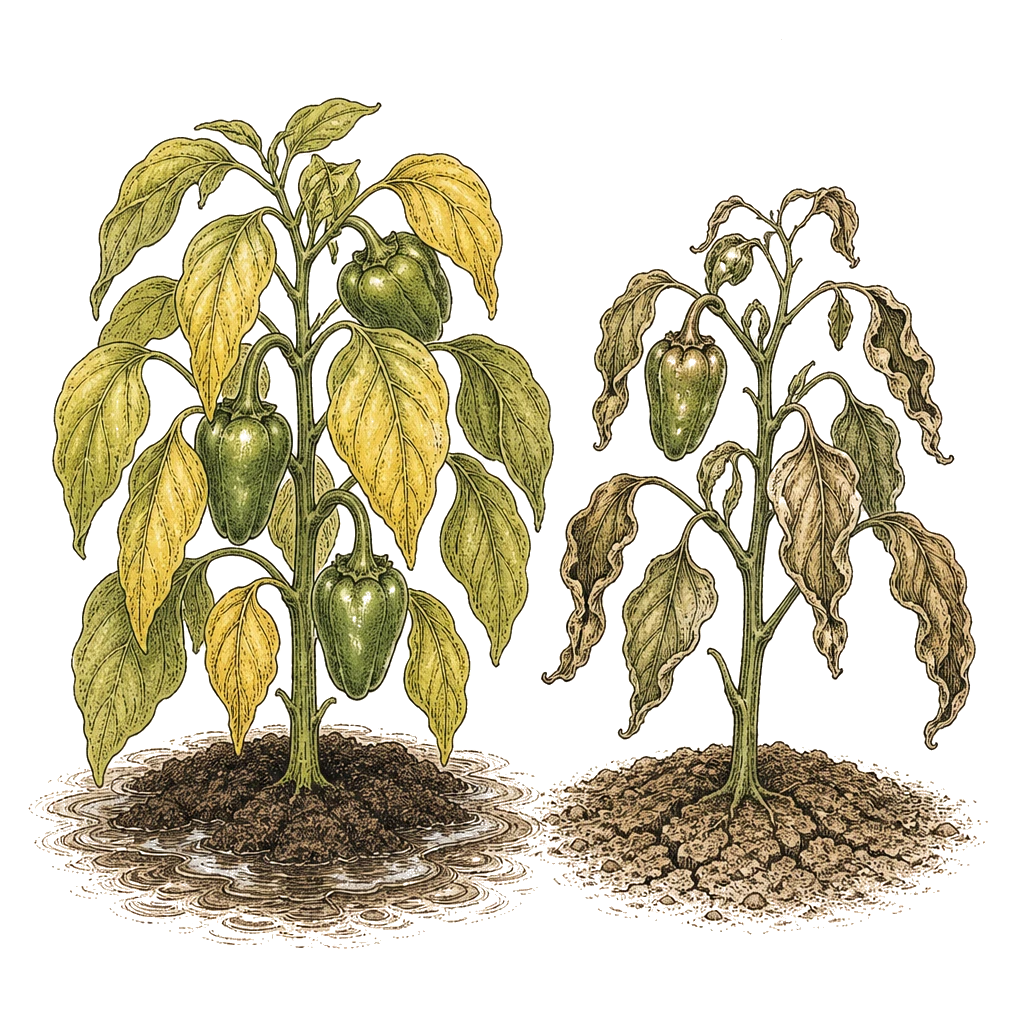
What’s actually happening
The reason the symptoms overlap is that both problems do the same thing to the plant: they cut off water uptake. Underwatering does it the obvious way. Overwatering does it sideways — Utah State Extension explains that saturated soil displaces the air in soil pores, starving roots of oxygen until they die, and dead roots can’t move water no matter how wet the bed is. A drowning plant is, functionally, a thirsty plant.
This is why the most expensive mistake in the garden is the reflexive one. UGA Extension reports that overwatered plants with early root rot wilt and yellow, the gardener naturally reads that as thirst, waters more, and the rot accelerates. Root-rot pathogens like Pythium thrive in exactly the wet soil that extra watering provides.
A few tendencies do lean one way. Maryland Extension identifies yellowing of the lower and inner leaves as the primary excess-moisture signal. But these are leanings, not verdicts — the soil check is the verdict.
What to do
If the root zone is dry: water slowly and deeply so it soaks down rather than running off, then fix the schedule, not just today. Chronic underwatering in summer usually means the interval is too long for the weather, not that you forgot once.
If the root zone is wet: stop watering and let the bed dry down until that 2–3 inch zone is merely moist before resuming. Check the obvious drainage culprits — a drip emitter stuck open, a low spot where the bed collects runoff, heavy clay that never gets a chance to drain. Then restart on a longer interval. If a plant keeps declining after the soil dries out — especially with a sour smell at the base or dark, mushy roots — root rot has likely set in, and recovery is uncertain.
Either way, recalibrate by feel for a week: check the soil before each scheduled watering instead of trusting the calendar. The wrung-out-sponge standard from Colorado’s Master Gardener guidance is the target — evenly moist at root depth, never waterlogged. A fixed weekly schedule is what gets gardeners into trouble here, since the right interval shifts with heat and rain — that’s why Arbor reads the forecast and tells you when to skip a watering or move one up, rather than reminding you on the same day regardless of weather.
Zone and season notes
In hot inland climates (zones 9–11 especially), there’s a third pattern worth knowing: temporary afternoon wilt on big-leafed crops like squash during the hottest part of the day, even in moist soil. NC State Extension notes that plants stressed this way through the midday hours typically recover on their own as temperatures fall — the plant simply can’t move water as fast as the heat pulls it out, and it recovers by evening. If the soil is moist and the plant perks up after sundown, that’s heat, not a watering problem — don’t chase it with the hose. Persistent morning wilt is the real signal.
In cool, wet seasons and heavy soils, overwatering is the default failure mode; in sandy soils and high summer, underwatering is. Know which way your garden leans.
Sources
- Utah State University Extension — Overwatering
- University of Maryland Extension — Overwatered Indoor Plants
- University of Georgia Extension — Overwatering Can Lead to Problems
- Ask Extension / Colorado State University — Signs of Overwatering vs. Underwatering
- NC State Extension — What Wilting Really Means: Heat Stress vs. Water Needs