
Root Rot in Vegetables: How to Spot It and Stop It
A vegetable that wilts and yellows while its soil is still damp usually has root rot, not thirst: the roots have rotted in waterlogged ground and can no longer take up water, so the plant droops even with moisture all around it. The fix runs opposite to instinct — stop watering, let the bed drain, and improve drainage long term. Prevention does almost all the real work here: well-drained beds and a hose you turn off.
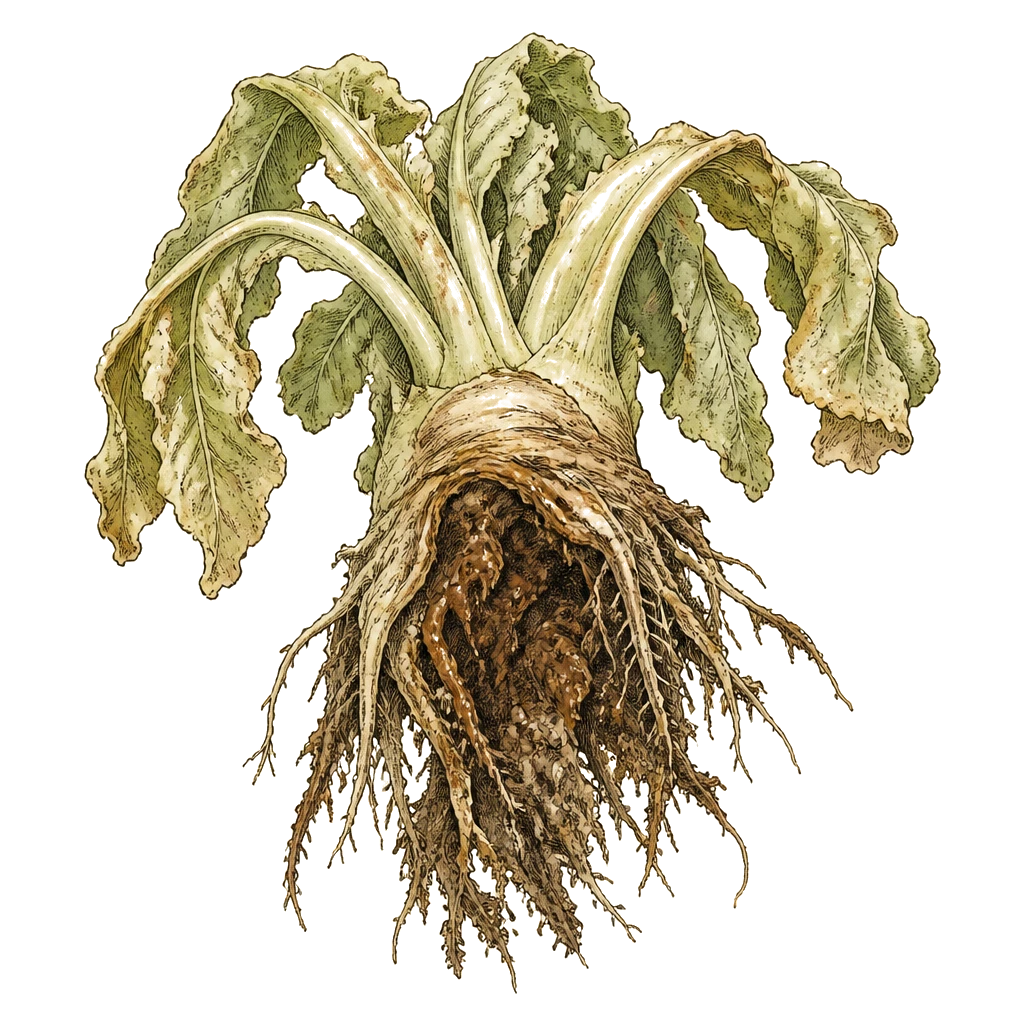
What’s actually happening
Root rot is a soilborne disease with several causes but one trigger: soil that stays too wet. The usual suspects are the water molds Phytophthora and Pythium and the true fungi Rhizoctonia and Fusarium — all present in practically every garden soil, attacking only when the ground stays saturated. Their resting spores survive for years, which is why a bed that rotted a crop one season can do it again the next.
This is where root rot fools people. The classic symptoms (wilting, stunting, lower leaves yellowing or reddening) look like a plant that needs water or feeding, so the gardener waters or fertilizes more, and the plant slides faster. Both feed the problem: more water keeps the roots drowning, and dying roots can’t draw up fertilizer. Yellow leaves over wet soil are a signal to back off, not pour on.
What to do
Confirm it’s root rot first, because the cure for a dry plant is the opposite of the cure for a drowning one — see overwatering vs. underwatering. Check the easy signs: soil still wet a finger’s depth down, a stem dark or soft at the soil line, a single root near the surface pinched and peeled back with a fingernail to expose the inside. Lifting and washing a whole plant is the definitive check, but it’s destructive — save it for one that has already collapsed. Healthy roots are firm and white to cream-colored; rotted ones are brown or black, soft, and often smell. The University of Illinois Extension adds a useful tell: with Pythium the rotted outer layer slides off and leaves a thin white core, Phytophthora darkens the whole root through, and Rhizoctonia and Fusarium leave a drier, reddish-brown rot.
Reduce soil moisture: let the bed dry until no longer saturated before watering again, and water to need, not a schedule. Give the plant 3 to 5 days of dry soil; if it hasn’t begun to stand on its own by then, lift one root — white and firm means it’s coming back, brown and soft means pull it now. Pull mulch back if it’s piled thick; past about 3 to 4 inches it holds the soil wet and works against you.
The long game is drainage: work compost into heavy soil; low corners that pool after every rain need raised beds, not just amended soil. Root rot doesn’t jump plant to plant on its own — it moves with infected soil and water, so splashing runoff from a sick bed onto a healthy one is the real spread risk. Don’t move soil between beds, don’t water healthy beds with runoff from infected ones, and dip tools in 10% bleach or 70% alcohol for at least 30 seconds.
Arbor treats a note like “tomato wilting but the soil’s still wet” as urgent, prompting a task to ease off watering and check drainage rather than water again, and records the bed and date, so a repeat collapse in the same spot next season reads as a drainage problem to fix.
Home-bed fungicides won’t help — the products for root rot are preventive, and none rebuild rotted roots. Fruit already on the plant is safe to eat; the pathogens stay in the root zone, so harvest anything close to ripe before you pull. A plant that has lost most of its roots is past saving: pull it, let the spot dry for at least a week, dig in 2 to 3 inches of compost, and rotate so no nightshade, cucurbit, bean, brassica, or lettuce returns to that spot the following year.
Zone and season notes
In cold, short-season gardens (zones 3–6), the avoidable mistake is setting warm-season transplants into cold, wet spring soil, which Rhizoctonia and Pythium both favor; UW Vegetable Pathology notes Rhizoctonia is worse where potatoes or snap beans grew the year before. Wait for the soil to warm past 60°F before transplanting. In warm, long-season gardens (zones 9–11), the danger concentrates in hot, rainy stretches; Phytophthora is favored by heat, and Texas A&M flags cucumbers, squash, and peppers as plants that can collapse quickly once they’re carrying fruit and have wet feet. Raised beds and real drainage matter most here.
When to pull and when to wait
One wilted seedling, or a plant that perks back up once you stop watering, is not a crisis; early root rot is survivable if you catch it and dry things out. The cases that warrant pulling are roots mostly brown, black, and mushy, a stem rotting at the soil line, or a plant that stays collapsed after the soil has dried.
A whole bed that keeps losing plants to the same fast wilt, year after year, isn’t bad luck — it’s a drainage or sanitation problem telling you to rebuild that bed before you replant it.
Sources
- University of Wisconsin-Madison Division of Extension (Plant Disease Diagnostics Clinic) — Root Rots in the Garden
- University of Illinois Extension (Home, Yard & Garden) — Pythium Root Rot of Garden Plants
- UW Vegetable Pathology, University of Wisconsin-Madison — Rhizoctonia Root Rot and Stem Canker Management in Tomato Production
- Texas A&M AgriLife Extension (Aggie Horticulture, Cucurbit Problem Solver) — Phytophthora Root Rot
- University of California Statewide IPM Program (UC ANR) — Pythium Root Rot
- Cornell University (Greenhouse Horticulture) — Root Rot Diseases
- Ohio State University / Rutgers University (VegNet News) — Managing Phytophthora Blight and Pythium Root Rot in Peppers