
Succession Planting: How to Keep a Bed Producing All Season
Succession planting means refilling a bed as it empties instead of sowing once and watching the harvest come and go. There are three ways to do it: stagger sowings of the same crop every couple of weeks, sow several varieties with different days-to-maturity on the same day, or follow one crop with another in the same bed as soon as the first finishes. Pick the method that fits the crop and the space, and use soil conditions, not just the calendar, to decide when the next round goes in.
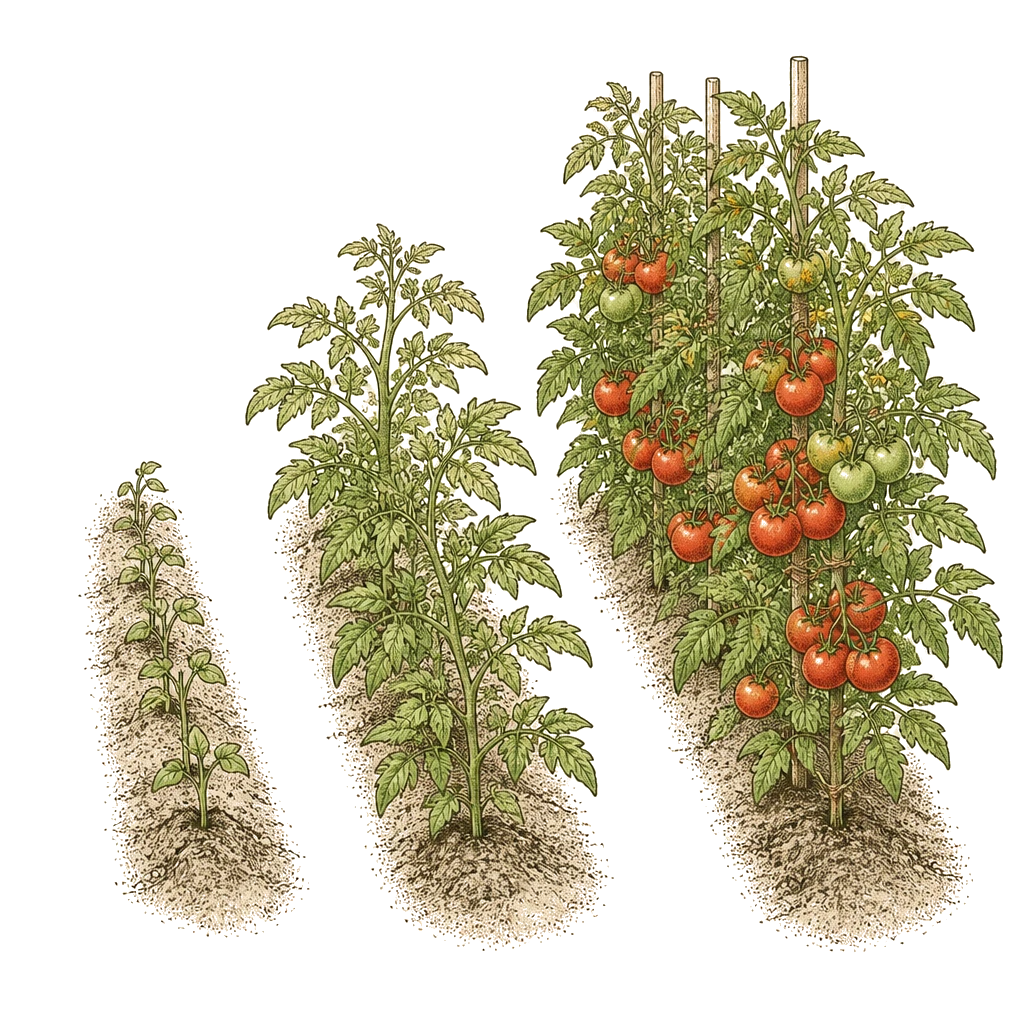
How it works
Staggered sowing is the most familiar version: instead of one planting of lettuce, sow a short row every 14 days so a new batch is ready as the last one bolts or gets picked clean. It works for anything harvested over a short window, but the calendar is a rough guide, not the trigger. Peas sown two weeks apart often mature only about a week apart: the second sowing meets better germination conditions and grows into lengthening days, catching up with the first. Early plantings run slow and later ones close the gap, which is how a season of evenly spaced sowings ends up delivering a midsummer glut instead of a steady supply.
Three summer squash varieties rated at 40, 47, and 54 days, sown on the same April date, work out to harvests spanning about six weeks end to end. That’s the second method: sow several varieties of one crop at once, on a single planting trip, and let their different days-to-maturity do the staggering. The same arithmetic works with corn — a 70-day variety and a 100-day variety sown together give two separate harvest waves.
Follow-crop planting, the third method, puts a new crop into the space a spent one vacates rather than leaving the bed empty — crop rotation on a short clock. A green bean row can follow spring lettuce, and broccoli can follow that bean row once it winds down, keeping the same square feet in production from early spring into fall.
What to do
Match the method to the crop. For anything harvested over a short window, like lettuce or radishes, settle first on how much total space you want in that crop, then sow a fraction of it every two weeks rather than the whole thing at once — four rounds means a quarter of the space each time. Two weeks is the interval University of Maryland Extension, the state’s university-run gardening research service, gives for leafy greens, beans, and cucumbers. For crops where one big planting date is more practical, like corn or squash, buy two or three varieties with staggered days-to-maturity and sow them together; the spread in maturity dates does the staggering for you.
Treat that interval as the plan and the soil as the veto — when the two disagree, go with the soil and the previous planting rather than the date. Oregon State’s germination table puts the optimum soil range at 60°F to 95°F for corn, 40°F to 75°F for peas, and 40°F to 80°F for lettuce. The same table shows what warming does to speed: lettuce comes up in about seven days at 50°F and about two days at 77°F, and peas roughly halve their emergence time over that stretch. It’s why sowings spaced two weeks apart come in less than two weeks apart, and why the interval should stretch as the soil warms instead of holding at 14 days. Sweet corn gets a simpler trigger: sow the next round once the previous one stands 1 to 2 inches tall.
For follow-crop planting, work out the last safe planting date for each crop by subtracting its days-to-maturity from your first fall frost date; anything sown after that won’t finish before the season ends. Maryland Extension’s own three-crop bed runs lettuce on March 20, green beans on May 15, and broccoli on August 1 — those are Maryland dates, so shift them against your own frost window rather than copying them. Three crops out of one bed also means three crops’ worth of nutrients drawn from the same soil, so each round starts its own feeding schedule.
A common way this fails is direct-sowing a new succession right next to an already-established planting. The new seedlings lose the competition with the established plants before they get a start. Start that follow-on crop as transplants instead. A transplant already has several weeks of growth on it, so it skips the vulnerable seedling stage entirely and moves straight into competing on even footing.
Keep a simple log through the season: planting date, germination date, harvest date, and yield per linear foot for each succession. That record is what lets a two-week interval get replaced next year with whatever interval this particular bed and this particular gardener actually need.
Zone and season notes
The three methods and the soil-temperature trigger work the same everywhere; what changes by zone is how many crops one bed can carry in a year. Add up the days-to-maturity of the crops you want in sequence and check that total against your own frost-free days. That three-crop bed sets its last planting on August 1 and needs the ground into fall to finish the broccoli; a season that closes sooner fits two crops, not three. Look your own frost dates up in the when-to-plant-vegetables hub before scheduling a follow-crop sequence, and lean on the spring and fall planting guides for how those seasons’ windows are built, since the last safe planting date for any succession is only as good as the frost date it’s counted back from.
If you log a bed’s planting and harvest dates in Arbor as you go, it keeps that history on hand so next season’s succession intervals for that bed can be set from what actually happened, not from a generic two-week rule.