
How to Grow Bush Beans
Direct sow two weeks after last frost, once the soil hits 60°F, spacing seeds 6 inches apart and keeping the foliage dry. Bush beans fix their own nitrogen, so skip the high-nitrogen fertilizer that most vegetables want. Expect pods around 55 days from sowing.
How it works
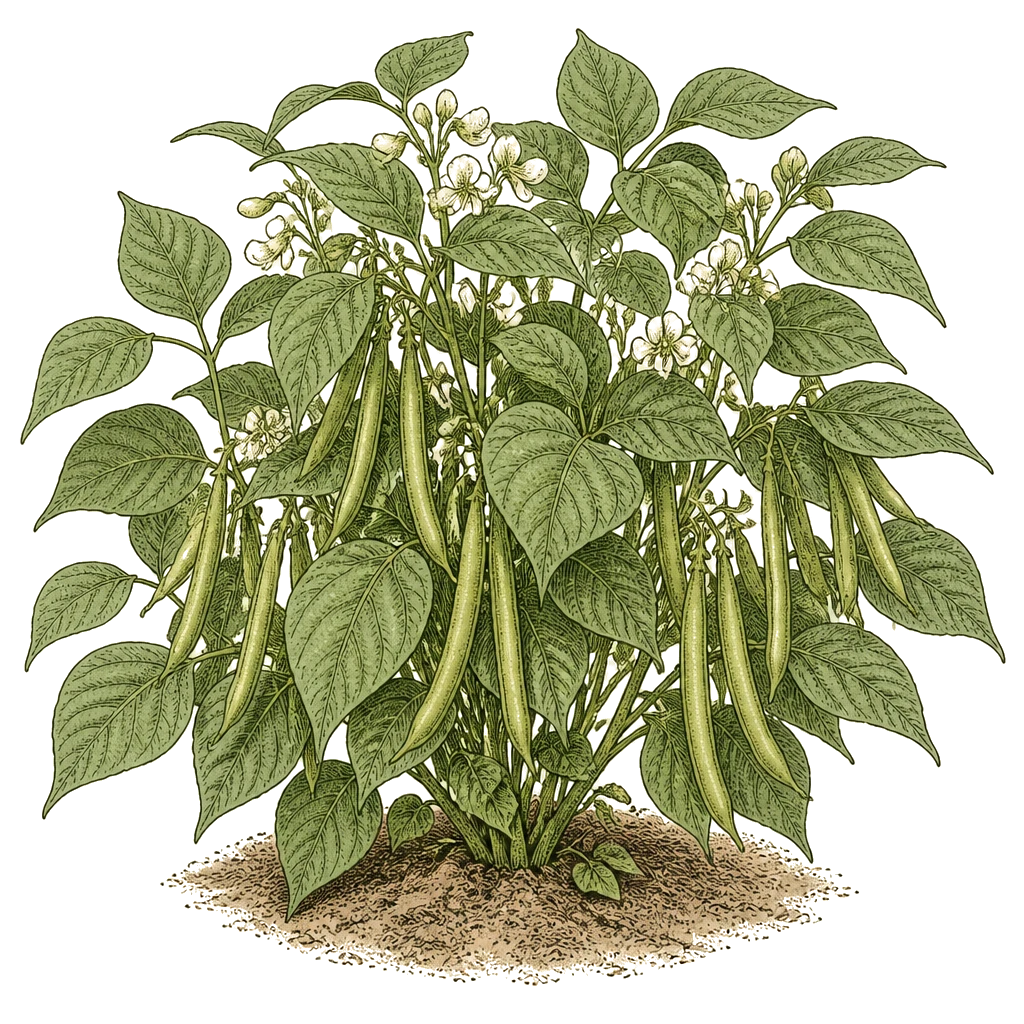
As legumes, bush beans feed themselves. Bacteria in the genus Rhizobium colonize their roots and pull nitrogen from the air, converting it to a form the plant uses directly. This means beans arrive at harvest with most of their fertilizer already on board — adding excess nitrogen fertilizer delays flowering and pushes the plant into producing more leaves instead of pods. Colorado State University Extension also links high nitrogen levels to increased severity of bean rust, the main foliar disease.
The flip side of that nitrogen independence is soil temperature sensitivity. Seeds rot instead of germinating in cold, wet soil. Utah State University Extension puts the minimum at 60°F at a 4-inch depth and the optimal germination range at 65–85°F. Clemson’s recommendation matches: don’t sow until that threshold is cleared. Never start seeds indoors and transplant — bush beans do not transplant well, and disturbing the developing root system disrupts the Rhizobium nodule association before it is fully established.
Bush beans produce a single concentrated flush of pods rather than a continuous trickle like tomatoes. Frequent picking and succession planting are the two levers for extending harvest beyond that flush.
What to do
Sow directly, two weeks after last frost. Plant seeds 1 inch deep, 6 inches apart in rows 18–24 inches apart. Skip any transplanting attempt — direct sow only. If you want harvest spread across eight weeks rather than two, sow a new batch every 2–3 weeks through mid-summer (see zone notes below for regional cutoffs).
Fertilize lightly at planting, then stop. Clemson HGIC recommends a low-nitrogen starter like 5-10-10 at 3 pounds per 100 square feet worked in before sowing. Once plants are up, no sidedressing is needed on typical home garden soil that already has compost — the root nodules are handling the nitrogen.
Water at the base, not the leaves. Aim for about 1 inch of water per week from rain or irrigation. Clemson recommends moistening the soil to 6-inch depth. The critical caveat: avoid wetting foliage. Bean rust (Uromyces appendiculatus) requires free water on the leaf surface for more than 10 hours to take hold, and once established it cycles every 10–14 days under cool to moderate temperatures (65–85°F). Water in the morning at the base of the plant so any incidental splash dries well before dark. Avoid light, frequent sprinkles — they encourage shallow roots without giving the deep drink beans need.
Monitor for Mexican bean beetle and bean leaf beetle. Mexican bean beetle adults are copper-colored, 1/3 inch long, with 16 black spots in a distinctive pattern. Larvae are yellow with black spines and cause more foliage damage than the adults. The threshold before action is roughly one egg mass per foot of row — below that, the plants tolerate it. Row covers installed at planting, sealed at the edges, are the most effective prevention. For established infestations, crush egg masses and larvae by hand; release the parasitoid wasp Pediobius faveolatus when larvae first appear. Spinosad or neem handles severe cases; follow label rates and reapply on the interval the label specifies.
Bean leaf beetles are 1/4 to 1/3 inch long with a black triangle at the forward edge of their wing covers — that mark is the reliable identifier regardless of their variable coloring (red, tan, yellow, or gray). They punch small round holes in leaves and attack pod bases. Rutgers recommends scouting between noon and 4 p.m., when the beetles are most active, and hand-picking into soapy water when numbers are low. Floating row covers at planting time prevent both beetle species.
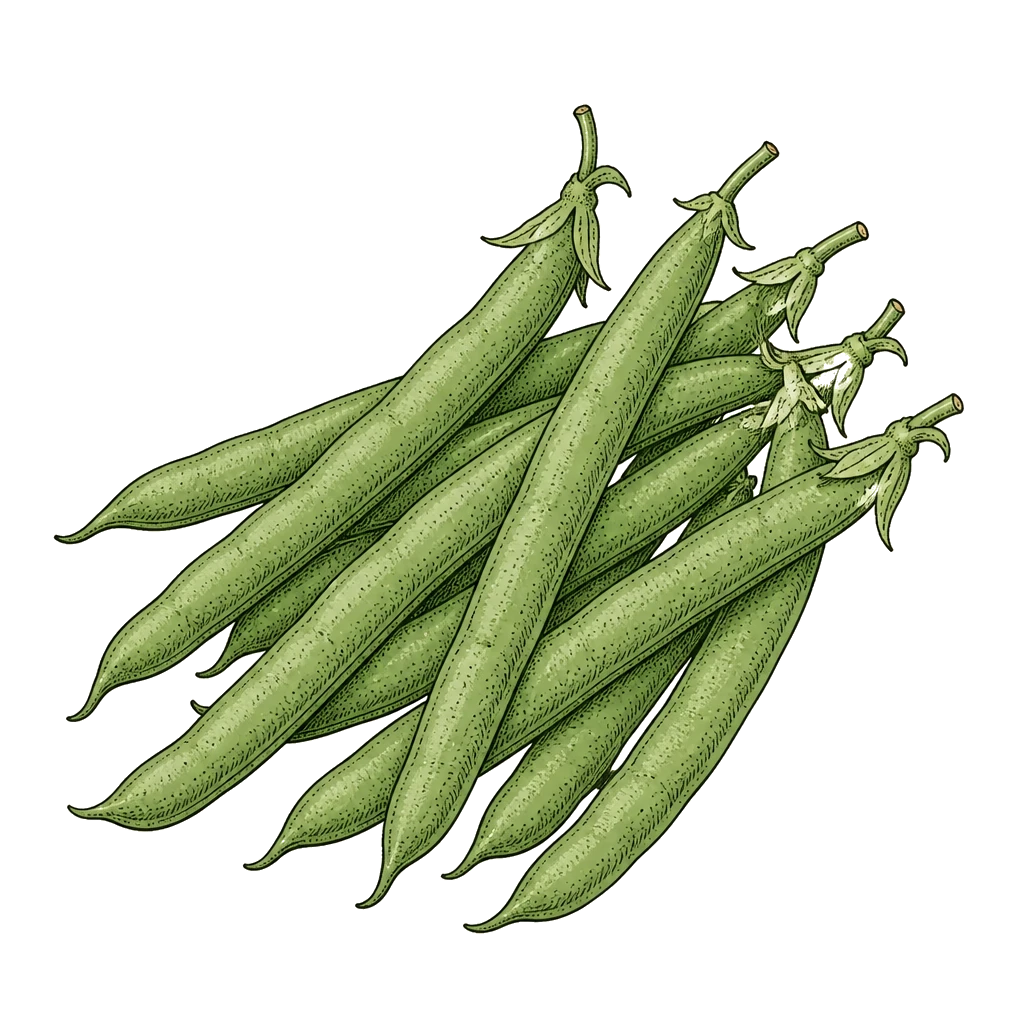
Harvest at pencil thickness. Pods are ready around 55 days from sowing. Iowa State University Extension uses pencil diameter and 4–6 inches long as the benchmark; pods should snap cleanly when bent, and seeds should not yet be bulging through the pod wall. Pick in the early morning for best quality. Once the first pods are ready, harvest daily — frequent picking signals the plant to keep setting pods and extends the production window.
When you log your bean planting date in Arbor, it schedules the first harvest check at 55 days out and flags daily picking reminders once pods start coming in, so the window doesn’t slip past you.
Zone and season notes
Northern tier (Minnesota and similar): Do not plant until late May or early June, when soils finally hold above 60°F. Succession-sow every 2 weeks through early August. Heat above 90°F reduces flowering and pod set, so midsummer gaps are common; they’re temporary.
Midwest (Iowa and similar): Central Iowa is typically safe around May 10. The last practical succession sowing is August 1 — anything later won’t reach 55 days before fall frost. Early-maturing varieties give you the most planting flexibility at either end of the season.
Mountain West (Utah and similar): Wait for confirmed soil temperature above 65°F for reliable emergence. Succession-sow every 14–21 days through mid-July. Dry Western air pulls moisture from soil faster, so sandy soils here may need water more frequently than the once-per-4-days baseline on loam.
Southeast (North Carolina and similar): Mexican bean beetle runs 3–4 generations per year in this region versus 1–2 in the North, and bean leaf beetle peaks in late May, late July, and again in August and September. Row covers from the start are especially worthwhile here. Choose early-maturing varieties to dodge the worst late-July and August pest pressure.
All regions: Bush beans die at 32°F. Plant after last frost is confirmed and plan succession sowings to finish well before first fall frost. Late July and August bring the highest rust risk nationally — cool nights with residual daytime warmth are ideal for Uromyces appendiculatus. Keep irrigation off the leaves and watch pods and stems for reddish-brown pustules about 1/8 inch across that rub off like rust dust. If rust does appear, pull and discard the most heavily infected leaves — bag them, don’t compost — and thin any crowded plants to move air through the canopy. A sulfur-based fungicide at the first pustules can slow the spread; follow label rates. Bean rust is a foliar disease, so beans with rusted leaves are still safe to pick and eat as long as the pods themselves are clean and undamaged.
Sources
- University of Minnesota Extension — Growing Beans in Home Gardens
- Clemson HGIC — Bush & Pole-Type Snap Beans
- University of Maryland Extension — Growing Beans in a Home Garden
- Utah State University Extension — How to Grow Beans in Your Garden
- Iowa State University Extension — Growing Green Beans
- University of Maryland Extension — Mexican Bean Beetle (Vegetables)
- Utah State University Extension — Mexican Bean Beetle
- NC State Extension — Insect and Related Pests of Vegetables: Pests of Beans and Peas
- Rutgers NJAES — FS241: Bean Leaf Beetle in the Home Garden
- Colorado State University Extension — Rust of Dry Beans