
Growing Pole Beans
Unlike bush beans, which produce a concentrated flush over 2–3 weeks and stop, pole beans flower continuously until frost. A single sowing reaches first harvest around 65 days and then keeps producing for months — no succession planting required. The catch is infrastructure: pole beans need a trellis 6 to 8 feet tall, and it must be in place before you sow a single seed.
How it works
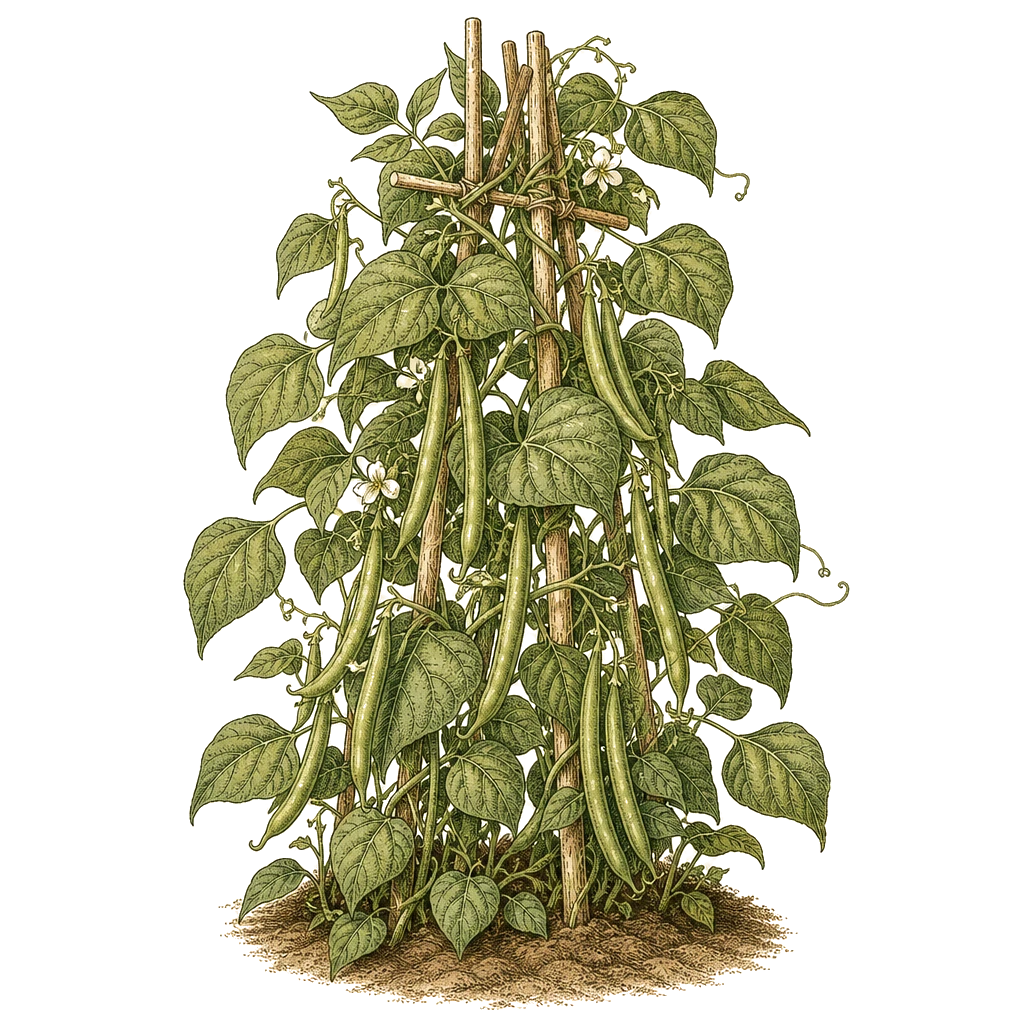
Pole beans are twining vines. They don’t set a fixed number of pods and quit — as long as you keep removing mature pods, the plant continues pushing new flowers. Leave overripe pods on the vine and the plant reads it as “seeds set, job done” and slows or stops production. That harvest behavior is the entire mechanism behind continuous yields.
Nitrogen fixation changes the fertilizer math entirely. Beans form a symbiotic relationship with Rhizobium bacteria in the soil, which colonize root nodules and convert atmospheric nitrogen into a form the plant can use. This is why pole beans need less fertilizer than most vegetables. Adding high-nitrogen fertilizer is counterproductive: excess nitrogen pushes leafy growth, delays flowering, and increases the risk of fungal disease. The plants are growing their own nitrogen supply; your job is to not interfere.
Pole beans also do not transplant well. The root-nodule association that makes nitrogen fixation work can be disrupted by transplanting, leading to poor establishment. This is direct sow only — starting seeds indoors provides no advantage and typically hurts.
What to do
Build the trellis before sowing. This is the one step you cannot redo after plants start climbing. Stakes should stand at least 6 feet above the ground — 8 feet gives vines the room they want. For a stake-and-twine setup, space stakes every 15 to 20 feet along the row, run twine horizontally at regular intervals, and secure the top firmly. Vines carrying a full load of pods are heavy and catch wind; anchor the stakes well. A teepee of bamboo poles works equally well for a smaller planting. The structure must be solid before any seed goes in.
Wait for warm soil. Cold soil causes seed rot rather than germination. The minimum soil temperature for reliable germination is 60°F at 4-inch depth; 65–85°F is optimal. In practice, sow 2 weeks after your last frost date. Plant seeds 1 inch deep, 6 inches apart in the row, directly at the base of the trellis structure.
Use inoculant in new beds. Coat seeds with a dry or liquid Rhizobium inoculant just before planting if beans haven’t grown in that bed before. The bacteria are inexpensive and accelerate nodule establishment. In a bed with a history of legumes, the bacteria are already present and inoculant is optional.
Fertilize at planting — and then stop. Apply compost or a complete balanced fertilizer when preparing the bed. That is typically sufficient for the entire season. Do not side-dress with nitrogen during the growing season; the plants are fixing their own, and extra nitrogen delays the flowers you’ve been waiting 65 days for.
Water at the base, not overhead. Soak the soil to 6-inch depth roughly every 4 days under normal summer conditions. Above 90°F, shorten that interval to every 3 days. The important rule: direct water at the base of the plant, never overhead. Wet foliage is the primary driver of bean rust and mold — both can spread quickly under humid conditions. Water in the morning so any foliage that does get wet dries before dark.
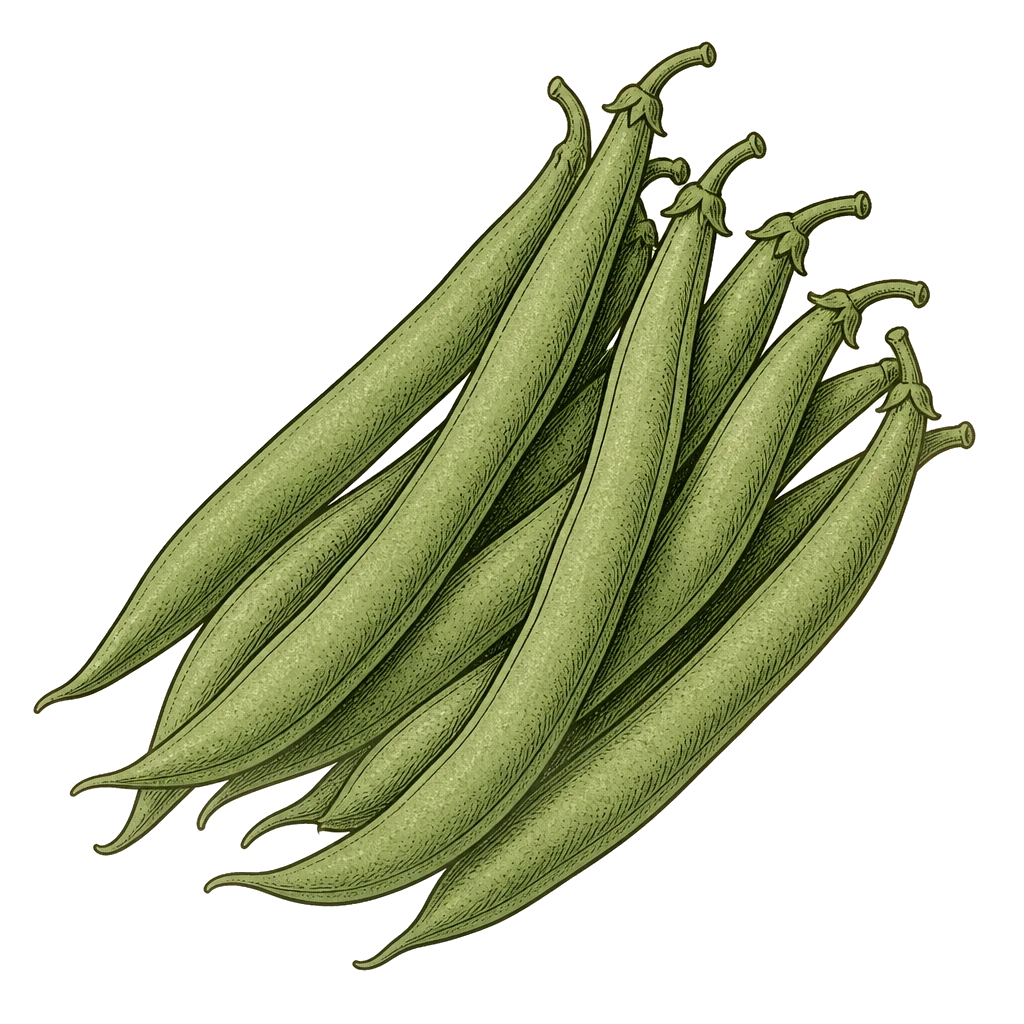
Harvest every 5 to 7 days without fail. Once pods reach roughly pencil thickness — with seeds not yet visibly bulging through the pod wall — pick on that tight schedule. The pods should snap cleanly when bent. NC State Extension reports pole snap beans are usually picked about 5 times over the season (occasionally as few as 3 or as many as 10), at roughly 3- to 5-day intervals. Pick any pods that have gone past prime as well. Overmature beans left on the vine signal the plant to stop flowering just as effectively as mature ones do.
If you log harvests in Arbor, the app tracks each pick date so you can see at a glance whether the bean bed has fallen outside that 5- to 7-day window — the interval that keeps continuous production going. A gap longer than 10 days and you will almost certainly see a slowdown in new flowers.
Zone and season notes
Memorial Day is the reliable sow date in zones 3–5, once soils have had time to warm past 60°F. Even with a short frost-free window, a single planting can produce from July through September or October. The continuous-harvest advantage matters most here: you get more fresh beans from one sowing than from three successive rounds of bush beans in the same space.
In the Southeast (zones 7–9), Mexican bean beetles and bean leaf beetles cycle through multiple generations from May through September. Checking plants weekly for pest damage is standard practice, and row cover at establishment can reduce early pest pressure significantly. Aphids also transmit bean common mosaic virus, so catch and knock back colonies early.
In the South and Gulf Coast (zones 9–11), two plantings are feasible: one in March–April and a second in August–September. Heat above 90°F causes flower drop and pauses production in midsummer. That gap is normal and not a sign that the plant has finished; watering frequency needs to increase during those heat spikes and the vine will resume flowering when temperatures ease.
The classic companion planting for pole beans is corn. The Three Sisters system — corn as support, pole beans as nitrogen fixer, squash as living mulch — is an Indigenous companion planting tradition documented by West Virginia University Extension as both historically grounded and practically effective in home gardens. Plant 4 bean seeds evenly spaced around each corn stalk once corn reaches 6 to 12 inches tall. Other good neighbors include carrots and cucumbers. Keep pole beans away from onions, garlic, beets, and fennel.
Sources
- University of Minnesota Extension — Growing Beans in Home Gardens
- Clemson HGIC — Bush & Pole-Type Snap Beans (HGIC 1302)
- University of Maryland Extension — Growing Beans in a Home Garden
- Utah State University Extension — How to Grow Beans in Your Garden
- NC State Extension — Pole Bean Production
- Penn State Extension — Growing Snap Beans in the Home Garden
- West Virginia University Extension — Three Sisters Gardening Method
- UF/IFAS Gardening Solutions — Pole Beans
- Oregon State University Extension — Grow Crisp, Flavorful Beans in Your Home Garden