
How to Grow Sweet Corn: Planting, Pollination, and Harvest
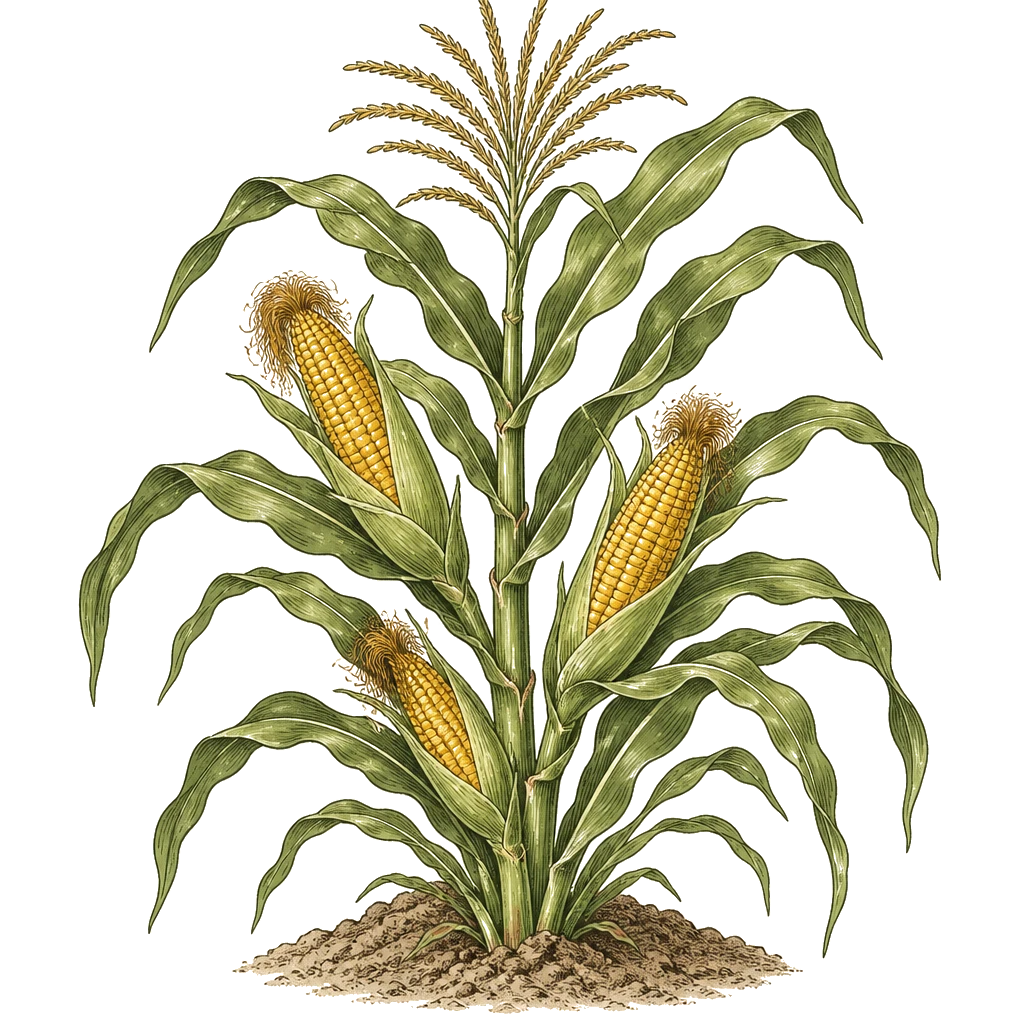
Sweet corn has one rule above all others: plant it in a block, not a line. A single row — or even two side-by-side rows — produces ears riddled with kernel gaps where pollination failed. Corn is wind-pollinated, relying on pollen shed from the tassels at the crown of each plant to drift down and land on the silks emerging from developing ears. A narrow planting can’t generate enough pollen density to fill every silk. Four short rows side by side is the minimum for a home garden; fewer than that and the harvest is unreliable regardless of how well you do everything else.
How it works
Each silk strand connects to a single kernel ovule, so every unpollinated silk leaves a blank in the ear. A 4×4 block of 16 plants saturates interior silks with pollen from all directions; a single row of 16 plants leaves the silks at both ends almost uncovered.
Sweet corn comes in four main types. Standard sugary (su) is the least cold-sensitive, germinating at soil temperatures as low as 50°F, and has the deepest corn flavor — though it converts sugar to starch quickly after harvest. Sugary enhanced (se) is sweeter and more tender, with a 55–60°F germination minimum. Supersweet (sh2) holds its sugar for days after harvest but demands 65°F soil; planted in cold ground, the seeds tend to rot before sprouting. Synergistic types blend sh2 and se kernels for high sweetness with better cold tolerance than pure sh2.
Isolation is non-negotiable when growing sh2. If supersweet pollen crosses with standard or enhanced varieties (or with field corn or popcorn), the resulting kernels turn starchy and flavorless — the cross overrides the sh2 gene. Separate supersweet plantings from all other corn by at least 250 feet, or time sowings so tasseling occurs at least 14 days apart between types.
One myth worth correcting: removing side shoots (suckers) improves yield. University of Minnesota and University of Maryland extension both report that sucker removal decreases yield. Leave them.
What to do
Planting
Corn is direct-seeded only and never transplanted well — for sowing technique, see how to direct-sow vegetable seeds. Sow outdoors 2 weeks after your last frost date, once soil has reached at least 50°F for su or se varieties, or 65°F for sh2. Plant seeds 1 inch deep, 12 inches apart in rows spaced 24–36 inches apart. Aim for a block of at least four rows; a 4×4 arrangement of 16 plants fits in roughly 4×6 feet of bed space. For successive harvests rather than one big flush, sow a new block every 10–14 days, or when the previous planting has 3–4 leaves.
Fertilizing
Before planting, incorporate 2–3 lbs of 10-10-10 fertilizer per 100 square feet into the top few inches of soil. Side-dress at knee height — roughly 12–18 inches tall: apply ½ lb of ammonium sulfate (21-0-0) per 100 square feet in a band 4–6 inches from the base and work it in lightly. Don’t wait past 24 inches — corn’s heaviest nitrogen uptake is already underway and canopy closure limits access. For more on rates and timing, see how to fertilize your vegetable garden.
Watering
Plan on 1 inch of water per week throughout the season, with demand rising sharply when tassels and silks emerge. That demand rises sharply during tasseling and silking: Purdue Extension records peak water use of 0.28–0.30 inches per day at that stage, approaching 2 inches per week. Drought or heat above 90°F during silking desiccates pollen and silk strands and pollination fails — the result is ears with few kernels. Keep soil consistently moist from 2 weeks before silks emerge through 3 weeks after tasseling. For watering technique, see how to water your vegetable garden.
When corn reaches tasseling, Arbor queues an increased-watering task and logs the growth stage, so you can track each planting through the critical pollination window.
Corn earworm
Corn earworm (Helicoverpa zea) is the primary ear pest across the U.S.: larvae enter the silk channel at the ear tip and feed downward, leaving frass and damaged kernels at the top. Ears with tip damage are still edible — cut off the damaged top inch and the kernels below the entry point are unaffected. Pressure peaks during silking, exactly when pollination is occurring. For gardens without Bt transgenic hybrids, spinosad sprayed onto silks and surrounding foliage every 3–5 days during silking provides effective organic control; University of Delaware extension recommends pheromone traps to monitor pressure and time sprays accurately. In zones 8–10, fall armyworm causes similar ear and foliage damage — the same spinosad schedule applies, but treat foliage as well as silks.
Harvest
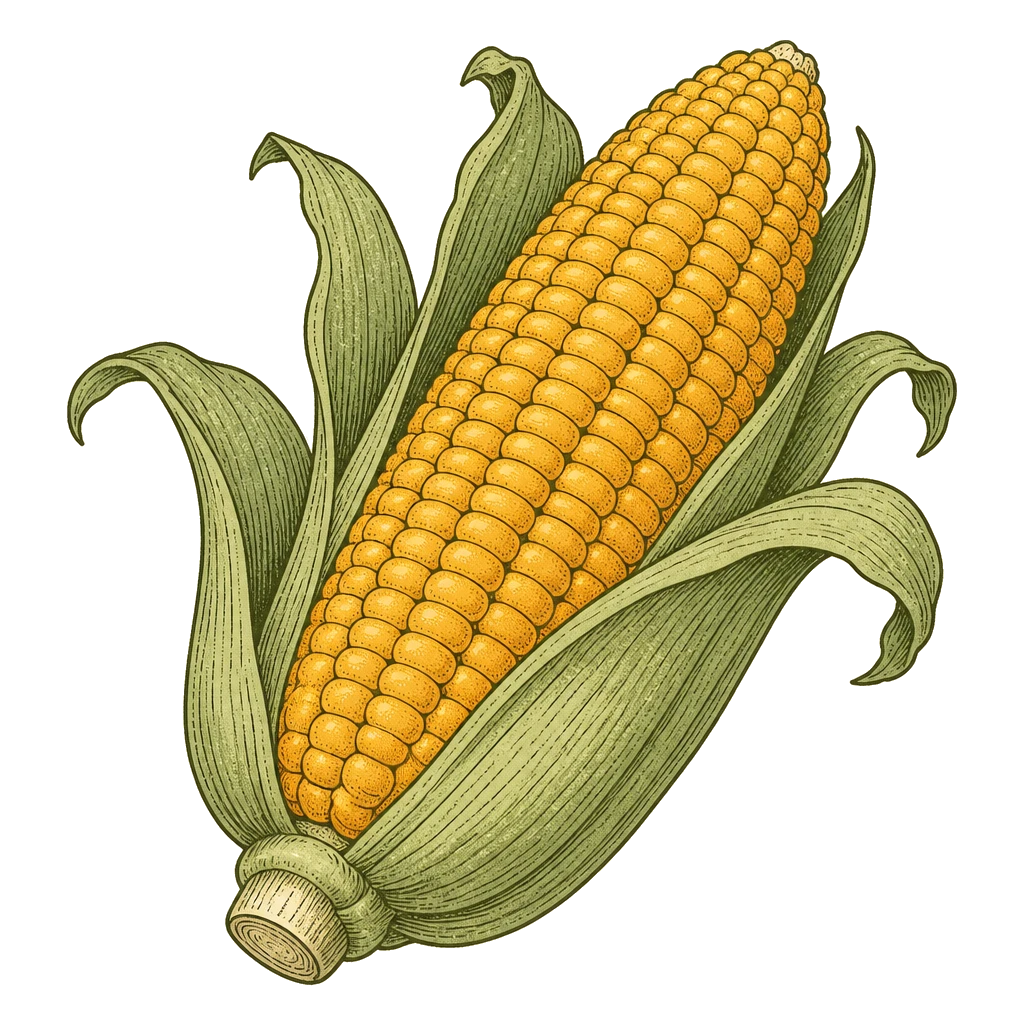
Count 18–22 days from the first silk strands appearing at the ear tip under average summer conditions. To confirm ripeness, peel back a section of husk and pierce a kernel with your thumbnail: clear, watery juice means immature; milky juice means prime; a doughy kernel with no juice means overripe. The silks at the ear tip should be brown, dry, and collapsed; the husk should feel tight; the tip of the ear should be full rather than pointed. In sustained heat above 85°F, prime condition lasts only 1–2 days — harvest daily. Supersweet (sh2) varieties hold prime condition for up to a week under refrigeration; standard sugary types convert sugar to starch within hours at room temperature, so cool them immediately after picking.
Zone and season notes
Sweet corn is frost-sensitive below 33°F — a late-spring freeze after germination means resowing and compresses the remaining warm-season window. Timing matters.
In zones 3–5, choose early su or se varieties rated 60–70 days to maturity. Supersweet (sh2) is a poor fit where soil doesn’t reliably reach 65°F before mid-June; the warm window often isn’t long enough before fall frost arrives, and germination failures in cold soil compound the problem.
In zones 6–7, both su/se and sh2 are practical. Standard timing applies: 2 weeks after last frost with appropriately warmed soil.
In zones 8–10, spring planting often opens in March or April. The critical constraint — especially in the Southeast and Southwest — is completing silking before sustained temperatures exceed 95°F, which causes pollen sterility. Fall plantings are feasible in many of these regions; consult your local extension office for specific windows. Irrigation is non-negotiable in the arid Southwest: 1 inch per week is a floor, and actual demand during the silking stage runs close to 2 inches per week. Fall armyworm pressure is elevated across warm-humid southern zones; see the earworm section above for control options that apply to both pests.
Sources
- University of Minnesota Extension — Growing sweet corn in home gardens
- Iowa State University Extension — Growing Sweet Corn in the Home Garden
- University of Maryland Extension — Growing Sweet Corn in a Home Garden
- UNH Extension — Growing Sweet Corn fact sheet
- Penn State Extension — Sweet Corn Production
- Purdue Extension — July/August Corn Water Needs
- University of Maine Cooperative Extension — Managing Insect Pests of Sweet Corn
- Clemson HGIC — Insect Pests of Sweet Corn
- University of Delaware Cooperative Extension — Protecting Sweet Corn From Corn Earworm
- University of Georgia Extension — Growing Home Garden Sweet Corn (C905)