
Aphids on Vegetables: What Works and What to Skip
For most vegetable-garden aphid outbreaks, the fix is a hard spray of water to knock them off the plant, repeated every few days, plus pruning out the worst-infested shoots. If that’s not enough, insecticidal soap or neem oil sprayed directly onto the insects finishes the job. What you should not do is reach for a broad-spectrum insecticide — it kills the lady beetles, lacewings, and parasitic wasps that were about to solve the problem for you.
What’s actually happening
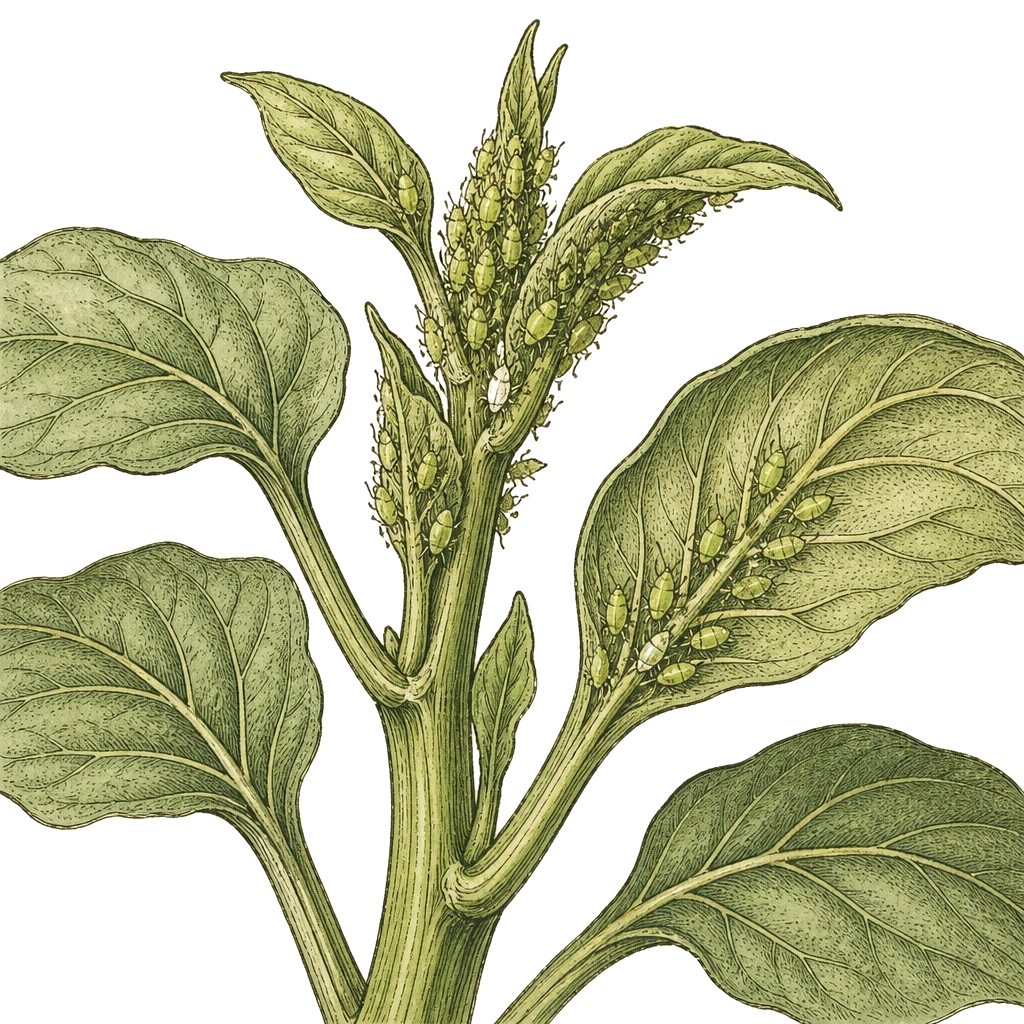
Aphids are soft-bodied, pear-shaped insects about 1 to 2 millimeters long, usually clustered on new growth and leaf undersides, sucking sap. The reason an infestation seems to appear overnight is that most of the season they skip eggs entirely — females give birth to live young that are themselves ready to reproduce within a week or so, which is how a few aphids become hundreds.
The good news, per UC’s statewide IPM program: low to moderate aphid numbers usually don’t do serious damage to established plants. Leaves may curl or yellow and you’ll see sticky honeydew (and sometimes the black sooty mold that grows on it), but plants tolerate a lot of aphid feeding. The real cases for acting fast are seedlings, which aphids can stunt, and the viruses some species transmit between plants.
Aphids come with an entourage: ants farm them for honeydew and will physically defend colonies from predators, so a persistent infestation often has an ant problem underneath it. And the predators are already on their way — lady beetles, lacewing larvae, and syrphid fly larvae are the reason most outbreaks collapse on their own a few weeks in.
What to do
Start with water. A strong jet from the hose, aimed at colonies on shoot tips and leaf undersides, knocks aphids off — and most that fall don’t make it back. Repeat as needed over a week or two, keeping it up while you still see live aphids. Prune off any shoot that’s truly encrusted; it’s faster than spraying it.
When colonies persist or you’re protecting seedlings, use insecticidal soap or neem oil, mixed and applied at the rate on the product label. Both kill only on contact, so coverage is the whole game — spray the undersides of leaves where the colonies actually are, and expect to reapply, since neither leaves lasting residue. That short residual life is a feature: it’s why these materials spare the predator insects that arrive after the spray dries. Rinse or wash any leaves and produce you plan to eat; that removes lingering aphids and honeydew.
If ants are running up and down the stems, deal with them too — UC IPM recommends keeping ants out of plants because protected aphids are the ones that get out of hand. In a vegetable bed the stems are too soft for sticky barriers, so put bait stations near the base of the planting, or band a barrier around a stake or cage leg that ants are using to reach the plants.
In Arbor, a note like “aphids all over the pepper tips” gets triaged as urgent — an alert card with a treatment task lands on this week’s list, and the follow-up sprays get scheduled so the repeat applications actually happen, which is where most home aphid control falls apart.
Skip the broad-spectrum sprays (pyrethroids, malathion, carbaryl) in a home vegetable garden. They kill the natural enemies along with the aphids, and UC IPM’s guidance across crops is consistent: aphid populations rebound faster than their predators do, so the spray buys a week and costs the season’s biological control.
When to worry and when not to
A few aphids on a mature tomato: not a problem, and the lady beetles need the food. Curling, stunted new growth on seedlings, or aphids spreading bed-to-bed: act now. Honeydew and sooty mold are ugly but cosmetic — the mold doesn’t infect the plant and washes off.
Zone and season notes
In mild-winter zones (9–11), aphids cycle nearly year-round, with population surges on the tender growth flushes of early spring and fall — exactly when seedlings are in the ground, so check new transplants weekly during those windows. In cold zones, outbreaks concentrate in spring; eggs overwinter on perennials and hatch as temperatures climb.
Sources
- UC Statewide IPM Program — Aphids (Pest Notes, Publication 7404)
- UC Statewide IPM Program — Aphids Quick Tips
- UC IPM — Floriculture & Ornamental Nurseries: Aphids
- University of Minnesota Extension — Aphids in home yards and gardens
- Clemson Cooperative Extension HGIC — Integrated Pest Management (IPM) for Aphids