
How to Harvest Vegetables at Peak Quality
Most vegetables are ready before they look fully done. Waiting until fruit looks finished by eye usually means you’ve already missed the window: check color and firmness rather than the calendar, harvest in the morning, and pick fast-producing crops like beans and cucumbers every two to three days to keep the plant flowering. The cues that signal peak eating quality are specific and learnable.
How it works
Plants are trying to set seed, not feed you. Once a fruit fully matures, the plant reads that as a reproductive success and slows or stops producing flowers. Beans, cucumbers, and peppers are blunt about this: leave a single overripe pod or fruit on the vine and flower production drops noticeably. Frequent harvesting — every two to three days for fast producers — keeps that signal from triggering and extends the harvest window across the whole season.
The “days to maturity” number on a seed packet is a guide, not a schedule. Soil fertility, rainfall, and temperature all shift the actual timing. Clemson Cooperative Extension notes that this number is calculated from transplant date for some crops and from direct-seeding for others, and it varies with the season regardless. Visual and tactile cues are more reliable than counting days.
What to do
Harvest in the morning. Overnight, vegetables regain moisture lost during the heat of the day, so morning fruit is crisper, cooler, and will store longer than the same vegetable picked at midday.
Use a knife or pruners rather than pulling or twisting. Yanking fruit off damages stems and leaves wounds where disease can enter. A clean cut takes two seconds and protects both the plant and the harvest. University of Minnesota Extension is direct on handling: the less you touch each vegetable, the longer it will last.
Color and give are the two cues for tomatoes: pick when the skin is uniformly pink or red and the fruit yields slightly to pressure. Never refrigerate — cold storage dulls flavor. Room temperature at about 55°F is ideal; they’ll hold 4 to 7 days. In hot climates, harvest at the “breaker stage” (first blush of color) and ripen them indoors to prevent splitting from heat.
Length is the cue for cucumbers: slicing types are ready at 6 inches long, and past that the flesh turns bitter and seeds harden. Refrigerated, they hold about 1 week.
Summer squash and zucchini. Harvest while still small and tender — most types between 6 and 8 inches. These grow extremely fast, so check every day or two. Oversize fruit turns seedy and tough, and leaving it on the plant stops new fruit from setting. Refrigerated, squash holds about 1 week.
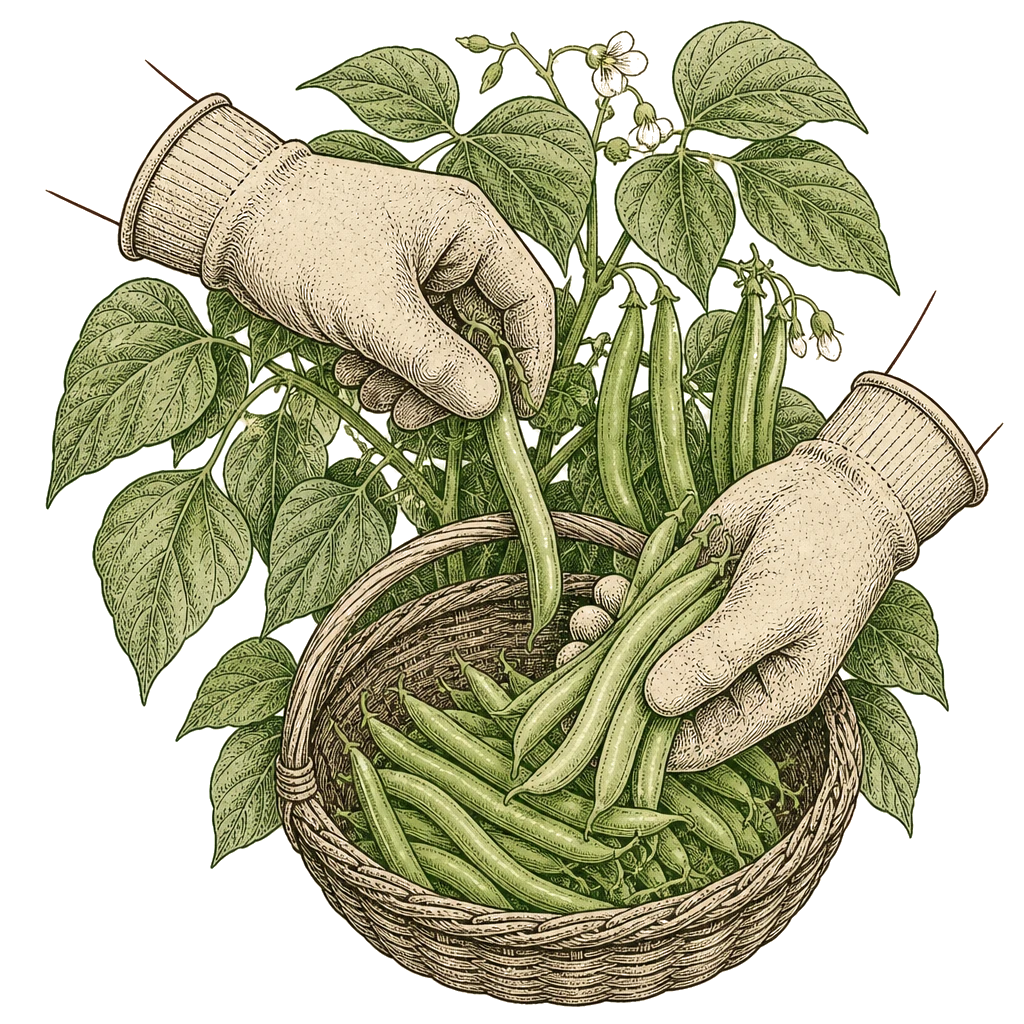
Snap beans. Harvest 2 to 3 weeks after bloom, while seeds inside are still small and immature. A ripe snap bean breaks cleanly with an audible snap. Use within a few days if you cool them immediately.
Peppers. Pick at whatever color you prefer — green peppers are simply immature peppers. Walls should be firm. Refrigerated, peppers hold 2 to 3 weeks.
Lettuce. Harvest head types while leaves are still tender, before the plant bolts. Bolting makes leaves bitter and the window closes fast; in warm weather you may have only a day or two. Refrigerated in the coldest part of the fridge, lettuce holds about 2 weeks.
Sweet corn. Silks should be brown and dry; kernels should look full and release milky juice when cut with a thumbnail. Corn loses sugar rapidly after picking. At 32°F it holds about 5 days — at room temperature it’s better eaten within hours.
Broccoli. Harvest heads at 3 to 6 inches in diameter while flower buds are tight and dark green. Once buds begin to loosen and yellow, the head is past peak. Refrigerated, it holds up to 1 week.
Speed matters most with okra: pods become tough and fibrous if left past 2 to 3 inches long. Harvest every day or two during peak season. Refrigerated, pods hold about 7 days.
Only store vegetables that show no damage or disease. A single rotting fruit in a storage bag or box will accelerate deterioration in everything around it.
When you check off a harvest task in Arbor, the app logs the date and what you picked — over a few weeks that record makes it easy to see which beds are producing and which have stalled.
Zone and season notes
In hot-summer climates, heat pushes tomatoes to color faster, but extreme heat can also crack fruit on the vine. Harvest at the breaker stage and finish ripening indoors during heat waves. Bolting is also a real hazard for lettuce and spinach: as the weather warms, harvest heading greens immediately rather than waiting for the plant to fill out further.
In cool climates, the warm-season crop window is shorter, which makes frequency more important, not less. Beans, cucumbers, and summer squash left on the plant through a cool week can stall so completely that the plant stops setting new flowers before frost closes the season. Check fast-producing crops every two to three days regardless of how the weather feels. If production has stalled, remove any overripe or oversized fruit still on the plant — even if it looks salvageable — to signal the plant to set new flowers. Once night temperatures drop consistently below 50°F, warm-season crops will not recover regardless of what remains on the vine.