
Sunscald on Tomatoes, Peppers, and Other Fruit
Sunscald is sunburn on the fruit: a bleached, papery patch on the side facing the sun, sometimes blistered or sunken. It’s a physical injury, not an infection, so there’s nothing to spray that will cure it. It arrives two ways. One is straight heat, when temperatures push past 100°F and cook the exposed tissue. The other is sudden exposure, when fruit that had been shaded gets thrown into full sun by a hard pruning, a storm that shreds the leaves, or a canopy stripped by disease. The fix for both is shade: keep enough leaf cover over the fruit, and protect that cover from the things that strip it. And fruit that’s already scalded won’t recover, so salvage what you can now and compost the rest.
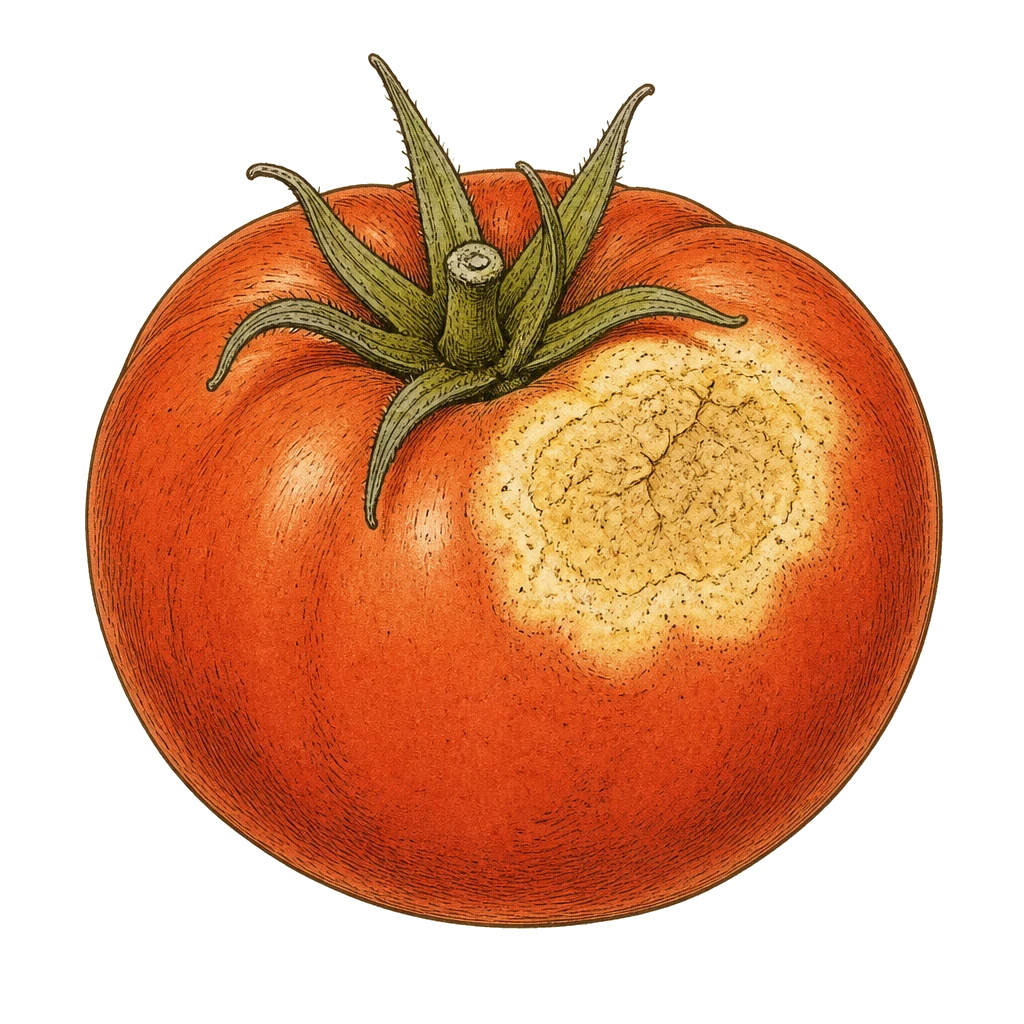
What’s actually happening
Tomatoes, peppers, summer squash, and melons like watermelon and cantaloupe all get this noninfectious disorder. SDSU Extension sorts it into three forms, and knowing which one you’re looking at tells you what to do about it. Necrosis is the high-heat version: above about 100°F the skin and tissue at the exposed spot die outright, leaving a white-to-brown, mushy lesion. Browning happens at somewhat lower temperatures and is milder, a yellow, bronze, or brown spot that usually stays firm. Photooxidative sunscald is the sneaky one, because it can strike at much lower temperatures whenever shaded fruit is suddenly exposed; it bleaches a large patch chalk-white, then sinks, softens, and wrinkles.
That third form is why over-pruning and storm damage cause so much of it, and why a plant losing its lower leaves to early blight, Septoria, or a leaf-spot disease ends up with scalded fruit underneath. The University of Illinois ties it directly to premature foliage loss, including from Verticillium and Fusarium wilts, and notes that skimping on nitrogen after fruit set can make it worse. On tomatoes the patch starts yellow or white on the side or upper half facing the sun, then blisters and dries to a flat, gray-white papery spot.
Secondary fungi like Alternaria then move into the dead tissue and grow a dark mold over it, which looks like the disease that caused the damage. It isn’t. The mold is a consequence of the sunburn, not the cause, so a fungicide on the spot itself misses the point.
What to do
For damage that’s already there, pull the affected fruit. Fruit still green or weeks from ripe: compost it. Fruit already ripe or showing color: cut out the scalded section and eat the rest promptly, before the secondary rot spreads. But if the lesion covers more than about a third of the fruit, or the flesh beneath is soft and watery, compost the whole fruit.
To keep more fruit from scalding, start by not removing the shade you have. Prune conservatively and never strip leaves above developing fruit, especially late in the season when the canopy won’t grow back in time. On upright crops like tomatoes and peppers, space and cage or stake plants so leaves cover the fruit, and choose heavy-foliage varieties; for peppers, types whose fruit hangs down under the leaves scald far less than upright-fruited types. On sprawling vine crops like melons and squash, the same principle applies through the vines’ own leaves, so keep the canopy intact.
Protecting the canopy from the diseases that strip it is the other lever, since defoliation is the most common road to sunscald. Stay ahead of early blight and the other leaf-spot diseases, and watch for the physiological leaf roll that can curl protective leaves away from the fruit during a heat spell. Keep plants watered on hot, windy days and mulch to hold soil moisture and pull the root-zone temperature down. When a heat wave is bearing down and the fruit is exposed, kaolin clay sprayed on the fruit gives it a protective coating, so follow the label.
Most sunscald follows a triggering event, a pruning session or a storm or a disease thinning the leaves, just ahead of a hot stretch. If you log a note like “pruned the tomatoes hard” or “early blight on the lower leaves” in Arbor and a hot spell is in your forecast, it prompts a task to shade the exposed fruit before the scald sets in, and it remembers which beds got hit so you can leave more cover next year.
Zone and season notes
Because necrosis needs 100°F-plus heat while photooxidative scald needs only sudden exposure, the form you’ll see tracks your climate, as should your response. In hot, arid, and warm zones, necrosis is the live risk during summer heat waves, when temperatures clear 100°F and even well-shaded fruit can scald; afternoon shade and a kaolin coating earn their keep. In humid and cooler zones, the photooxidative form dominates: leaf-spot diseases and summer storms strip the canopy, and fruit scalds at moderate temperatures once exposed. There the work is disease control and gentle pruning, not heat management.
When to worry and when not to
A small firm browning spot on one fruit is cosmetic; cut around it and eat it, not a disease outbreak. What does warrant pulling a fruit is the soft, sunken, chalk-white photooxidative lesion, which won’t heal and opens the door to Alternaria rot. That rot can spread to neighboring fruit it physically touches, so pull the affected fruit promptly; the sunscald itself is not infectious.