
Tomato Leaves Curling: When to Worry and When Not To
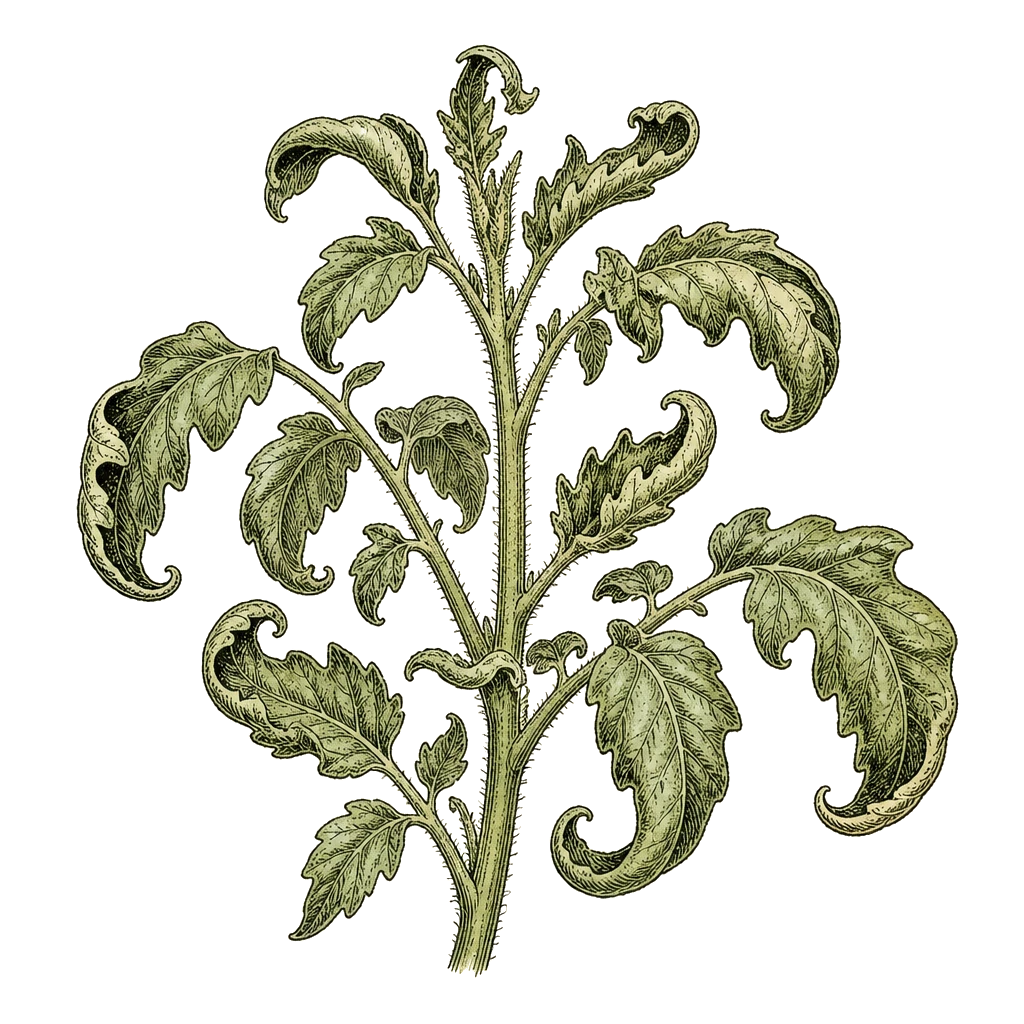
Most of the time, curling tomato leaves are physiological leaf roll: a stress response to heat and water, harmless to your harvest, and self-correcting once the weather settles. The two causes that actually cost you fruit are rarer, and they look different. Herbicide damage twists and curls the leaves downward and hits new growth first; virus cups and discolors the newest leaves at the top of the plant. Which one you have comes down to two clues — which leaves curled, and which way they rolled.
What’s actually happening
Physiological leaf roll is by far the most common version, and the least serious. As spring tips into summer and the plant is suddenly losing water faster than its roots can replace it, the lower, older leaflets roll upward and inward toward the midvein. That curl is the plant cooling itself: a rolled leaflet catches less of the sun’s energy and loses less water. The leaves turn thick and leathery but stay a normal green, and the veins don’t discolor. Indeterminate and high-yielding varieties do it most. University of Missouri and University of Illinois extension specialists are blunt about the upshot: it does not reduce yield or fruit quality, and plants recover on their own once the stress eases. There is nothing to spray for it.
The two that matter announce themselves on new growth. Herbicide injury bends petioles down, twists and cups the leaflets, can split or thicken stems, and may deform the fruit. The usual sources are 2,4-D or dicamba drifting in from a lawn or field, or, by the sneakier route, compost, manure, or mulch carrying long-lived pasture herbicides like aminopyralid, clopyralid, or picloram, which persist in those materials. Virus is the other one: tomato yellow leaf curl, curly top, and the mosaics cup the top leaves, yellow their margins, shrink the leaflets, and stunt the plant. Both can cause real yield loss, and neither has a cure.
What to do
The fix depends entirely on the cause, so read the plant first. If it’s the common case (older leaves, rolled upward, still green), do nothing dramatic. Even out your watering, since both drought and waterlogged roots trigger the roll, and aim for steady soil moisture rather than swings. Hold off on heavy nitrogen, prune indeterminate vines conservatively, and on stretches above 95°F give the plants some shade if you can. Expect it to resolve on its own once the weather steadies. If the curl hasn’t eased after a cooler stretch, or if it starts climbing into the newer top growth, go back through the checks above before you write it off as physiological.
If the curl is on new growth, twisting downward, and you’ve sprayed a weedkiller nearby or recently worked in fresh manure or compost, suspect herbicide and stop using the suspect batch of compost, manure, or mulch before you add more of it. Plants may grow out of mild exposure, but don’t eat fruit from badly injured plants: misshapen or distorted fruit is the clearest sign to throw the harvest out. If new growth keeps curling after you’ve cut the suspect input, pull it rather than wait on a crop that won’t come, and check with your local extension office if you’re unsure a lightly affected plant’s fruit is safe.
If the newest leaves are cupped, yellowing at the edges, and the plant is stunting, suspect virus — and confirm two or more of those symptoms together before you act, since any one alone has other explanations. There’s no treatment; pull the plant and bag it rather than composting it. Then check every other tomato in the bed for the same cupped, yellowing new growth, and where whiteflies are active, getting them under control on the remaining plants is the main lever for slowing spread. Check leaf undersides for whiteflies as you go.
When the pattern doesn’t map cleanly to any of the three, wait: even out watering, hold off on inputs, and watch which leaves are affected over the next several days before deciding.
Drop a note like “tomato leaves curling” into Arbor and it prompts you to record what’s around it — a recent heat spike, a pruning session, where on the plant it started, then keeps that timeline, so a week later you can see whether the curl tracked with the weather and eased (physiological) or crept up the new growth (worth a closer look).
Zone and season notes
Where whiteflies overwinter, such as Florida and other warm-winter areas, tomato yellow leaf curl virus is established and spread by them, so new-growth cupping with marginal yellowing there earns real virus suspicion and a check of leaf undersides for whiteflies. In colder zones, physiological roll dominates and shows up reliably at the spring-to-summer transition, when heat arrives before the root system has caught up. Herbicide carryover doesn’t follow zones at all; it follows your hay, manure, and compost sources, so it’s a nationwide risk regardless of climate.
When to worry and when not to
Lower leaves curling upward in July heat, normal color, fruit setting fine: not a problem, and not worth a second thought. New growth that’s twisting, discolored, or shrinking, especially with malformed fruit or a plant that’s stalling, is the signal to stop and identify whether you’re looking at herbicide or virus — because for those two, the right move is removal and prevention, not patience.