
Early Blight on Tomatoes: Treat It or Let It Ride
Brown spots with concentric rings, a bullseye pattern, on the oldest, lowest leaves of your tomato plant is early blight. What matters most: you probably don’t need to spray. Tomatoes tolerate a surprising amount of early blight without dropping their yield, so the real work is sanitation and airflow. Strip the infected lower leaves, mulch to stop spores splashing up from the soil, water at the base instead of overhead, and pick resistant varieties next year. Fungicides are a last resort for gardens where it’s chronic and severe, not a first response to a few spotted leaves.
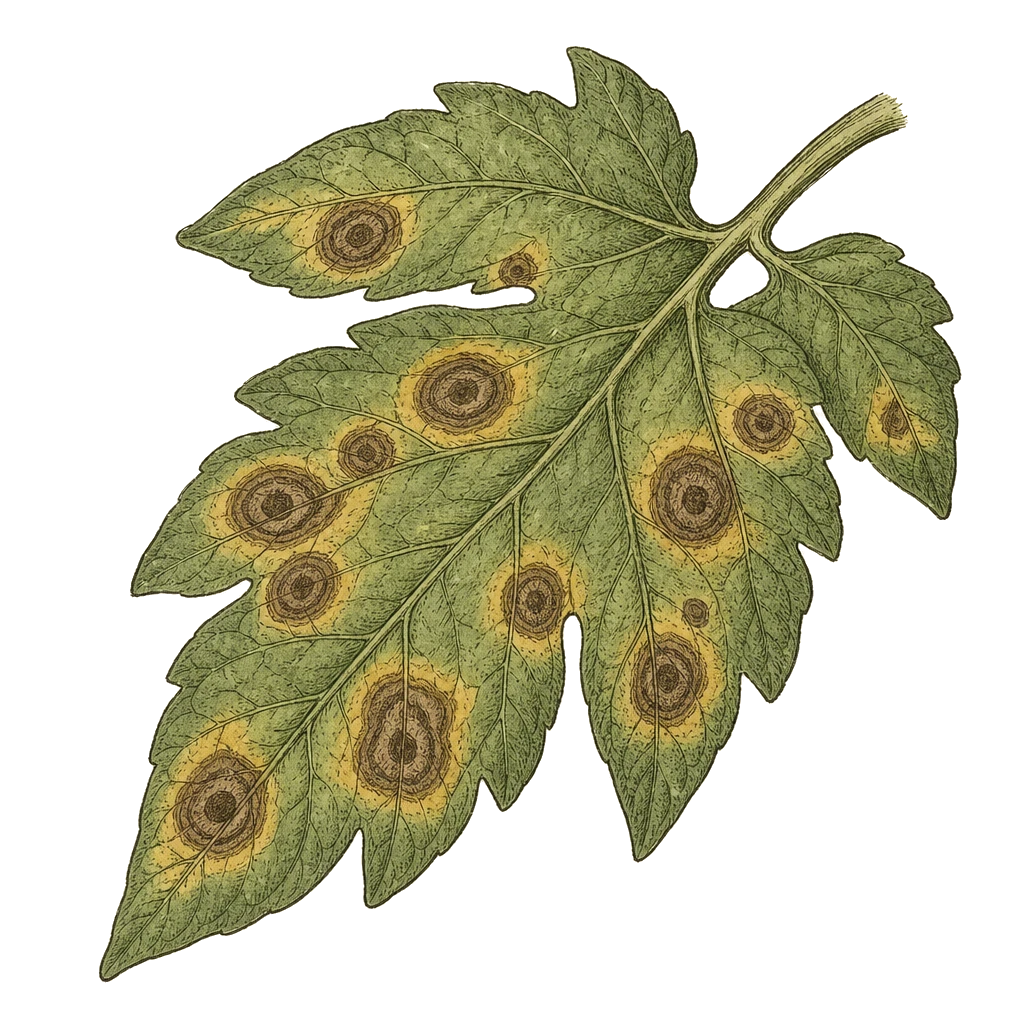
What’s actually happening
Early blight is a fungal disease caused by Alternaria solani, which overwinters on tomato debris, related weeds like nightshade, and sometimes the seed itself. The spores move from the ground up: rain and overhead watering splash them off soil and debris onto the lowest leaves, which is why the disease almost always starts at the base and climbs. The first spots are small and roughly circular, then enlarge into the dark concentric rings that give early blight its target-like signature. Left unchecked on a susceptible plant, it can defoliate the lower canopy and even kill the plant.
What it needs is warmth plus extended leaf wetness from rain, dew, or overhead irrigation — which is exactly the lever you control: keep leaves dry and well-spaced and you starve the fungus.
Two things to get straight. First, severity: the University of Minnesota is blunt that most home gardeners don’t need to treat tomatoes with a fungicide, because plants carry a lot of early blight without producing fewer tomatoes. Second, early blight is not late blight — a different, far more aggressive pathogen (Phytophthora infestans) that can collapse a whole plant within days in cool, wet weather. Early blight is the slow, lower-leaf, target-spotted disease most gardeners are looking at.
What to do
Once symptoms show, the disease is hard to stop, so the goal is to slow it and keep the plant producing. Remove the infected lower leaves and any fallen debris to cut the spore source closest to the plant, and don’t compost that material if early blight recurs in your garden.
Open the plant up. Wider spacing and thinning the lowest branches increase airflow, so leaves dry faster and the fungus gets less of the wet window it needs. Water at the soil line, not over the canopy, since overhead water both spreads spores and supplies the leaf wetness they require.
Mulch earns its place, with a caveat. One to two inches of mulch blocks soil-borne spores from splashing onto the lowest leaves. Don’t overdo it: a thick, soggy layer holds moisture and raises canopy humidity, working against you.
Then plan next season around resistance. Resistant cultivars, often flagged “EB” in seed catalogs, won’t be immune but show milder infection. Rotate tomatoes and their relatives out of that bed for at least two years — longer if you can manage it — to drop the spore load, and clear nightshade weeds and volunteer tomatoes, which host the fungus between crops.
If early blight is genuinely chronic and severe, fungicides with copper or chlorothalonil can help, but only preventatively: start before or as symptoms appear and keep to a schedule, since they protect clean tissue rather than cure infected leaves. Organic gardens can use fixed copper, potassium bicarbonate, or hydrogen dioxide. Rotate products so the fungus doesn’t build resistance.
Early blight tends to arrive at the same point each season, around mid-to-late June in the Upper Midwest, and the plants that come through it best are the ones where airflow and mulch were sorted before the first spot. Log “early blight on the bottom leaves” in Arbor and it drops a strip-and-mulch task on this week’s list, then records the date so next year it flags your watch window before the spots return.
Zone and season notes
Early blight isn’t a warm-versus-cold disease; it tracks humidity and leaf wetness, so where you garden changes the pressure far more than your winter does. In humid, summer-rainfall climates like the Upper Midwest, Northeast, and Southeast, frequent rain and heavy dew keep foliage wet, and the disease is a near-annual fixture. There the whole game is maximizing drying time: space generously, prune the lower canopy, never water overhead.
In hot, arid zones like the interior West, including much of 9–11, dry air does most of the work and pressure is far lower. When it appears, it’s usually self-inflicted — overhead sprinklers, or a canopy so dense it traps its own humidity and makes the leaf wetness the climate otherwise denies the fungus. The fix is to stop creating wet leaves: switch to drip or soaker hoses and thin the canopy. Same playbook as a humid garden, aimed at the one variable you’ve introduced.
When to worry and when not to
A few target-spotted leaves low on a vigorous plant in midsummer is normal and not worth spraying over; strip them, mulch, and let the plant keep setting fruit. Step up attention if defoliation climbs fast into the upper canopy and exposes fruit to sunscald, or if it hits young plants early before they’ve bulked up. And if a plant collapses in days rather than declining over weeks, with greasy gray-green blotches rather than neat rings, suspect late blight and treat it as the more serious problem.
Sources
- University of Minnesota Extension — Early blight in tomato and potato
- University of Wisconsin–Madison Division of Extension (Wisconsin Horticulture) — Early Blight
- University of Wisconsin–Madison Vegetable Pathology — Tomato Early Blight
- Cornell University — Managing Tomato Diseases Successfully
- eOrganic (Cooperative Extension) — Early Blight Management for Organic Tomato Production