
Rust on Vegetables: Causes and Controls
Rust on vegetables is a fungal disease that shows as small, reddish-brown pustules on leaves — gritty to the touch, not powdery white. The three crops most commonly hit in home gardens are asparagus (Puccinia asparagi), snap beans (Uromyces phaseoli), and sweet corn (P. sorghi and P. polysora). Cultural controls handle most home-garden cases without fungicides.
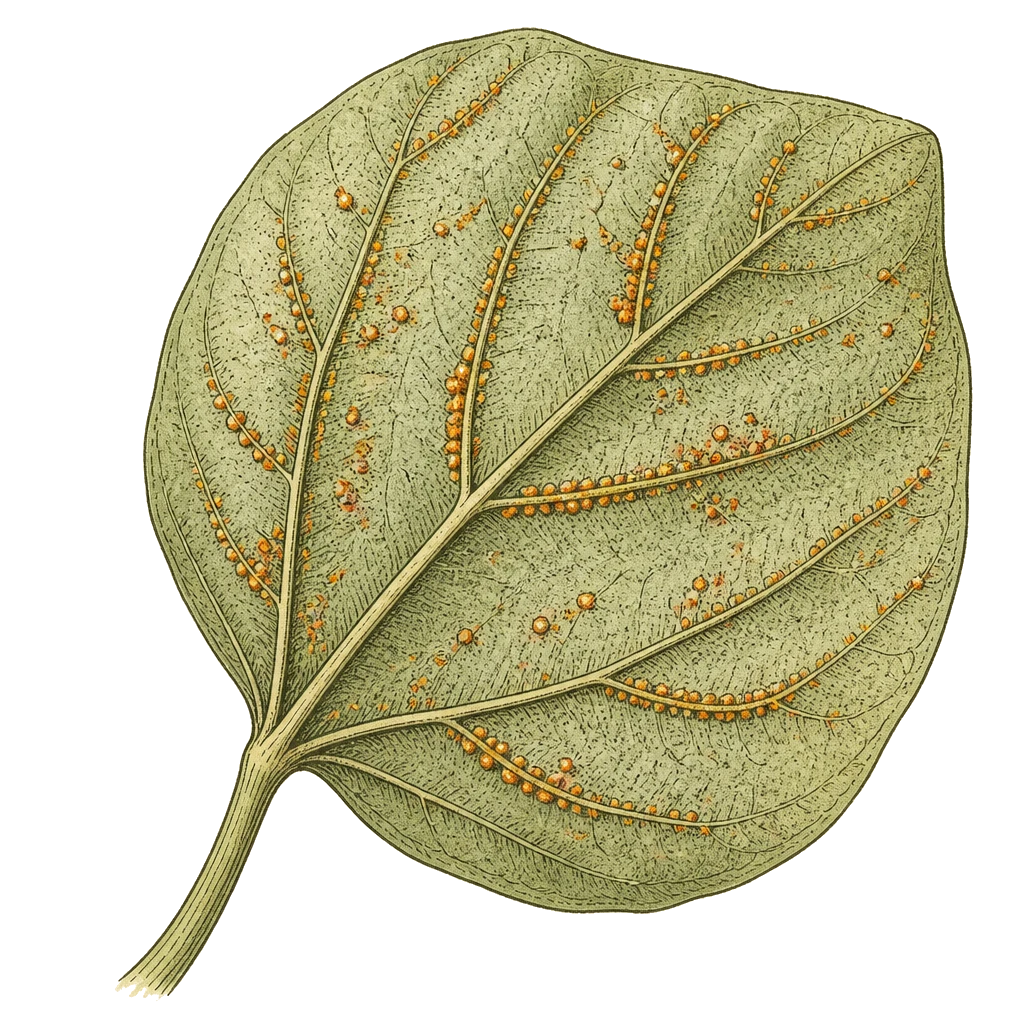
What’s actually happening
Rust pustules break through the leaf surface and release spores — that’s what makes them feel gritty. This distinguishes rust from powdery mildew, which sits on top of the leaf as a white surface coating and wipes off cleanly. The two diseases need different responses, so the texture check matters.
Each rust species is fairly host-specific. Asparagus rust has a single-host lifecycle: the fungus overwinters on old crop debris and needs no alternate host to complete its cycle. On asparagus, the first sign is light green oval spots on new shoots in April or May. Those spots progress to yellow cup-shaped lesions, then orange-to-brick-red pustules on the summer fern, and finally black spores on dead stalks by fall. Snap bean and sweet corn rust follow a similar pustule pattern on their leaves and husks.
Spread accelerates near 80°F with high humidity and repeated dew. The pathogen needs temperatures between 55°F and 90°F and several hours of leaf wetness for spores to germinate. A warm, damp stretch in midsummer can push a mild case into a serious one within days.
What to do
Start with the least disruptive fix. For snap beans, spacing plants so air moves freely between them shortens the leaf-wetness period that rust needs. Water at the base, or switch to morning watering so foliage dries before nightfall — overhead irrigation in the evening mimics dew and spreads spores even in dry climates.
Pinch off rust-infected leaves as soon as you spot them, but remove no more than one-third of a plant’s leaves at once. Removing more stresses the plant and can slow production more than the disease would have.
For asparagus beds three or more years old, cut every spear below the soil line and continue harvesting until approximately July 1. This removes fungal resting structures on stub tissue before they can generate the summer fern phase. Also remove any wild asparagus growing within 300 yards of the planting — volunteer plants are a reservoir for overwintering spores.
After harvest, the fern that grows through late summer is where asparagus rust does most of its late-season damage. If disease pressure has been high in previous years, apply a protectant fungicide on a 7–10 day schedule once the fern is up, starting before pustules appear. Choose a product labeled for rust on asparagus and follow its rate and pre-harvest interval exactly — those vary by product and matter on an edible crop. In most home gardens, though, fungicides are rarely necessary: spacing, watering timing, and resistant varieties handle most situations.
Sweet corn rust is usually the least of these three problems. Early-season hybrids often escape significant infection because inoculum levels are still low early in the season, so planting an early, rust-resistant variety is the main lever a home gardener has. Under heavy pressure, a protectant fungicide labeled for corn, applied before pustules appear, is the only effective treatment — again, at the label’s rate and pre-harvest interval.
When you log a rust sighting in Arbor, the app flags it as urgent and adds a treatment task to this week’s list — so your cultural controls line up with when the disease is actually spreading.
Zone and season notes
In humid regions — the Midwest, East, and Southeast — rust pressure builds faster because warm nights and morning dews are more frequent. Treat the asparagus harvest cutoff and fern protection schedule as non-negotiable there.
Overhead irrigation changes the calculus in drier western climates, where rust is otherwise uncommon in non-irrigated plantings: sprinklers that wet foliage in the evening recreate the dew conditions rust needs. Drip irrigation or soaker hoses at the base of plants remove that risk.
In warm-winter zones (9–11), asparagus rust can become active earlier in spring because debris never goes fully dormant. Remove all old fern tissue as soon as harvest ends — don’t wait for a killing frost to do the cleanup.
When to worry / when not to
A handful of pustules on a few bean leaves mid-season is normal. Pinch the leaves, adjust your watering, and monitor weekly. Worry when more than one-third of the canopy is showing active pustules — at that point, yields will be affected and a protectant fungicide is worth considering. Rust infects leaf tissue, not the harvest: bean pods and corn ears that look sound are fine to eat even when the foliage is heavily rusted.
On asparagus, the concern is cumulative: heavy rust in the fern phase drains the energy stored in crown roots, which lowers spear production the following spring. One bad year is recoverable. Repeated heavy rust over 2–3 seasons causes real long-term decline. The July 1 harvest cutoff and clean fern management are investments in next year’s crop.
Rust is distinct from leaf spot diseases, which cause flat brown or tan lesions that do not rupture the leaf surface, and from early blight, which targets the lower leaves of nightshades with concentric-ring lesions. If the spot feels smooth rather than gritty, you’re likely dealing with a different problem.