
Fall Vegetable Planting: When to Sow by First Frost
Fall planting math runs backward, not forward: take a crop’s days-to-maturity off the seed packet, add roughly two weeks to leave room for the harvest itself, and count back from your average first frost to find the sowing date. For most of the country, that date lands in the hottest stretch of mid-to-late summer, not the cool weather the season is named for. The seeds go in while the spring garden is still producing; the crop finishes as the weather turns.
How it works
“Fall gardening starts in fall” undersells how the season actually runs. Because everything is timed backward from one fixed point, first frost, the planting itself happens well before the weather changes, and by the time it’s genuinely cool outside the hardy crops are already established. Iowa State University Extension puts that state’s own first frost at September 30 to October 15. Look up your own average first frost with When to Plant Vegetables before running any of the math below; it moves by weeks depending on where you garden.
Vegetables sort into three cold-hardiness tiers for fall the same way they do for spring, and the tier sets how late a crop can push into cooling weather. Tender crops are damaged or destroyed by the first light frost. Semi-hardy crops tolerate temperatures into the upper 20s°F, though spinach is the outlier in that tier and takes cold into the low 20s. Hardy crops tolerate down into the mid-to-low 20s°F. Add roughly two weeks to whatever days-to-maturity a variety lists, so there’s time to pick the crop before frost, then count back.
Lettuce is the crop that most often fails to come up in high summer, and the reason is the soil, not the seed: its optimal germination range is 40 to 70°F, and little comes up once soil holds at 70°F or above. Hot soil holds back germination in some other vegetables too, but lettuce is the clearest case, which is why fall lettuce is usually started indoors, where temperature is controlled, rather than direct-sown into August soil.
What to do
The tiers translate into planting windows this way, worked against a first frost near the start of October — slide them earlier or later to match your own date:
| Hardiness | Fall planting window | Days to maturity | Crops |
|---|---|---|---|
| Tender (damaged by light frost) | By mid-July | 50–70 days | bush beans, cucumbers, summer squash |
| Semi-hardy (upper 20s°F) | Early August–mid-September | 25–60 days | lettuce (start indoors), radish, spinach |
| Hardy (mid-to-low 20s°F) | Mid-June–early August (transplant date; start seed 4–8 weeks earlier) | 60–90 days | broccoli, Brussels sprouts |
Plenty of other fall crops skip transplanting and go straight into the bed by direct sowing, on their own maturity clock: carrots run about 70 days, beets 50, radish 25, turnips 45 to 50, peas 60 to 70, and Swiss chard 50 to 60 — plug any of those into the same backward count from your own frost date.
Beets are that count in miniature: 50 days plus the two-week buffer is 64 days, so against an October 15 frost the seed goes in around August 12. Where the window is already tight, days-to-maturity is the lever — a 50-day variety fits where a 70-day one doesn’t, and the crop guides linked above carry variety notes worth checking before you buy seed.
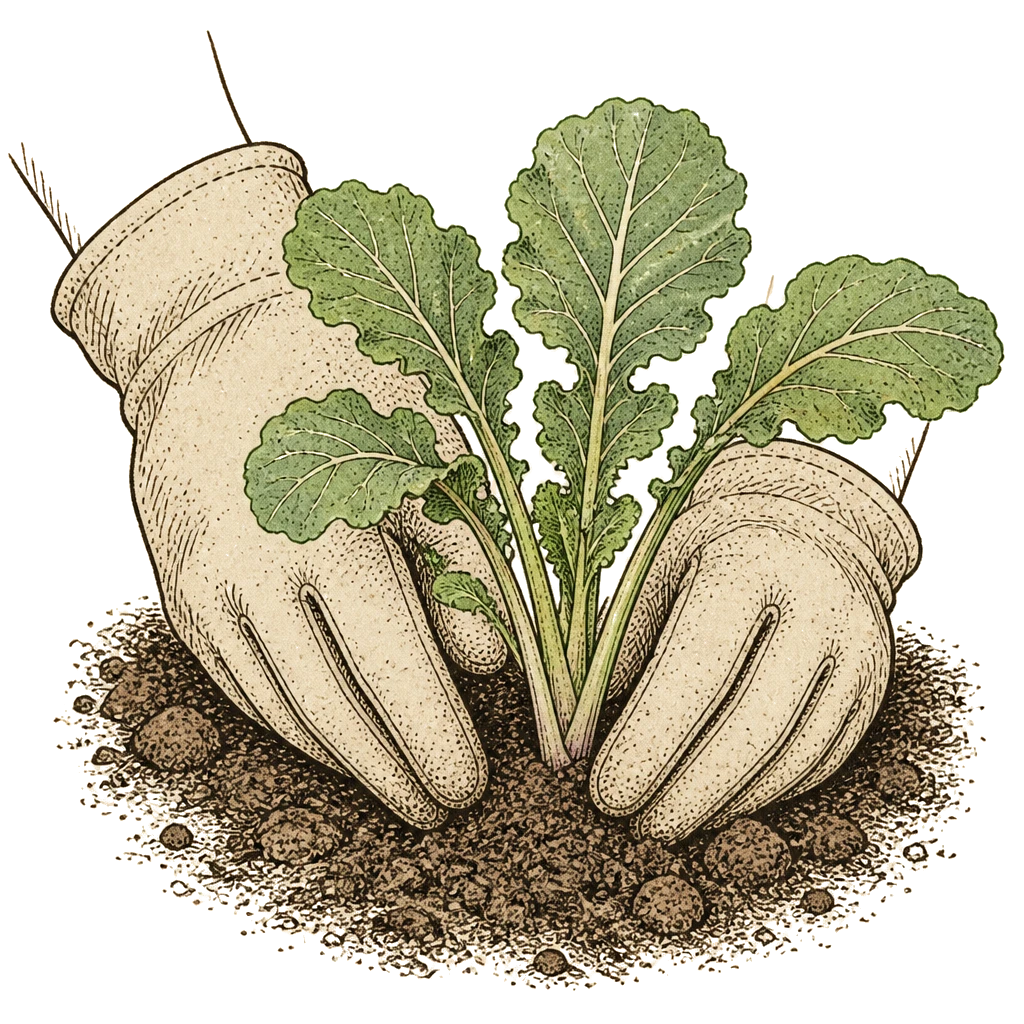
For the hardy transplants, broccoli and Brussels sprouts, start seed indoors 4 to 8 weeks before the fall planting date, shorter for a fast variety and longer for a slow one, then harden them off the same way you would in spring before you transplant. Water and mulch those transplants well once they go into July soil; mulch holds the moisture a shallow-rooted new transplant needs through the hottest stretch of the season.
Mulch also helps seed sown directly into hot soil: a light layer over the row cools the soil enough for germination to proceed on schedule instead of stalling in the heat. Salad crops and other leafy greens sown while it’s still hot are the ones worth shading — 30 to 50% cloth mounted on a support structure, never laid straight across the plants, cuts that stress without starving the bed of light. Even under cloth, keep the bed in six or more hours of direct sun. Skip anything denser than 50%; pale, leggy growth is the sign shade has gone too far. Whatever the density, keep air moving under a covered bed, because still air drives humidity up and disease with it. Left unprotected, heat stress on these crops shows up as leaf burn, bolting, or a bitter flavor rather than an outright failure to grow.
Running that backward count for a dozen crops by hand is tedious. If you log a fall crop in Arbor, it works that same count off your zone’s typical first frost and puts the sowing task on your week’s list when you confirm the plan.
Zone and season notes
How far back that first-frost anchor falls is the local part of this math — the same crop sown against a mid-September frost needs to go in weeks earlier than the same crop against a late-October one farther south. When to Plant Vegetables covers how to find your own average first frost and pull crop-specific offsets from it. Row cover or a cold frame can push that anchor date back a couple of weeks for hardy crops already established by first frost.
Gardeners in zones 9 and 10 should work from their own zone calendar rather than this timeline: the cool-season window runs differently where winters stay mild. Start from 9a, 9b, 10a, or 10b instead; each sets its dates against that zone’s own winter.