
Growing Spinach: Timing, Spacing, and Beating the Bolt
Spinach is ready to harvest in about 40 days from seed, tolerates frost down to 20°F for established plants, and will bolt the moment days get long and warm. Direct-sow seeds 1/2 inch deep starting 6 weeks before your last frost date, thin to 6 inches apart, and water consistently — about 1 inch per week. In warm-summer climates (zones 8 and above), treat fall and winter as your primary season; a summer crop is not practical without heavy shade infrastructure.
How it works
Spinach grows best when air temperatures stay between 50°F and 60°F. Seeds germinate most reliably when soil sits at 55–65°F, emerging in 7–10 days under those conditions. Above 85°F soil temperature, germination fails outright, and plants that germinated in warm soil bolt faster even after temperatures cool back down.
Bolting — the plant sending up a flower stalk and turning leaves bitter — is triggered first by day length, then by heat. Oregon State Extension research shows that once days exceed roughly 14 hours, bolting is largely locked in even in cool weather. Heat compresses the timeline: plants growing at 75–80°F bolt faster than those in cooler conditions, even with identical day lengths. Drought stress also speeds the process. Keeping soil consistently moist is the most reliable tool for delaying bolt once the plant is in the ground.
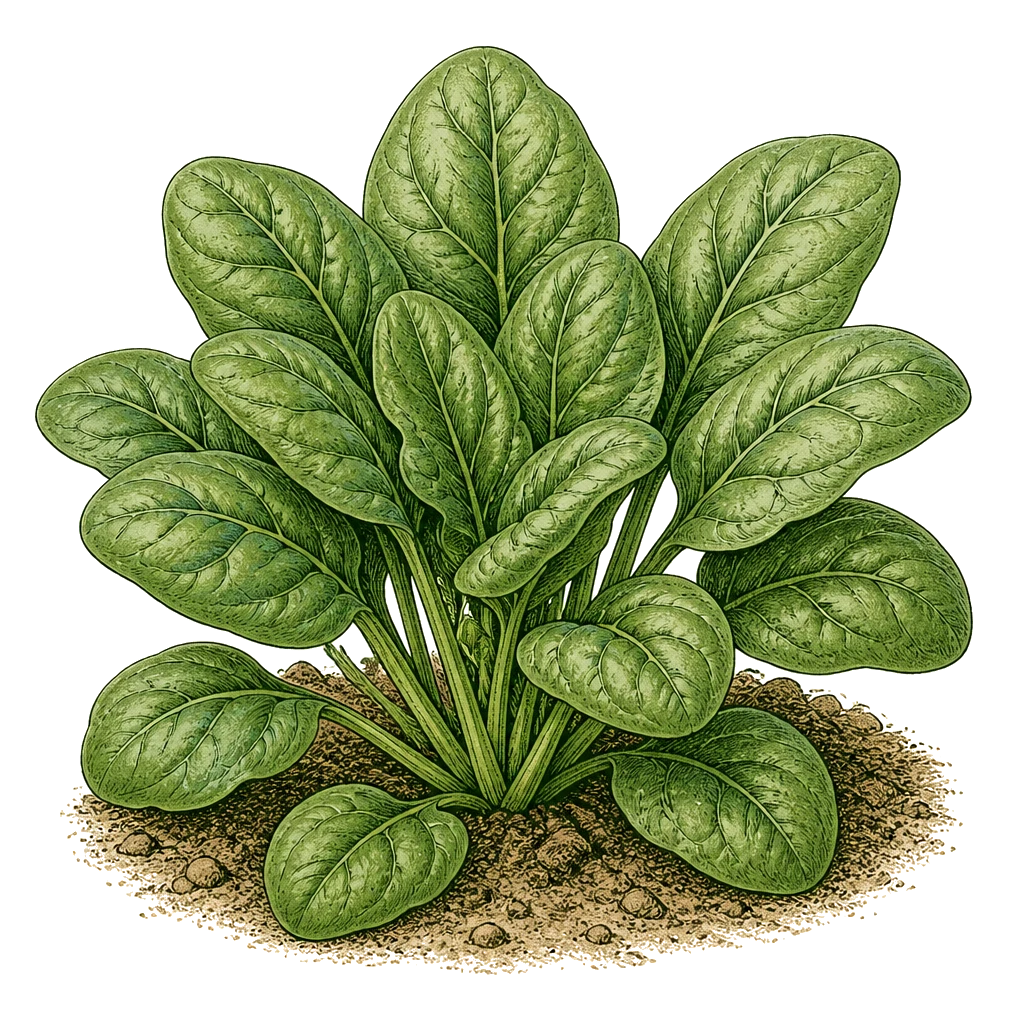
The three types available — savoy (crinkled), semi-savoy, and flat leaf — differ mainly in ease of washing and bolt resistance. Semi-savoy types like Tyee hold up best under spring pressure. Flat-leaf varieties like Space (an All-America Selections winner) are fast and easy to clean. Bloomsdale Long Standing is the classic savoy type, widely grown as a spring crop. For fall and overwintering, look instead to Winter Bloomsdale or Giant Winter.
What to do
Sowing and thinning. Direct sow seeds 1/2 inch deep. Penn State Extension and UMN Extension both recommend this depth across soil types. Once seedlings reach about 2 inches tall, thin to 6 inches apart for full rosettes; if you are growing for cut-and-come-again baby leaves, 3 inches is sufficient. In single rows, keep rows 12 inches apart. For details on direct-sow technique, see how to direct sow vegetable seeds.
Succession sowing. A single planting matures all at once, which means a week of frantic harvesting — or bolted leaves if you miss the window. Sow a new batch every 7–14 days from first planting through the spring window. Stop sowing 4–6 weeks before your typical daytime highs reach 75°F consistently; past that point, seeds won’t produce a harvestable crop before bolting.
In Arbor, logging each spinach sow date lets you set a task to start the next succession on schedule — which is where most home spinach growing falls apart, not in the sowing itself but in the follow-through every ten days while other things compete for attention.
Watering. Roots are concentrated in the top 6 inches of soil, so even short dry spells register as drought stress. Water to maintain consistent moisture, targeting about 1 inch per week. Under average summer-shoulder conditions, watering every 3 days is a reasonable rhythm. Do not let the soil dry out between waterings; Oregon State Extension is explicit that drought stress accelerates bolting.
Fertilizing. Nitrogen is the nutrient spinach wants most. About 4 weeks after thinning, side-dress with 1/4 cup of 21-0-0 nitrogen fertilizer per 10 feet of row, as recommended by USU Extension. Alternatively, apply a liquid nitrogen fertilizer at the rate on its label every 2 weeks from thinning through harvest. Skipping nitrogen does not help prevent bolting — a nitrogen-deficient plant bolts and yellows faster, not slower.
Extending the spring window. When your forecast shows daytime highs trending toward 75°F, install 30–50% shade cloth over the bed. Shade cloth reduces canopy temperature enough to add 2–3 weeks before bolting sets in — often the difference between a full harvest and losing half the planting to a heat spike.
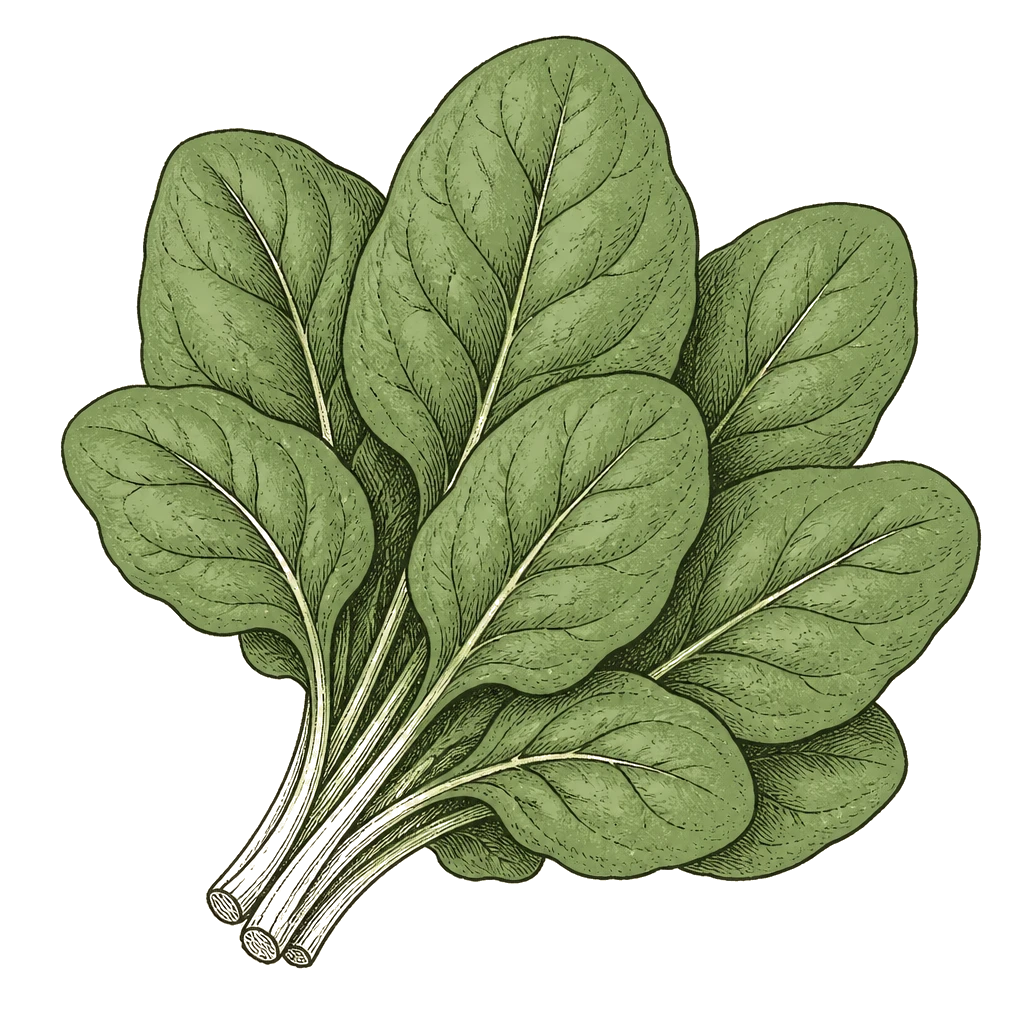
Harvesting. Cut outer leaves once they reach 3–4 inches long, or harvest the whole plant at once before the center starts pushing upward. Don’t wait past 40–45 days from sowing. Even slightly bolted leaves are edible but increasingly bitter; once the plant has committed to bolting, the window for palatable leaves is days, not weeks. For more on reading the signs, see bolting in lettuce and greens.
Companions. Spinach grows well alongside strawberries, peas, and radishes — cool-season crops that share its watering and timing needs without competing for nitrogen.
Zone and season notes
Zones 3–5. Spring planting starts as soon as soil reaches 40°F — UMN Extension reports April as the prime window in Minnesota. A fall crop sown in July can reach harvest before hard freeze in August or September. Two windows, both short, both worth using.
Zones 6–7. The spring window runs February through April; the fall window runs August through October. Succession-plant both windows. The spring window closes when May temperatures climb past 70°F daytime highs, which happens quickly.
Zones 8–9. Clemson Extension identifies fall and winter as the primary growing season in the Southeast. A spring planting started in February can succeed, but the window is narrow and closes by early March most years. Summer growing is not practical.
Zones 10–11. Fall through spring is the full productive season. Afternoon shade extends harvest into March along coastal areas. In warm-winter zones, sow in fall and late winter for spring harvest; the summer gap is not recoverable with ordinary home-garden methods.
Fall-grown spinach is often noticeably sweeter than spring crops. Cool nights shift the plant toward sugar storage, and the slower growth before day length drops below the bolt threshold means leaves develop more fully before harvest. Where summers are brutal, this is the season to grow spinach seriously.
Sources
- Penn State Extension — Growing Spinach, A Cool-Season Vegetable
- University of Minnesota Extension — Growing Spinach and Swiss Chard
- Utah State University Extension — How to Grow Spinach in Your Garden
- University of Maryland Extension — Growing Spinach in a Home Garden
- Clemson Cooperative Extension HGIC — Spinach
- Oregon State Extension — Tired of Bolting Spinach? Plant While Soil Is Cool
- Utah State University Extension — Spinach in the Garden (Digital Commons)