
How to Grow Beets: Planting, Thinning, and Harvest
Beets are a cool-season root crop, direct-sown 4 weeks before last frost and ready to harvest in 50–60 days. Every planting also delivers a bonus crop: thinnings and young tops are edible greens — the same crop bred for leaves instead of root is Swiss chard. The single step most often skipped is thinning — and it’s what determines whether you get a usable root at all.
How it works
What nurseries label a “beet seed” is actually a dried multi-germ cluster containing 1 to 4 true seeds. This is why multiple seedlings sprout from a single planted point, and why thinning is always required — no variety avoids it. Left unthinned, beets crowd each other and produce small, deformed roots even when everything else goes right.
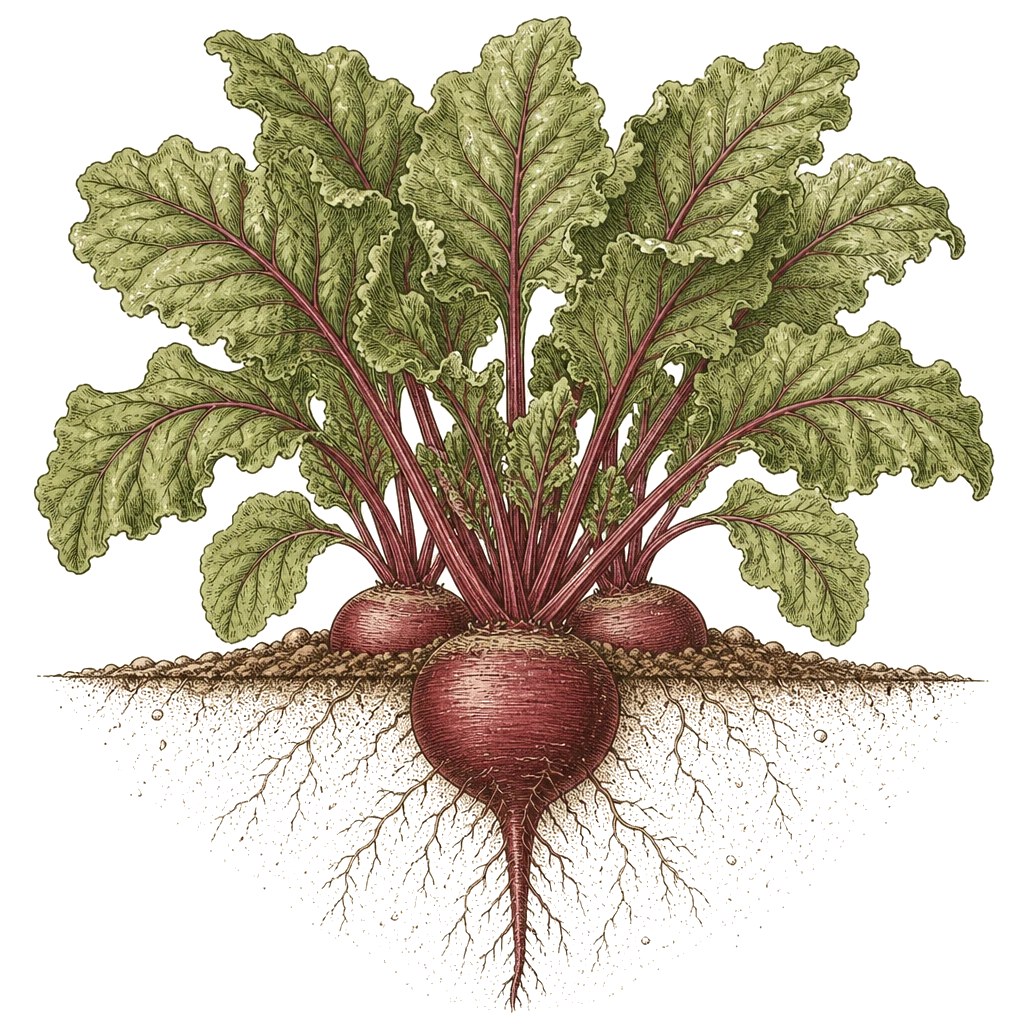
Roots develop underground while the broad leaves channel energy downward. Soil pH of 6.0–6.8 keeps nutrients available; beets are sensitive to acidic soils below pH 6.0. Seeds germinate in soil as cold as 41°F but take close to 40 days to emerge at that temperature. Optimal soil temperature for germination is 70–80°F, where seedlings appear in 10–15 days.
Boron deficiency destroys roots invisibly — the damage only shows when you cut open the root. Low boron causes cankers, black spots, and hollow or darkened interiors — a condition called hollow heart — with no outward sign until you cut into the root. A mildly affected root — small dark spots, slight hollowing — is still edible once the discolored tissue is cut away; severely hollowed or mushy interiors should be composted. Sandy soils are most prone to deficiency, and dry conditions compound the problem: drought restricts boron uptake even in soils with adequate boron levels. If your soil is sandy or you’ve seen hollow heart in previous seasons, work a granular trace-element fertilizer into the top 2 inches at the label rate before sowing.
What to do
Choose a site that gets at least 6 hours of direct sun per day; beets tolerate light afternoon shade in zones 8–11 but need full sun in cooler zones. Direct-sow seeds 1/2 inch deep, spaced 1–2 inches apart in the row, with rows 12–18 inches apart, the same direct-sown approach parsnips need. For sowing technique, see how to direct sow vegetable seeds. Water the bed immediately after sowing and keep the soil evenly moist through germination.
Thin in stages. When seedlings reach 1–2 inches tall, remove the weakest seedling from each cluster, reducing to one plant per 2 inches. A week or two later, thin again to 4 inches final spacing. Those thinnings go directly to the salad bowl — the young greens are edible and worth collecting.
When you add beets in Arbor, the app creates a thinning task timed for after germination, so the step most commonly skipped shows up on your task list before crowding has already cost you roots.
The main cause of cracked or woody roots is uneven moisture: long dry spells followed by heavy watering stress the developing root. Water every 3–4 days in normal weather, and every 1–2 days once air temperatures exceed 85°F.
Harvest roots at 1.5–3 inches in diameter, which falls at roughly 50–60 days from seeding. Past 3 inches, roots turn fibrous and the texture degrades. For harvest technique, see how to harvest vegetables. Young tops are also edible at any size, but leave most of the canopy on plants you’re still growing for the root.
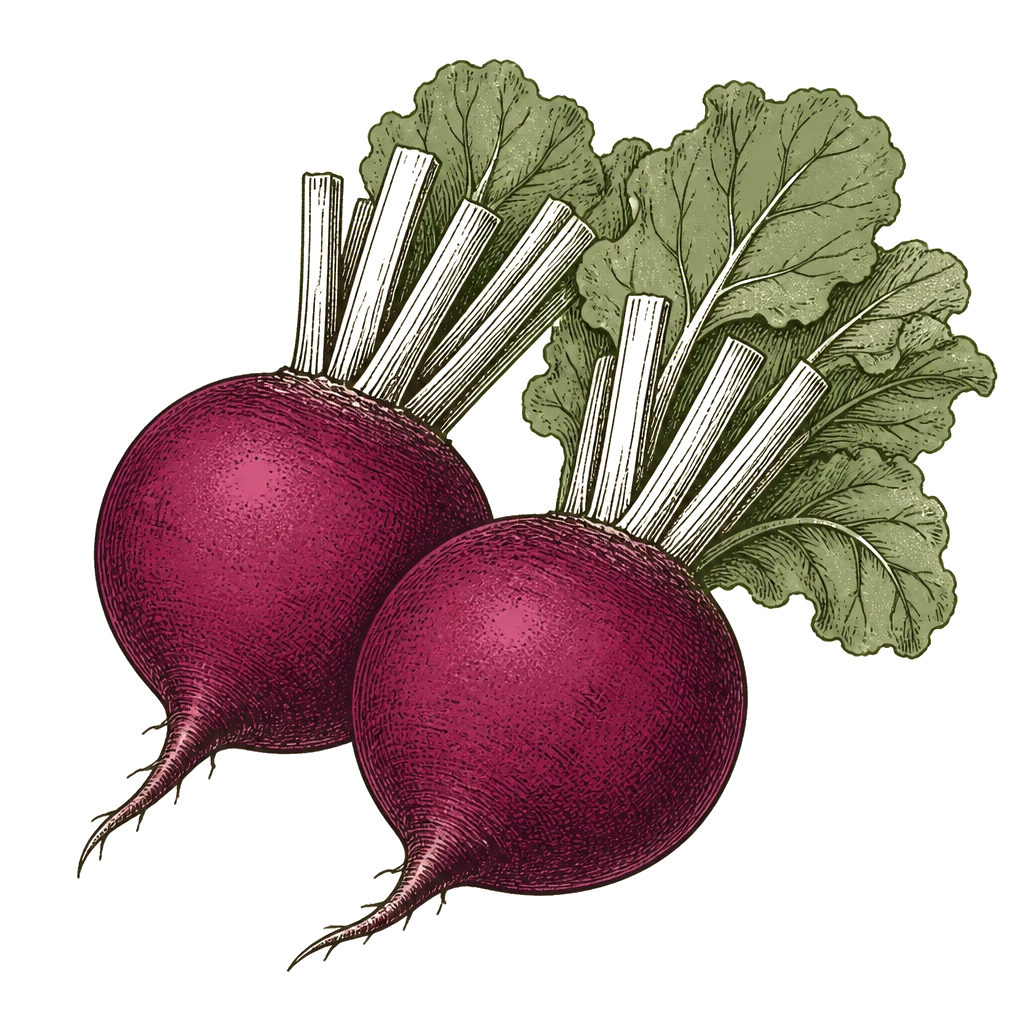
Detroit Red is the most widely available red variety. Golden beets are milder and don’t bleed on the cutting board. Chioggia is the Italian candy-stripe heirloom.
Plan for two crops per year. The spring crop goes in 4 weeks before last frost; sow the fall crop 8–10 weeks before the first expected fall frost, giving roots time to size up in warm soil before autumn temperatures sweeten them.
Zone and season notes
Zones 3–5: Spring planting is the primary crop, sown as soon as soil reaches 41°F — often March or early April. The fall window is tight because early frost cuts into the 50–60 day growing window; a light layer of mulch after the first frost can extend harvest somewhat.
Zones 6–7: Both spring and fall crops are practical. Fall plantings sown in late August or early September often produce sweeter roots because cooling temperatures drive sugar accumulation in the final weeks of growth. Beets tolerate frost down to 26°F, so fall harvest can run into November.
Zones 8–9: Fall through early spring is the primary season. A spring crop can succeed if seeds go in before consistent 85°F days arrive; once daytime highs hold above that threshold, root development slows and bolt risk increases. Sow the fall crop in September for harvest through November or December.
Zones 10–11: October through December is the planting window, with harvest running through February or March. UF/IFAS extension notes that golden and Chioggia varieties handle the warm end of the season better than red types.
Sources
- University of Maryland Extension — Growing Beets in a Home Garden
- Iowa State University Extension — Growing Beets in the Home Garden
- Texas A&M AgriLife Extension — Growing Beets
- Utah State University Extension — Beets in the Garden
- South Dakota State University Extension — Table Beets: Harvest and Storage
- University of Florida IFAS Gardening Solutions — Beets
- University of Minnesota Extension — Boron for Minnesota Soils
- Michigan State University Extension — How to Grow Beets
- Cornell Cooperative Extension — Growing Guide: Beets
- West Virginia University Extension — Growing Beets in West Virginia