
How to Grow Carrots
Carrots succeed or fail in the soil before a single seed goes in. Loosen the bed to at least 12 inches deep, clear every rock and clod, and choose a variety matched to your soil texture. Then direct sow 4 weeks before your last frost date in cool climates, or from October through January in warm-winter zones (8–11) where carrots are a fall crop. Leave any of those steps out and you will harvest forked, misshapen roots instead of straight ones — no matter how carefully you water.
How it works
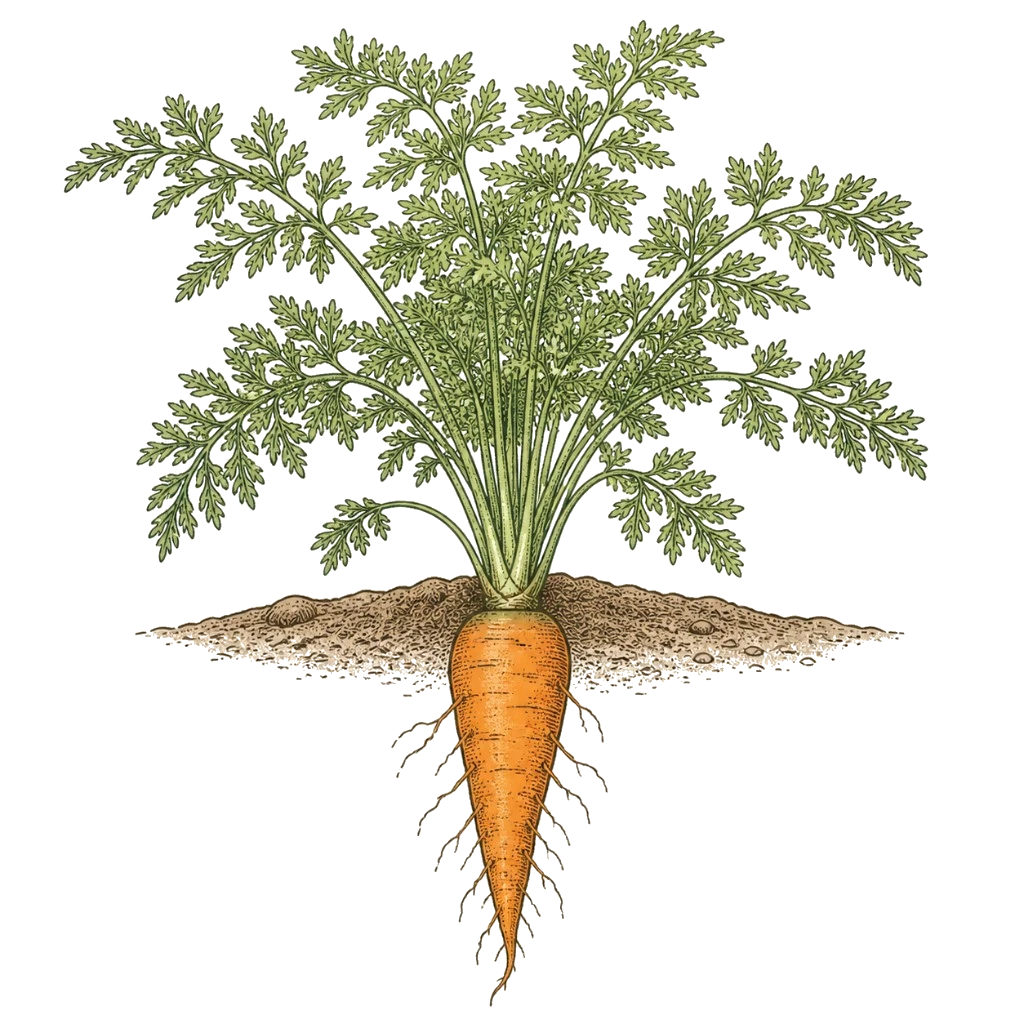
Carrot roots follow the path of least resistance straight down. Any compaction, stone, or hard pan forces the tip sideways, producing forks and stunted growth — a physics problem, not a pest or disease problem. Loose, stone-free soil is the fix, and it comes first: variety choice only decides how badly a bad bed shows up at harvest.
Expect germination to take 7–21 days, slower than most vegetables and driven mainly by soil temperature. Seeds sprout most reliably at 55–75°F, and 45°F soil is the practical floor for sowing. Heat cuts the other way: past about 85°F carrots are working against the weather, which is why summer sowings come up thin. During those first three weeks, consistently moist surface soil matters more than anything else you control. A dry top inch is the most common cause of patchy stands.
Get your fertilizing strategy right before you sow. High nitrogen is counterproductive: it drives leafy top growth at the expense of root development and often produces hairy, forked roots. Carrots build their roots on potassium and phosphorus instead, which is why University of Georgia Extension caps fertilizing at a single light side-dressing after the tops are up. Push more than that and you trade root quality for leaves.
What to do
Soil prep before sowing. Work the bed to 12–15 inches deep — 15 inches if you plan to grow long Imperator types. Test pH and target 5.8–6.7. To raise a low pH, work in ground limestone; to lower a high one, use elemental sulfur, and ask your county extension office for rates by soil volume. If your soil is clay-heavy, skip Imperators entirely and choose Chantenay or short Nantes varieties instead. Those types produce blunt or gently tapered roots 5–7 inches long that can push through dense soil without forking the way an 8-inch Imperator would. For very heavy clay, Thumbelina — a round, golf-ball-sized type — is the most reliable option.
Fertilizing. Before sowing, incorporate 30 lbs of 5-10-10 per 1,000 square feet — about a pound across a 4-by-8-foot bed — and rake it in. Once tops reach 4 inches, side-dress once with 1 lb of 34-0-0 per 100 feet of row, or a little over an ounce per 8 feet. That is the last nitrogen the bed needs.
Sowing and thinning. Sow seeds 1/4 to 1/2 inch deep in rows 12–18 inches apart. Seeds are small and nearly impossible to place precisely, so plan to thin. Once seedlings reach 2 inches tall, cut them to 2–3 inch final spacing at soil level — do not pull, because pulling disturbs the roots of neighboring plants.
Moisture during germination. Check the soil surface daily in dry weather during the first three weeks, and water lightly whenever the top inch has dried. A thin straw mulch over the row slows evaporation without capping the seedbed the way a dried crust does. Once plants are established, water about 1 inch per week and irrigate deeply enough to wet the soil 4–6 inches down. Sandy beds need more frequent watering: an inch of water penetrates roughly 10 inches in sand but only about 6 inches in clay, so root-zone moisture runs out faster.
When you log your carrot planting date in Arbor, it recommends a thinning reminder and tracks days to maturity. The harvest window then surfaces on your task list at the right time, rather than when you notice the tops flopping over.
Harvesting. Pull a test carrot when the shoulder — the visible top where the root meets the soil — reaches 3/4 to 1 inch across. Most varieties are ready 65–75 days from sowing. A light frost after the roots have sized up works in your favor: carrots convert stored starches to sugars in the cold and tolerate temperatures down to 26°F. That is why late-season carrots taste sweeter than summer ones. Cut the tops off as soon as you pull the roots, or they go on pulling moisture out of the carrot. Topped roots hold 4–5 months at 32°F and 90–95% humidity; a refrigerator crisper runs drier and buys a few weeks.
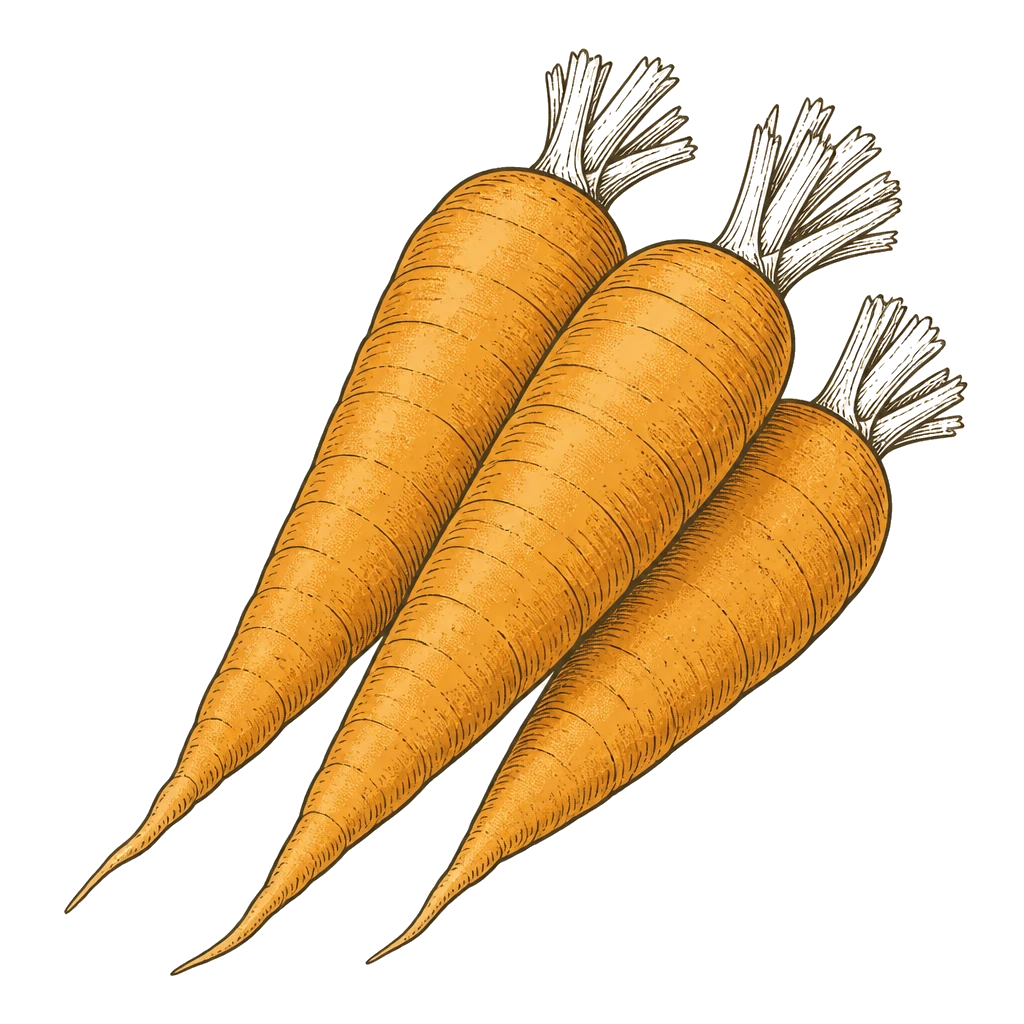
Carrots grow well alongside onions, lettuce, tomatoes, and rosemary. Give them distance from dill, fennel, and parsnip — a related root that shares carrots’ pests and slow-germination quirks, so crowding the two together compounds both problems.
Zone and season notes
Zones 3–5: Direct sow as soon as soil reaches 45°F, about 4 weeks before your average last frost. A fall crop started in late July gives roots time to size up before hard freezes arrive. In Zone 5 and the warmer parts of Zone 4, a thick mulch layer lets roots overwinter in the ground to be dug through the winter.
Zones 6–7: Both spring and fall crops are viable. Time spring sowing to finish sizing before sustained heat arrives, since hot soil thins stands and stalls root growth. A fall crop — sown about 75 days before your average first frost — typically produces better stand uniformity and sweeter roots than a spring crop grown through summer.
Zones 8–11: Carrots are a cool-season crop in warm-winter zones, not a summer vegetable. Sow from October through January. The spring window closes quickly as temperatures climb in March and April. An October planting hits the year’s best germination conditions and misses the heat that collapses spring stands.
Sources
- University of Minnesota Extension — Growing Carrots and Parsnips in Home Gardens
- University of Maryland Extension — Growing Carrots in a Home Garden
- University of Georgia Cooperative Extension — Home Garden Carrots
- UC IPM — Cultural Tips for Growing Carrot
- Texas A&M AgriLife Extension — Carrots (E-505)
- Michigan State University Extension — How to Grow Carrots