
How to Grow Turnips: Spacing, Watering, and Harvest Timing
Sow turnip seed 1/4 to 1/2 inch deep and 1 to 2 inches apart, in rows 12 to 30 inches apart. Once the second set of leaves appears, thin the seedlings to 3 to 4 inches apart. Give them 1 to 1.5 inches of water a week, and pull the roots at 2 to 3 inches across, while the flesh is still mild and tender. A standard variety takes 45 to 65 days from seed to harvest, and the fastest types are ready in about 40. Turnips grow in both spring and fall, and the fall crop is usually the better one.
How it works
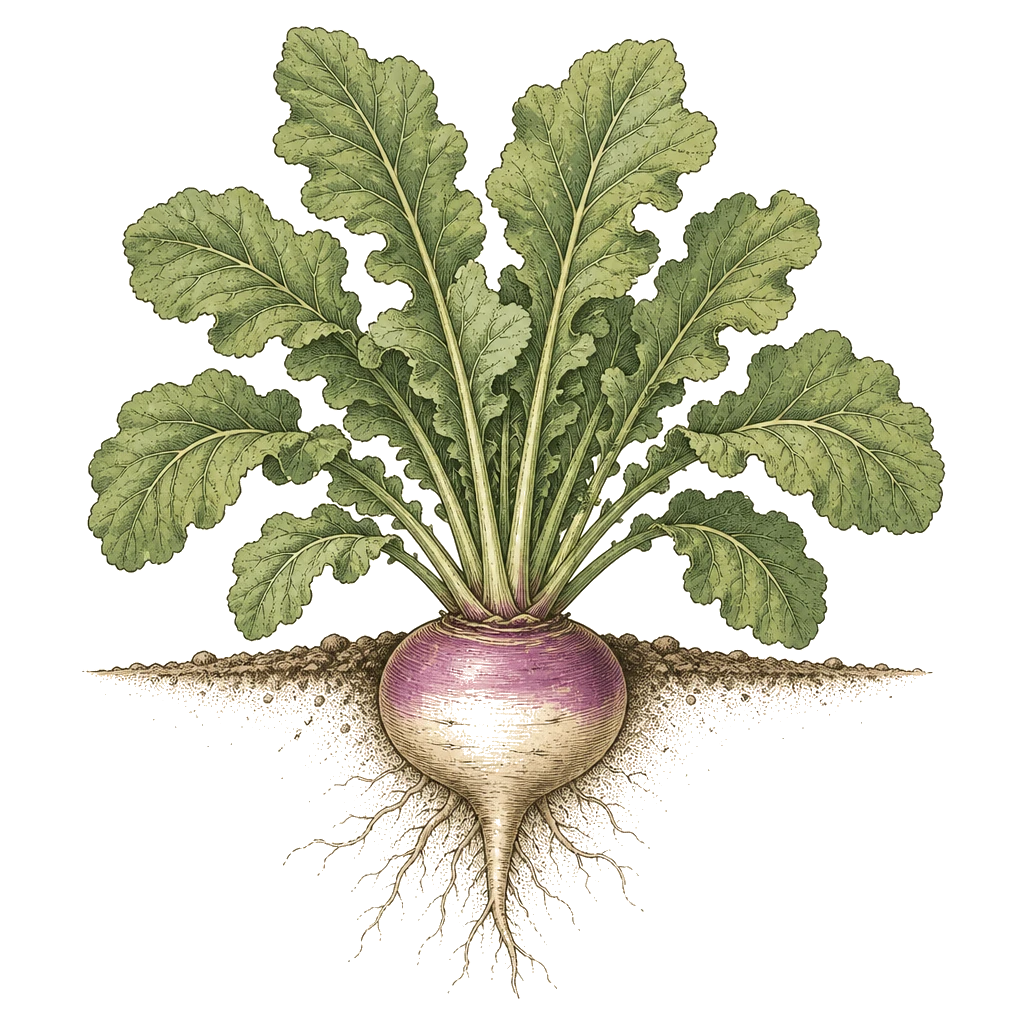
Turnips are a fast, cool-season root crop, and most of what goes wrong with them traces back to two things: root disturbance and inconsistent water. The taproot — the single main root that swells into the turnip you eat — does not tolerate being moved. Transplanting damages its growing tip, and the root forks into several branches. Sow turnips where they will grow, never indoors, the same rule that governs carrots. Once seedlings are up, thin them. Final spacing runs 3 to 6 inches depending on the root size you want, and roots left crowded stay small.
Sweetness comes from cold. A light frost is enough to bring it out, which is why fall turnips often taste better than spring ones. A turnip that tastes sharp or feels woody isn’t a bad variety or an inherently strong-flavored vegetable; it is a root that dried out or sat in the ground past usable size. Summer heat does something different, leaving roots spongy at the center with a very strong flavor.
What to do
Sowing and thinning
Turnips want full sun, at least six hours of direct sun a day; a bed that loses part of the afternoon will still crop, just less heavily. Direct-sow an inch or two apart and don’t skip the thinning step — crowded rows are a common cause of small, misshapen roots. Thin once true leaves appear: that is the second set of leaves, which look like miniature turnip foliage rather than the plain rounded pair that came up first. Three to four inches between plants suits most home beds and sits comfortably inside the 3-to-6-inch range.
If you want greens as well as roots, take a few outer leaves from each plant rather than stripping it bare. Leaves are what size the root, and stripping them again and again is what stalls it. A full greens harvest comes in around 50 days after sowing, and the seedlings you pull while thinning are edible as baby greens.
Watering and feeding
Aim for 1 to 1.5 inches of water a week, counting rain and irrigation together. Two windows matter more than the rest: the first weeks after seedlings emerge, and the stretch when roots are actively sizing up. Keep the soil moist rather than saturated, and pay closest attention during dry spells.
Go easy on nitrogen beyond a balanced feed worked in before planting. Too much of it pushes leafy top growth at the expense of the root, which is how a bed ends up producing fine greens and nothing underneath. A soil test tells you where your bed actually stands. Your county extension office, the university-run service that answers home-garden questions, is where to get one. Clemson puts the target soil pH at 6.0 to 6.5, and that same test tells you how much lime or sulfur it takes to get there.
Protecting seedlings from flea beetles
Flea beetles chew small shot-hole pits in the leaves of young seedlings. Their larvae feed on roots as well, and turnips are as exposed to that stage as radishes are.
Timing matters more than the hole count. Row covers earn their keep while the seedlings are small, which is when the planting is most vulnerable; pitting on plants that are already sizing roots is far less urgent. A floating row cover laid over the bed keeps the adults off, and clearing weeds and old crop debris nearby removes the places they overwinter.
Where beetle pressure is heavy, spinosad is one of the sprays listed for home use, and some spinosad products are cleared for organic growing. Kaolin clay on the foliage works as a repellent. Follow the label’s rate and days-to-harvest interval, since with turnips you may be eating both the leaves you sprayed and the root beneath them. Some growers sow radish nearby as a trap crop to pull beetles away, though it hasn’t been tested in the Northwest trials that recommend it — worth trying, not your main defense.
If you log something like “flea beetle holes on turnip leaves” as a note in Arbor, it flags the entry as urgent and adds a row-cover task to that week’s list.
Pulling roots
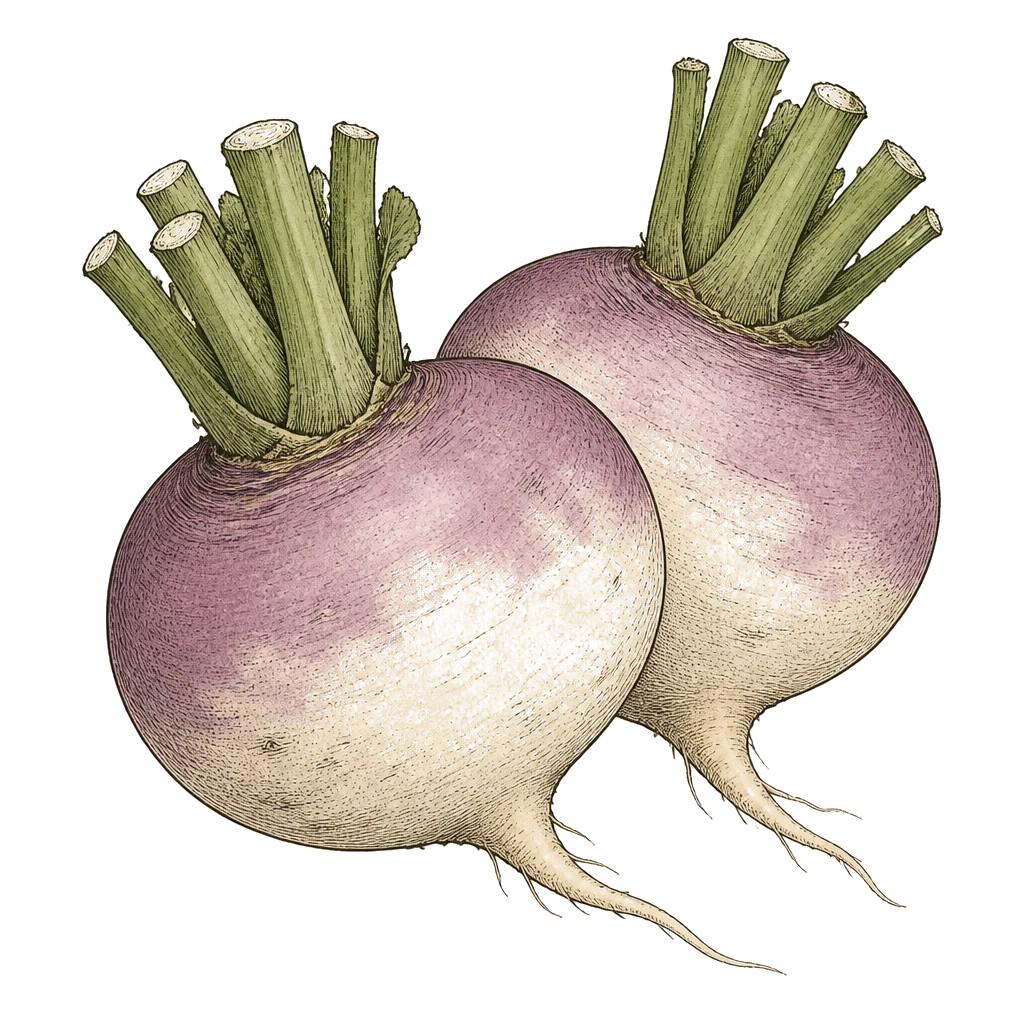
Pull at 2 to 3 inches across. You do not have to dig one up to check. A turnip’s shoulders, the top of the root, usually sit above the soil line, so the width you can see is the width you are judging, and a ready root is about the size of a tennis ball. Past that size, turnips turn woody and pithy — dry and spongy at the center. A light frost is the only cold you want on them; a hard freeze damages the roots outright.
Zone and season notes
Turnips are brassicas — the cabbage family — and share that family’s preference for cool weather, the same way cabbage does. For a slower-maturing cool-season root, see parsnips. Both planting windows work, but the fall crop is the better bet: cool weather avoids the quality decline that heat brings on, and frost sweetens the root instead of damaging it. Roots left in the ground through hot weather turn pithy as well, and their flavor turns very strong. A summer sowing is the one window worth skipping in any zone.
Time a fall planting by counting back from your average first frost date, not by a fixed calendar date. Take the days to maturity printed on the seed packet and add about ten days for the slower growth that comes with cooling weather. Count that total back from your frost date. A mid-range turnip at 55 days becomes about 65, and that extra margin is what gets roots finished before hard weather arrives. In Minnesota’s short season that means sowing as early as August 1; in South Carolina the same window stays open into September. Shorter rules of thumb circulate, six weeks before frost among them, but six weeks falls under the 45 to 65 days the crop needs — treat it as a floor for fast salad types rather than a general rule.
Sources
- University of Minnesota Extension — Growing turnips and rutabagas in home gardens
- Clemson Cooperative Extension, Home & Garden Information Center — Turnips & Rutabagas (HGIC 1324)
- Clemson Cooperative Extension, Home & Garden Information Center — Harvesting Vegetables
- University of Illinois Extension — Turnip | Home Vegetable Gardening
- Iowa State University Extension and Outreach, Yard and Garden — Growing Turnips and Rutabagas in the Home Garden
- University of Georgia Cooperative Extension — Home Gardening (B577)
- Pacific Northwest Pest Management Handbooks (OSU/WSU/UI Extension) — Turnip (roots and tops) and rutabaga — Flea beetle
- Washington State University Extension, Hortsense — Turnip, Rutabaga: Flea beetles
- Purdue University Extension Entomology — Flea Beetles (E-74)
- Purdue University Vegetable Crops Hotline — Insect Spotlight: Flea Beetles
- University of Maryland Extension — Flea Beetles on Vegetables
- Colorado State University Extension — Fertilizing the Vegetable Garden (7.611)
- University of Tennessee Extension — Fall Vegetable Gardens (SP291-G)
- Oregon State University Extension, College of Agricultural Sciences — Turnip Greens