
How to Grow Cabbage: Planting Through Harvest
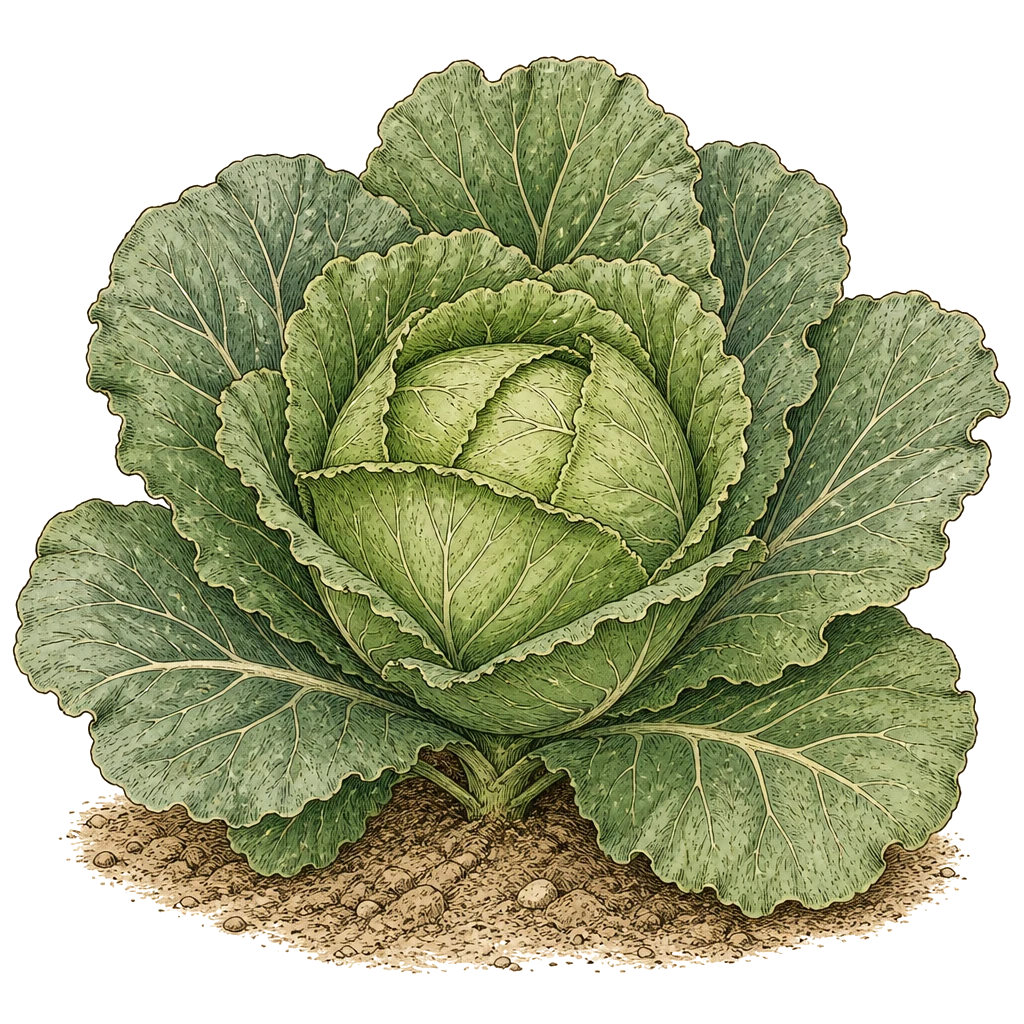
Cabbage is a cool-season crop that wants steady moisture, moderate feeding, and temperatures under about 75°F to form tight, solid heads. Space plants 12 to 18 inches apart in rows 2 to 3 feet wide, hold soil pH between 6.0 and 6.8, and feed it early rather than late, since nitrogen applied after heads start to firm causes splitting and loose heads. Start seed indoors 4 to 8 weeks before your last frost for a spring crop, or sow in midsummer for a fall harvest where winters stay mild. Harvest when a head feels solid all the way through, typically 60 to 100 days from seeding, depending on variety.
How it works
Two internal triggers explain most of what goes wrong with cabbage, and neither one is about starving or overwatering it. Bolting happens because cold exposure “vernalizes” the plant, making it competent to flower. Michigan State Extension puts the dose at two to eight weeks of sustained temperatures in the vernalization range, once plants carry somewhere between two and 15 leaves, with long-maturing varieties taking as long as 20 weeks. Vernalization only makes flowering possible; what actually pushes the stalk up is heat stress later in the season. The trigger isn’t permanent either. Sustained warmth above 61°F immediately following the cold snap can “devernalize” the plant and reverse its progress toward flowering, which is why one cold night in spring doesn’t automatically doom a planting.
Head splitting runs on similar logic. A mature, firm head that gets a sudden surge of water, usually heavy rain landing after a dry spell, pulls in more moisture than the outer leaves can accommodate, and the head cracks under the pressure. Tipburn gets blamed on low soil calcium, but it’s a transport problem rather than a supply problem: calcium only moves through the plant in the transpiration stream, so under uneven soil moisture, high humidity, or excess nitrogen it never reaches the fast-growing inner leaves, regardless of how much calcium sits in the soil. Foliar or soil calcium applications don’t reliably fix it. Clubroot follows its own logic worth knowing before you plant: NC State Extension puts the pathogen at its most active in acidic soil under pH 7.0 at soil temperatures of 64° to 77°F, which overlaps the window when cabbage usually goes in the ground.
What to do
Starting seed and setting plants out
Sources split on timing: University of Maryland and University of Minnesota Extension both give 4 to 6 weeks before your last frost date; Ohio State gives 6 to 8. Either way, aim for around 75°F to germinate, then grow transplants on nearer 60°F so they stay stocky instead of leggy. Set them out about 2 weeks before your last spring frost. For a fall crop, sow about three weeks before you plan to set transplants out — mid-July to early August in the mid-Atlantic, earlier in cold-winter zones and later where fall runs long. Count back from your first fall frost using the variety’s days to maturity.
Spacing and soil pH
Space plants 12 to 18 inches apart in rows 2 to 3 feet apart for full-size heads. Tightening spacing to 9 to 12 inches trades head size for head count, giving 2- to 3-pound heads rather than full-size ones — a reasonable move if you want more, smaller cabbages from the same bed. Keep soil pH at 6.0 to 6.8 for ordinary growth, and if clubroot has shown up in that bed before, lime it toward 7.2 or higher. How much lime that takes depends on your soil’s starting pH and texture, so get a soil test rather than guessing at a rate.
Feeding and watering
Cabbage needs nitrogen early and none late. Work 2 to 3 pounds of 8-16-16 per 100 square feet into the bed about two weeks before transplanting, then side-dress with three-quarters of a pound of urea (46-0-0) per 100 feet of row two to three weeks after plants go out — Ohio State’s rates. Stop nitrogen entirely once heads begin to firm up: extra feeding at that stage pushes leaf growth instead of head density and raises the odds of splitting. Water consistently, about an inch a week, more often on sandy soil, and hold that rhythm steady as heads mature rather than letting the bed swing between dry and soaked. That even moisture is also what keeps calcium moving into the inner leaves, so it is the practical defense against tipburn as well. If you log a note like “heads starting to firm up” in Arbor, it flags a task to cut back on nitrogen and adds a harvest check to that week’s list, so the splitting window doesn’t sneak up on you.
Harvest
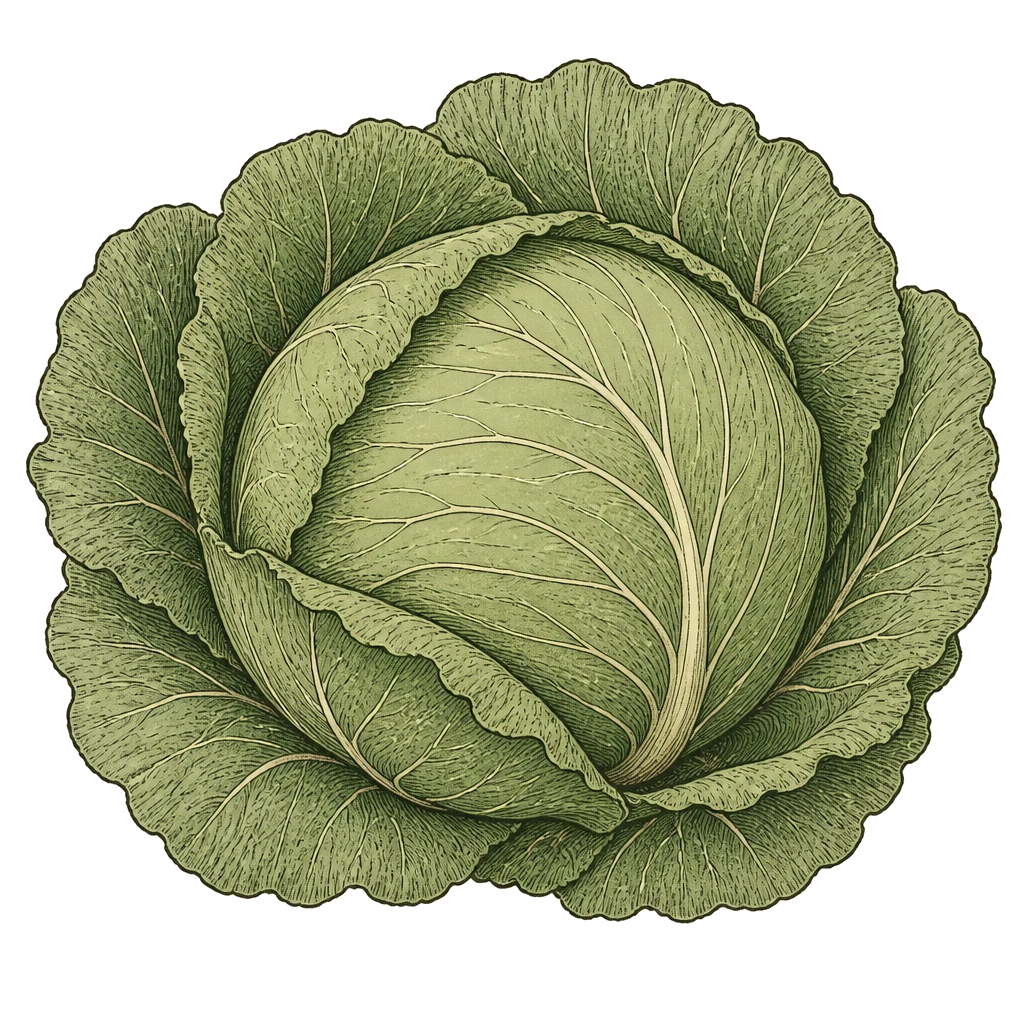
Cut a head once it’s firm from the outer leaves to the core — variety decides the size, not the calendar. If a hard rain is coming and a head is already firm but you’re not ready to cut it, buy a few extra days by slowing water uptake: twist the plant until you feel a few roots give, or sever roots on one side with a spade. Heads keep up to 5 months at 32°F and 95 to 100% relative humidity. Strip the loose outer leaves before storing, and skip washing until you’re ready to use it, since the added moisture speeds spoilage.
Rotation and pests
Rotate cabbage and other brassicas out of that bed for at least four years to keep clubroot and other soil-borne rots from building up, and stretch that to seven in a bed that has already had it. Cabbage is also one of the vegetables aphids commonly colonize; check the undersides of leaves regularly and see aphids on vegetables if you spot them.
Zone and season notes
In cold-winter zones, cabbage is primarily a spring crop, and spring is when vernalizing cold is most likely to catch young plants: a long cool spell can leave them competent to flower, and the heat that arrives later in the season finishes the job. Starting transplants indoors and setting them out on schedule, rather than direct-sowing into unpredictable spring weather, limits that exposure. In mild-winter zones, cabbage does better as a fall and winter crop. Sowing in midsummer for a harvest that matures through the cooler months sidesteps the problem almost entirely, since the plant never sees a vernalizing cool spell followed by summer heat before it’s cut. Mature heads are more frost-hardy than most gardeners expect, holding up to temperatures around 18° to 20°F without serious damage, so a light freeze late in the season isn’t a reason to rush harvest. This guide covers cabbage specifically; for its cole-crop relatives, see growing broccoli and growing cauliflower.
Sources
- Ohioline (Ohio State University Extension) — Growing Cabbage in the Home Garden (HYG-1611)
- NC State Extension Publications — Clubroot of Brassicas
- University of Maryland Extension — Growing Cabbage in a Home Garden
- University of Maryland Extension — Club Root of Vegetables
- Michigan State University Extension — Bolting in Spring Vegetables
- University of Maryland Extension — Flower Stalks Form or Bolting of Vegetables
- Clemson Cooperative Extension HGIC — Cabbage & Chinese Cabbage
- Illinois Extension — Cabbage (Home Vegetable Gardening)
- UMass Amherst Center for Agriculture, Food & the Environment — Brassicas, Tip Burn
- University of Delaware Cooperative Extension — Weekly Crop Update: Tipburn in Brassica Crops and Lettuce
- Michigan State University Extension — How to Grow Cabbage
- University of Minnesota Extension — Growing Cabbage in Home Gardens