
Growing Kale
Kale does its best work in cool weather, and the most common timing mistake is treating it as a summer vegetable. For spring, start seeds indoors 4 weeks before your last frost date and transplant outdoors 2 weeks before that date. For a main-season fall harvest, direct sow or set out transplants 6 to 8 weeks before your first expected fall frost. Either way, space plants 18 inches apart and plan on 55 days to full-size leaves. Baby leaves are ready in about 30 days. Kale tastes noticeably sweeter after a hard frost, so leave it standing through the first freezes. Around 20°F the leaves start taking damage so that’s the time to take what you want and mulch the crowns for an early-spring harvest.
How it works
Kale belongs to the brassica family alongside cabbage, broccoli, and Brussels sprouts. Heat is what ends a planting: on plants that carry into summer, the leaves turn tough and strong-flavored. It also pushes kale toward bolting, and a bolting plant’s leaves go bitter.
The flavor improvement from frost is real: cool nights prompt the plant to convert starches to sugars. The longer kale sits in cool weather, the sweeter it gets so don’t rush the fall harvest.
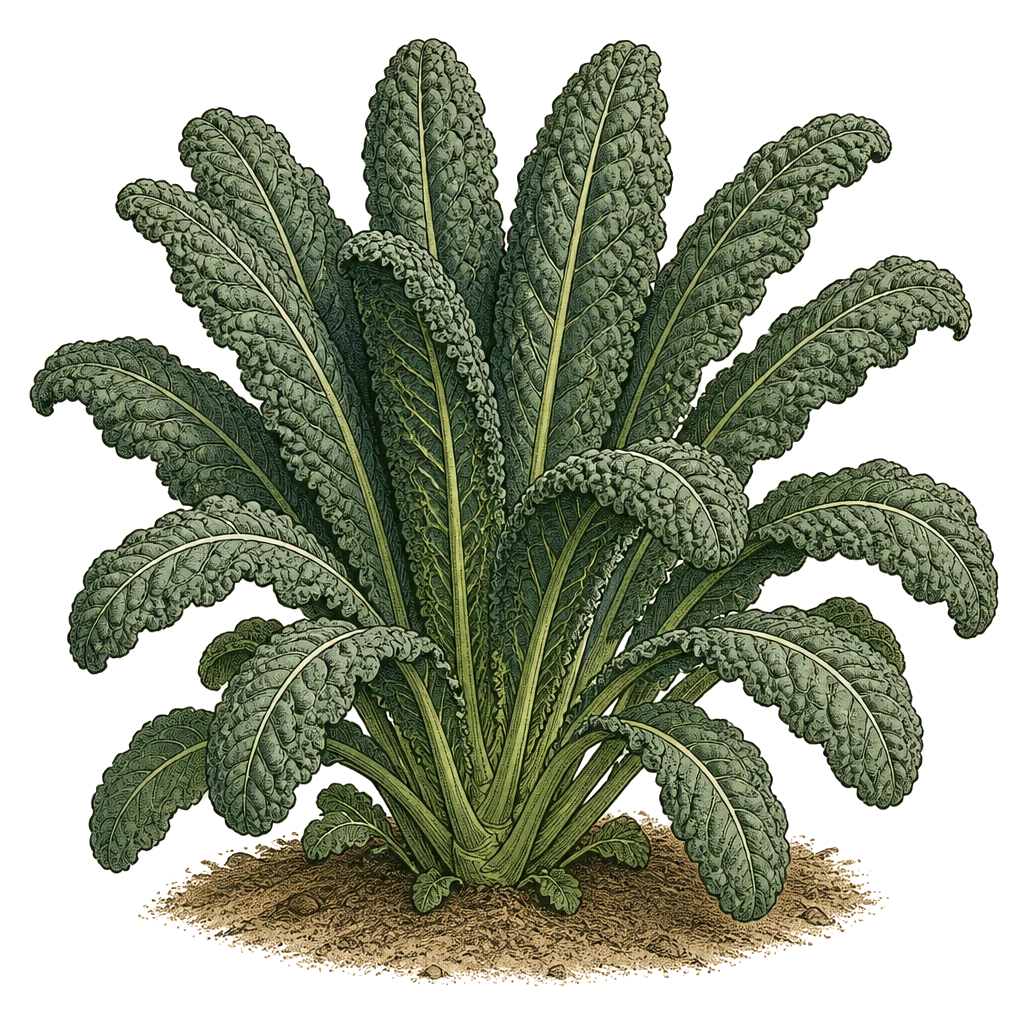
Three variants cover most gardens. Curly kale (including Winterbor, which produces harvestable baby leaves in about 28 days, and Vates, which is compact and slow to bolt) is the cold-hardiest and most common type. Lacinato (dinosaur kale) has strap-like dark leaves and handles brief heat spikes better than curly types, making it a better choice for warm-climate fall plantings where you’re starting transplants in late summer. Red Russian has tender leaves with purple veins, grows quickly, and is extremely cold-hardy.
Because kale is a brassica, don’t plant it where cabbage, broccoli, or Brussels sprouts grew the previous year. Soil-borne pathogens specific to brassicas persist season to season; annual rotation is the most effective prevention.
What to do
Planting
Kale grows best in full sun — 6 or more hours a day — but tolerates partial shade, especially in warmer zones where afternoon shade extends the productive window.
For spring: start seeds indoors 4 weeks before your last frost date, then move transplants outdoors 2 weeks before that date. Harden off seedlings over 7 to 10 days before setting them out, moving them outdoors for gradually longer stretches so they acclimate. Kale tolerates light freezes and establishes better in cool conditions than in warmth. In spring, skip direct sowing and use transplants; the season is too short to waste time on germination in the ground.
For fall (the main season in most climates): direct sow or set out transplants 6 to 8 weeks before your first expected fall frost. If you direct sow, thin seedlings to 18 inches apart once they reach 3 to 4 inches tall, keeping the strongest plant at each spot. For a steady supply rather than a single flush, start a new batch of transplants while the last one is still sizing up.
Soil and fertilizing
Before planting, incorporate 3 to 4 inches of compost into the planting area as kale is a moderate to heavy nitrogen feeder and benefits from that base. Four weeks after transplanting or thinning, side-dress with nitrogen: scatter fertilizer alongside the row, a few inches out from the stems. Use about 1/2 cup of a high-nitrogen granular fertilizer (sold as 21-0-0) per 10 feet of row, and repeat monthly through the growing season.
When you add kale to your garden in Arbor, it schedules a side-dressing reminder — the maintenance step that’s easiest to lose track of when you’re managing multiple beds at once.
Watering
Water established plants every 4 days under normal conditions. Above 85°F, move to every 3 days. Consistent moisture produces tender leaves; drought stress produces tough, bitter ones.
Harvest
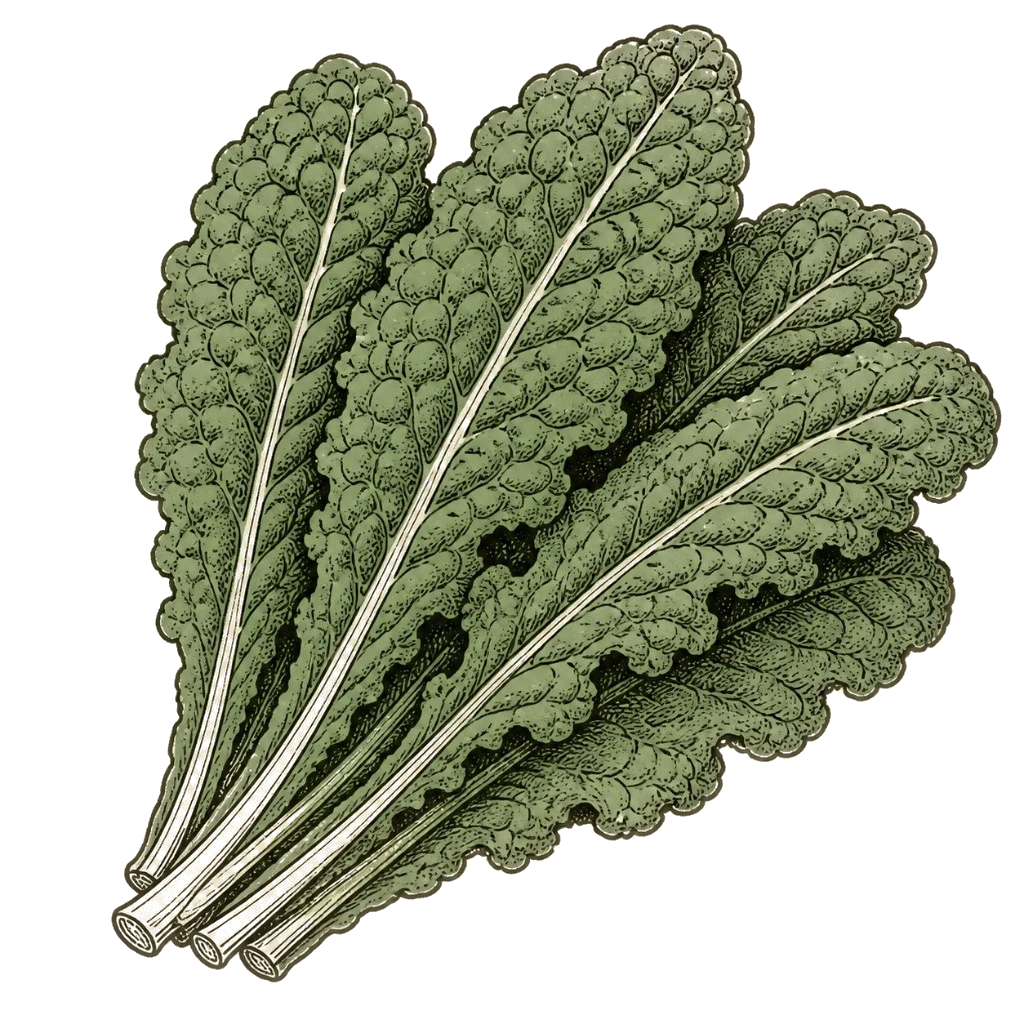
Harvest outer leaves when they reach 8 to 10 inches long, leaving several young inner leaves and the central growing point untouched. Take no more than one-third of the plant at any one harvest. Worked that way, a single planting keeps producing through multiple frosts and in mild winters, for months.
If you want baby leaves rather than full-size ones, decide that at sowing: space plants 12 inches apart rather than 18, and start picking at about 30 days. The one-third rule still holds, so each plant grows back into the next cutting.
Remove yellowed or damaged leaves whenever you spot them; they won’t recover and draw resources away from productive growth.
Pests
Cabbage worms, aphids, and cabbage borers are the primary threats. Row covers installed over young transplants provide effective protection before pest populations build. Remove the covers 3 to 4 weeks after transplanting, once plants are actively growing and large enough to tolerate moderate pest pressure. If cabbage worms are already present, hand-pick them and the pale-yellow egg clusters on leaf undersides and drop them in soapy water. For aphids, a firm spray of water knocks most of the colony off; repeat every few days until numbers drop. Flea beetles also feed on kale, chewing small holes in the leaves; flea beetles covers identification and treatment.
Zone and season notes
Zones 3–5: Spring is a short but real window; fall is the main event. Direct sow by late July to early August in most of this range. Mature plants can overwinter under heavy mulch, giving an early-spring harvest from the previous season’s planting before new transplants are ready.
Zones 6–7: Both spring and fall plantings are productive. Fall-planted kale often carries through winter with minimal protection and produces new growth in early spring.
Zones 8–9: Fall through spring is the primary window. Summer heat makes productive kale nearly impossible, so build the year around a fall planting. Lacinato is the type to set out in August, since it takes brief heat spikes better than curly kale.
Zones 10–11: Same fall-through-spring window. Afternoon shade can push the spring harvest a few weeks further, but once daytime temperatures consistently exceed 85°F, quality drops fast. Succession plantings matter most here, where the productive window is bounded on both sides.
Sources
- UMD Extension — Growing Leafy Greens in a Home Garden
- Clemson HGIC — Kale Is a Headless Cabbage
- USU Extension — How to Grow Kale in Your Garden
- UMN Extension — Growing Collards and Kale in Home Gardens
- NC State Extension — Kale
- University of Vermont Extension — Kale for Autumn Harvest
- West Virginia University Extension — Growing Kale