
How to Grow Cauliflower
Set transplants out in full sun no sooner than 2-3 weeks before your average frost-free date for a spring crop, or from mid-July into early August for fall, spacing plants 18-24 inches apart with rows 24-30 inches apart. Keep soil pH at 6.0-6.8, water 1-2 inches per week, and blanch white curds (fold the plant’s own leaves over the head so sunlight can’t reach it) once they reach 2-3 inches across. The single hardest rule with this crop is that it has to grow without interruption from seedling to harvest, because any check from cold, heat, drought, or damage can abort the curd before it forms.
How it works
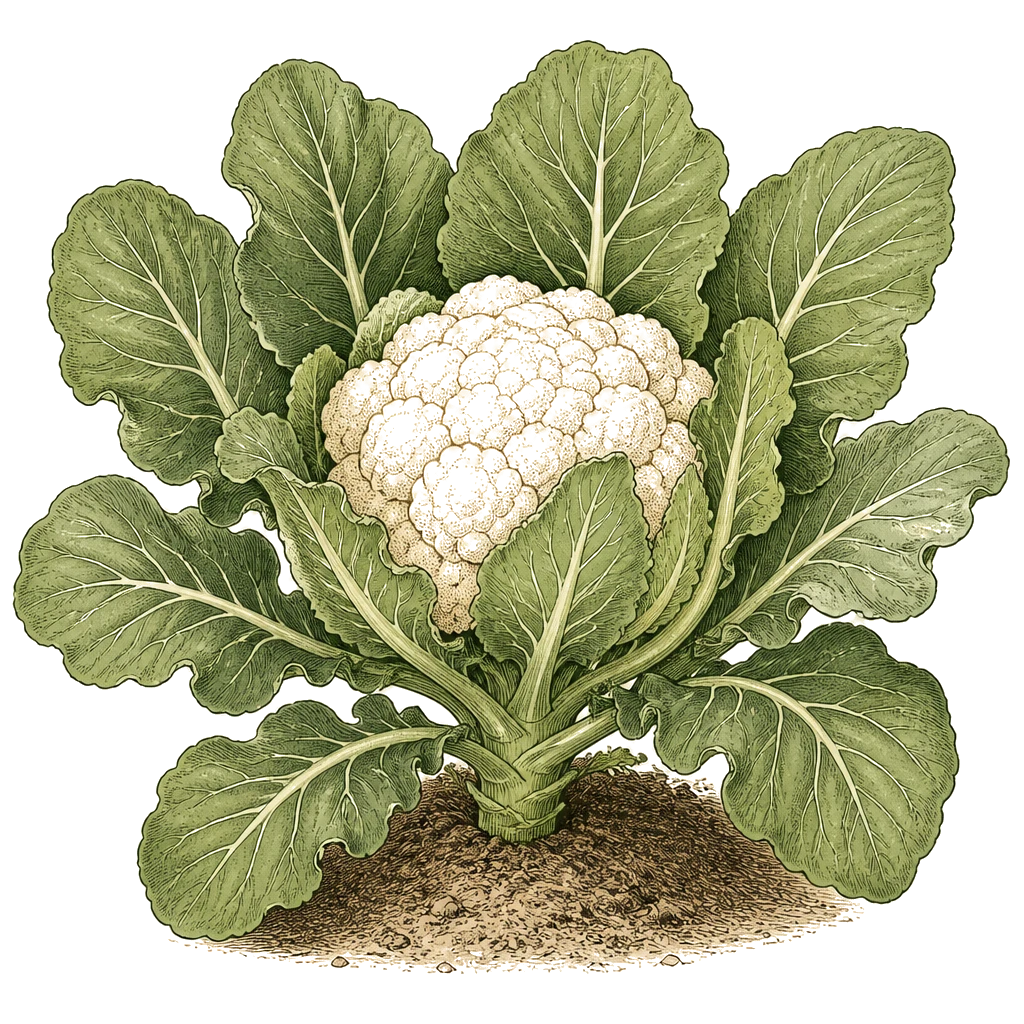
The curd everyone eats is an immature flower head, and cauliflower is far less forgiving about how that head develops than relatives like broccoli and cabbage. A plant that hits a cold snap while it’s small and actively growing, or that dries out, gets underfed, or overheats once the curd is initiating, tends to respond with “buttoning” — small, premature heads that never fill out. The earliest-maturing varieties are the most prone, and stage matters more than severity. A plant that is past the seedling stage and growing hard can button after several days of cold weather, while the same cold does nothing to one still too immature to head at all. Heads that never form at all are a related but separate problem, one that takes sustained days over 86°F with nights over 77°F, keeping the plant vegetative instead of heading. A third failure, ricing, shows up later, when high temperature, direct sun, rapid growth right after the head forms, high humidity, or excess nitrogen make the curd elongate and separate into a grainy, fuzzy texture.
One thing that isn’t a sign of trouble: a curd that’s turned pale yellow or tan where it’s been exposed. That’s sun discoloration, not a nutrient deficiency, and it’s the entire reason blanching exists.
Neither buttoning nor ricing is an infection, so nothing spreads down the row, and neither one reverses. A buttoned plant will not size that head up later, which makes pulling it and giving the space to the next planting the practical move. A curd that has started to rice, or whose segments have begun to separate before it reached full size, is still worth cutting — but cut it the day you notice, because the texture only coarsens from there.
What to do
Starting seed and transplanting
Start with a strong transplant rather than a stunted one, 4-6 mature leaves and a well-developed root system. Seed indoors 4-6 weeks before you plan to set plants out, and then go by the plant rather than the calendar. Set it out once it reaches that size; transplants held in their cells past that point give disappointing heads no matter what you do afterward. For a spring crop, don’t transplant sooner than 2-3 weeks before your average frost-free date. Fall transplants go out from mid-July into early August, but the date that matters is your own. Work back from your first hard freeze instead, subtracting your cultivar’s days from transplant to a cuttable head and setting plants out at least that far ahead.
Spacing, feeding, and watering
Plants go 18-24 inches apart in the row, using the wider end of that range for fall plantings, with 24-30 inches between rows. In a 4×8 bed that comes out to two rows of four or five plants, eight to ten in all. Target a soil pH of 6.0-6.8, which maximizes nutrient availability. That band alone doesn’t settle clubroot, a soil-borne disease that swells the roots of cabbage-family crops into clubs and stunts the plant above them. Infection risk climbs in soils below about pH 6.5, so where it has shown up before, work the top half of the range rather than the bottom. Apply a starter fertilizer at transplanting, then side-dress (scatter fertilizer alongside the row, a few inches out from the stems) with nitrogen when plants are about half grown, roughly three weeks later, and again as needed through the season — the fertilizing guide covers rates and reapplication intervals by product type. Water deeply and evenly, aiming for 1-2 inches per week; the two periods where water stress does the most damage are the weeks right after transplanting and head maturation, when uneven moisture keeps curds from sizing up solid and well-flavored.
Blanching and harvest
Once the curd reaches 2-3 inches across — tennis-ball to teacup size — blanch white varieties by pulling 3-4 outer leaves up and over the head and securing them with a rubber band, or by snapping a leaf and tucking it over the curd. Self-blanching varieties curve their upper leaves inward on their own, but that trait isn’t always complete: types grown for early-summer maturity from a spring planting may still need leaves tied by hand. Purple, orange, and green varieties skip blanching entirely. The curd whitens in about 4-8 days, longer into fall, but it keeps sizing under the wrap, so open the leaves and look instead of going by the calendar. Cut when the head is 6-8 inches across and still compact and firm, before its segments start to separate, which usually lands 7-12 days after you tied it. If you log a note like “curd at teacup size, leaves tied” in Arbor, it puts the blanching check and the harvest window on your task list for the following week rather than leaving you to guess when to cut. Aphids and the other common cabbage-family pests are covered separately — see aphids on vegetables.
Zone and season notes
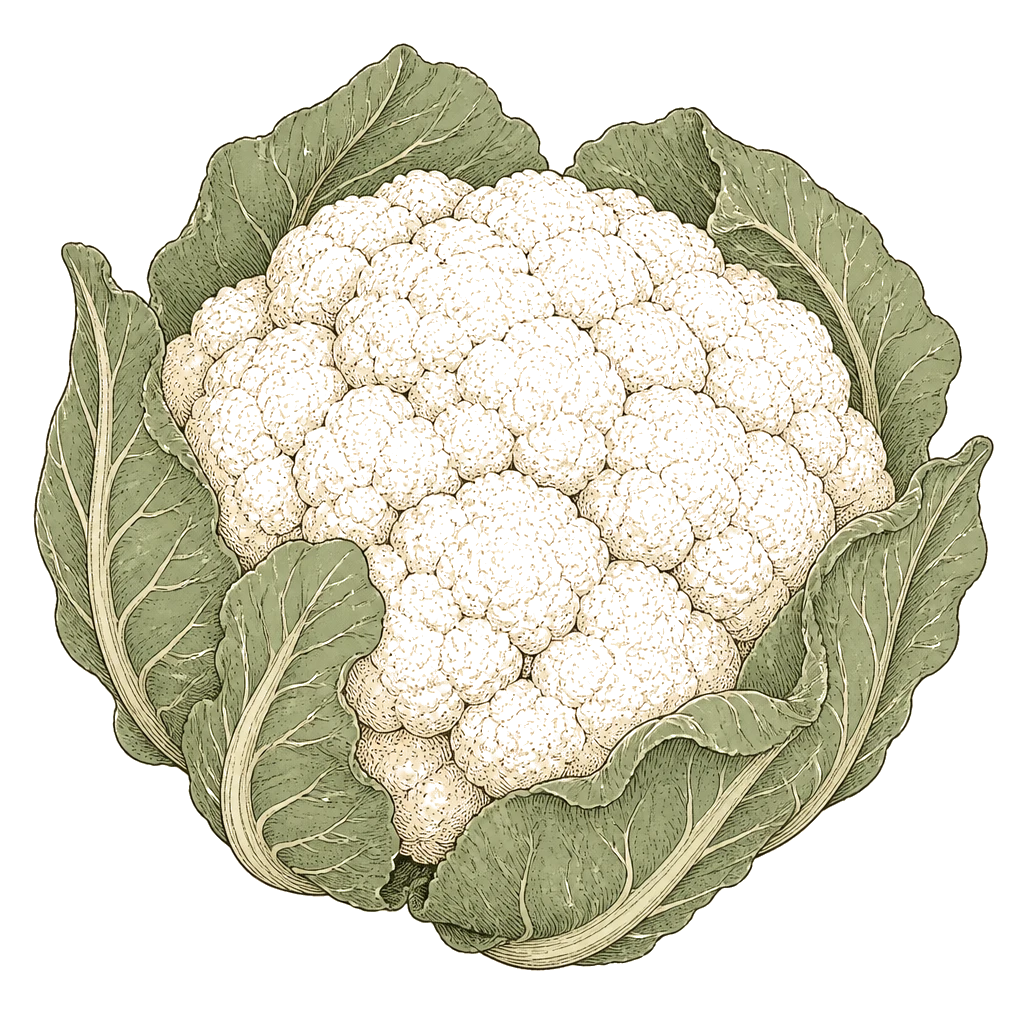
A late cold snap on young transplants and heat during head formation can each cost you the crop in the same season. Cauliflower carries both risks in a way broccoli and cabbage don’t, because it can’t absorb a stress event the way its relatives can. Fall crops tend to outperform spring ones for that reason; they mature into cooling weather instead of climbing toward summer heat, the same heat that drives ricing and poor curd quality in spring plantings.
The plant itself is semi-hardy, tolerating light frost in the 28-32°F range, and temperatures of roughly 26-31°F may only burn exposed foliage without killing it. The curd is more fragile than the plant: a hard freeze after heads have formed can damage or destroy them even though the plant survives, which makes timing the fall harvest ahead of that freeze matter more here than for cabbage. Cultivar choice moves that math directly. Early cultivars run roughly 50-60 days from transplant to a cuttable head and late cultivars 70-80, so an early type for a late-planted fall crop buys a real margin.
In warm-winter zones (9-11), the July transplant dates above don’t transfer. Setting plants out mid-July there puts head formation squarely in the 86°F-day, 77°F-night weather that keeps plants vegetative and drives ricing, so build the schedule backward instead of off the calendar. Count your cultivar’s 50-80 days from the date the weather actually cools into cauliflower’s range, and start seed 4-6 weeks before that transplant date.
Sources
- Illinois Extension — Cauliflower (Home Vegetable Gardening)
- University of Minnesota Extension — Growing Cauliflower in Home Gardens
- University of Minnesota Extension — Clubroot
- University of Maryland Extension — Growing Cauliflower in a Home Garden
- University of Arkansas Cooperative Extension — Cauliflower Home Gardening Series (FSA6007)
- Utah State University Extension — How to Grow Cauliflower in Your Garden
- UF/IFAS Gardening Solutions — Cauliflower
- Ohioline (Ohio State University Extension) — Growing Cauliflower in the Garden (HYG-1613)
- University of California IPM (UC ANR) — Buttoning in Broccoli and Cauliflower
- University of Delaware Cooperative Extension — Physiological Disorders of Cole Crops
- University of Georgia Cooperative Extension (CAES Field Report) — Home Garden Cauliflower
- Purdue University Extension — The Fall Vegetable Garden (HO-66-W)
- Illinois Extension — Time Your Vegetable Plantings by Cold Hardiness