
How to Grow Radishes
Radishes are the fastest vegetable in the home garden — spring types mature in 21–35 days from direct sow. In frost-prone zones, sow 4 weeks before your last frost date; in frost-free zones, sow November through January when temperatures drop into the productive range. Either way, pull them promptly: roots that sit too long in the ground become pithy and sharp-tasting within days of their peak. The key to continuous supply is succession sowing every 7–14 days rather than one large planting.
How it works
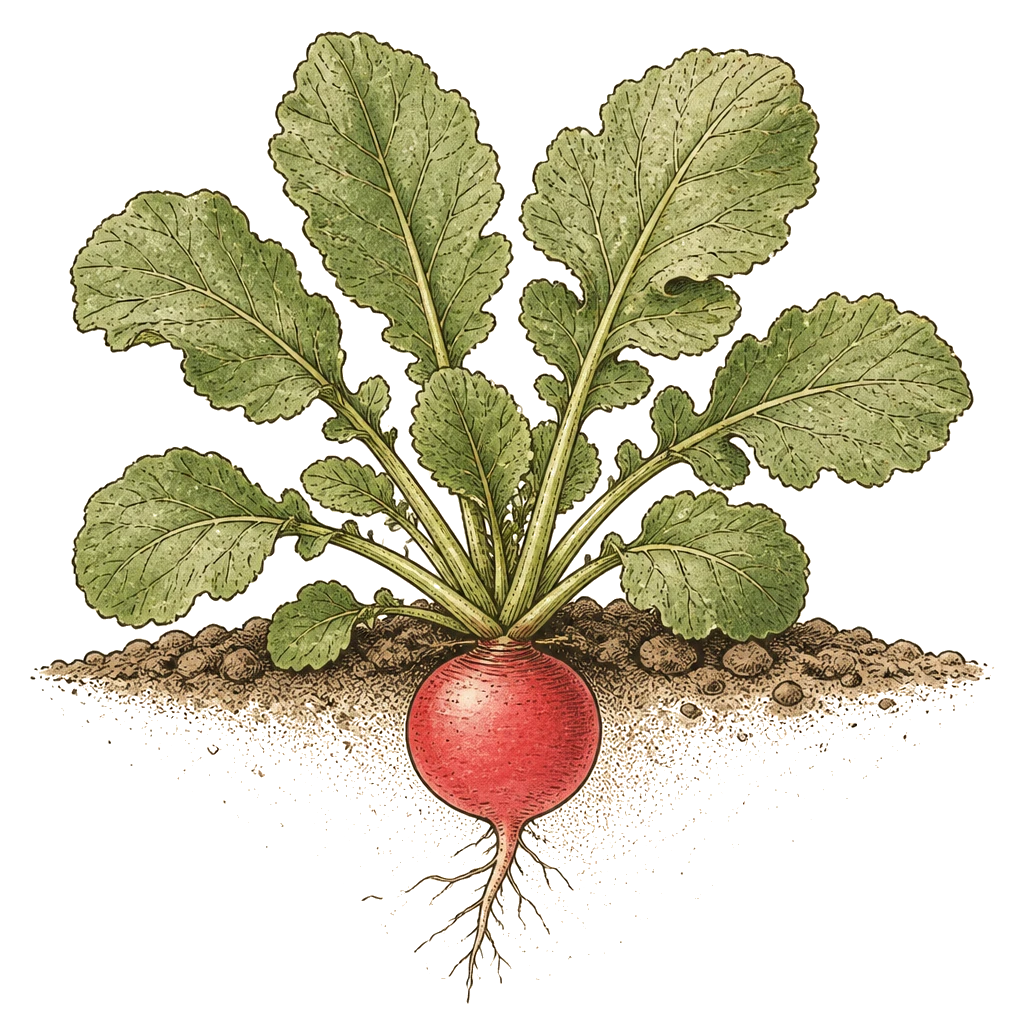
Cool temperatures are what make this crop work: roots develop best between 50°F and 75°F. Quality deteriorates fast once temperatures climb above 80°F — roots turn spongy and hot, and plants bolt to seed before the root is worth eating. This narrow temperature window is why a spring radish bed is measured in weeks, not months, and why the fall season often produces milder, better-textured roots than spring in zones 8–11.
Two distinct crop types behave very differently. Spring and summer varieties — small, round or oblong types like Cherry Belle (about 22–25 days) and French Breakfast — complete their cycle in 21–35 days and must be grown in cool shoulder seasons. Daikon and other winter radishes operate on a different schedule: sown in midsummer to late summer, they produce roots that can reach 24 inches long and 3 inches in diameter. Utah State Extension puts their maturity at 50 to 60 days. Both prefer full to partial sun and well-drained, loosened soil.
The short cycle compresses every cultural decision. Inconsistent watering causes cracking and pithy interior — there is not enough time to recover from a dry spell followed by a heavy soak. Excess nitrogen pushes leafy growth at the expense of root development, so unless your soil is very poor, skip the fertilizer or apply only a light balanced granular at planting. Thin plants to 2 inches apart; crowded roots size up poorly and are more prone to irregular shape.
Radishes also pull duty as a row marker. They germinate within a week and break the soil surface well before slow-starting crops like carrots have emerged. By the time the carrots need the space, the radishes are already at harvest. See the guide on growing carrots for how to set up this pairing. The same fast germination makes radishes a flea-beetle trap crop for other brassicas like turnips — sown a week or two ahead, they draw beetle pressure away from the slower-starting crop.
What to do
Sowing: Direct sow seeds about ½ inch deep, starting 4 weeks before your last frost date. Radishes tolerate light frost but tissue damage begins below 28°F, so avoid sowing into frozen ground. Sow 2–3 seeds every 2 inches, then thin to one seedling at 2-inch spacing once they emerge; space rows 6 inches apart for spring types. Rather than one large batch, sow a short row every 7–14 days throughout spring to spread the harvest window. For the basics of getting seeds into the ground, see how to direct sow vegetable seeds.
Watering: Keep the bed evenly moist throughout the growing period. In average weather, plan to water every 3 days; heat shortens that interval. Radishes have low drought tolerance, and a single dry period followed by a heavy rain is the most common cause of cracked roots and pithy texture.
Pests: Flea beetles are the most common pest on radishes, chewing clusters of small round holes in the leaves. Drape floating row cover over the bed right after sowing and leave it on through harvest; the short cycle means it rarely needs to come off. Heavy feeding stunts young seedlings faster than on slower crops because the entire life cycle runs only 3–5 weeks.
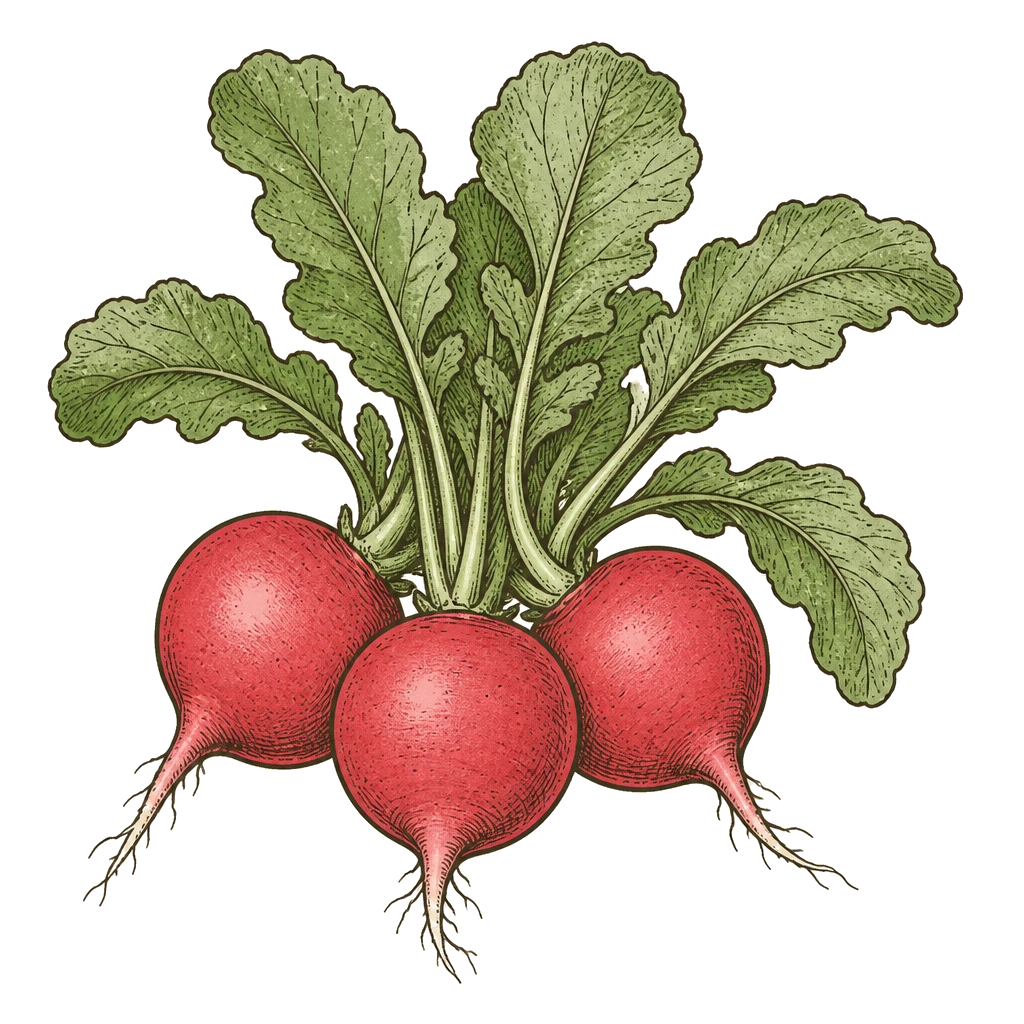
Watching for peak: Check spring radishes starting at 20–25 days. When the root shoulders push above the soil and the root reaches 3/4–1 inch across, it’s ready. Don’t wait for a larger size — a root at peak one day can be pithy and unpleasantly sharp within just a few days more. When you add radishes in Arbor, the app puts an inspect reminder on a 5-day cadence, which is tight enough to catch the narrow window before quality drops.
Harvesting: Pull the entire root. If it feels hollow or spongy when you squeeze it, you’ve passed the window. Refrigerate immediately. For timing cues that apply across root crops, see how to harvest vegetables.
Daikon and winter types: Sow in late July or early August, 50–60 days before your first hard frost. Loosen the soil to at least 12 inches before sowing; compacted soil produces forked roots in these long types. They need more room — thin to several inches apart and space rows 12 inches apart. Unlike spring types, daikon tolerates some cold at harvest; pull before the ground freezes.
Zone and season notes
Zones 3–5: The spring window opens in April and closes by late May before summer heat arrives. A fall window runs from late July through late August. Daikon types may not have enough growing days in Zone 3 — check days-to-maturity against your first frost date before committing to a full bed.
Zones 6–7: Both spring and fall crops are reliable here. Spring sowing runs from late March through May; fall sowing from late July through September. Succession sow every 7–10 days within each window for the most consistent harvest.
Zones 8–9: The spring window is narrow — February through early March before heat ends the season. Fall is the primary growing period, running September through November. Winter radishes can be sown as late as October for a December harvest.
Zones 10–11: Spring plantings rarely succeed; heat arrives before roots can develop. Sow November through January for a winter crop. Those are the only months when temperatures consistently stay in the productive range for cool-season root development.
Sources
- University of Maryland Extension — Growing Radishes in a Home Garden
- University of Minnesota Extension — Growing Radishes in Home Gardens
- Utah State University Extension — Radishes in the Garden
- Iowa State University Extension — Growing Radishes in Iowa
- Illinois Extension — Radish
- Washington State University Extension — Growing Radishes in Home Gardens (FS127E)
- Texas A&M AgriLife Extension — Easy Gardening: Radishes
- University of Florida IFAS Gardening Solutions — Radishes
- South Dakota State University Extension — Radish: A Quick-Growing Vegetable