
Spring Vegetable Garden: What Order to Do Things In
Spring planting has a fixed order, and it isn’t the calendar: prep the bed once the soil itself is workable, start tender crops indoors on a countdown to your own last frost, harden those seedlings off over the following two weeks, and only then sow hardy crops directly or set out transplants. Get the order backward — dig wet soil, skip hardening off, transplant before the seedlings have toughened up — and the damage doesn’t undo itself later in the season.
How it works
Most gardeners skip the soil-readiness check. Everything that follows depends on it. Squeeze a handful of soil into a ball. If it crumbles readily under light pressure, it’s dry enough to work. If it stays sticky and holds its shape, wait. Clearing last year’s debris is a separate question: hold off until daytime temperatures are consistently 50°F or higher, because beneficial insects and pollinators are still overwintering in it.
That test matters because working or walking on wet soil compacts it, squeezing out the pore space roots and soil organisms depend on. Compost improves soil health over time, but it doesn’t reliably undo compaction already caused by a tiller or footsteps on saturated ground — prevention beats remediation here. If you suspect a bed is already compacted from last season, press a wire flag or similar probe straight down without bending it, when the soil is moist but not soaked. Penetration of less than 4 inches signals compaction that needs loosening before you plant.
What to do
Once soil passes the crumble test, prep in three moves: clear winter debris, loosen the soil, then work in organic matter. A broadfork loosens without inverting the soil layers the way a tiller does. For new beds, turn soil to a depth of 7 to 8 inches and rake the surface soon after so it doesn’t dry into hard clods. Either way, dig in 2 to 4 inches of organic matter, which breaks up heavy clay soil and improves drainage.
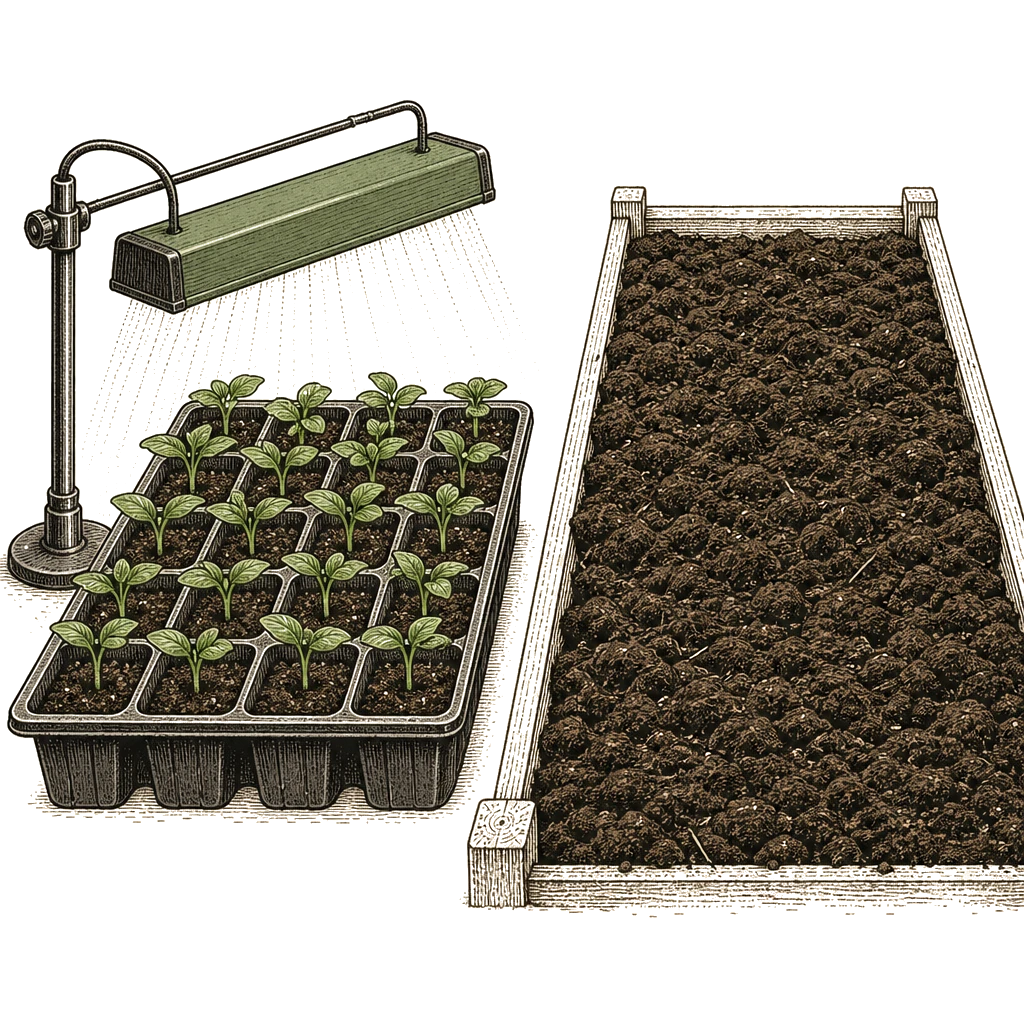
Indoor seed starting runs on your last frost date, not on bed prep: work backward by how long the crop needs under lights plus its hardening-off window. In warm-winter zones that sowing date often falls before the beds are workable at all; the soil clock and the seedling clock run independently. Use a pasteurized, soil-less starting medium rather than garden soil — garden soil carries damping-off pathogens that a sterile mix doesn’t. Most vegetable seeds germinate best with medium at 65–70°F, which usually means a heat mat, not a windowsill, for the first week or two.
Budget 10 to 14 days for hardening off, and don’t compress it: start seedlings in shade for a few hours a day, add sun exposure daily, and finish with them tolerating a full 24 to 48 hours outdoors before they go in the ground. Seedlings that looked sturdy under grow lights can stall or scorch within days if they skip this acclimation.
From there, the sequence splits by crop type rather than by date. Direct-sow hardy crops as soon as the bed passes the crumble test. Hold tender and very tender crops until hardening off is complete and your own last frost date has passed, then transplant or direct-sow them. When to Plant Vegetables sorts crops into those groups by how much cold each one takes, and carries the frost-date math behind the timing.
Zone and season notes
None of this sequence is zone-specific in its logic, but the calendar window it happens in shifts by climate. In cold-winter zones, the gap between “soil passes the crumble test” and “last frost” can run several weeks, which is exactly the window indoor starts and hardening off are meant to fill. In warm-winter zones, that gap compresses, and beds can be workable well before the indoor-starting calendar built around a colder region’s timeline would suggest. Season length also changes what you plant, not only when: count a variety’s days to maturity against the window you actually have before you commit to it. Growing Tomatoes works that same math through on a short Midwest season. A wet, cool spring pushes bed readiness later than an average year in any zone — there’s no reliable day count for how much later, which is exactly why the crumble test outranks the date on the wall calendar. If you log your seed-starting and transplant dates in Arbor, it keeps a record of what actually worked in your beds last year, so the next spring’s timing is built on your own garden rather than a generic average.
Sources
- Clemson Cooperative Extension, HGIC — Spring Garden Preparation: How to Prepare Garden Beds for Spring Planting
- University of Illinois Extension — Tips for Starting Your Spring Garden Off Strong
- Mississippi State University Extension — Soil Preparation (Vegetable Gardens)
- University of Connecticut Extension, Home & Garden Education Center — Hold Off for Healthier Soil: Managing Spring Compaction Risks