
Growing Mediterranean Herbs: Thyme, Rosemary, Oregano, Sage
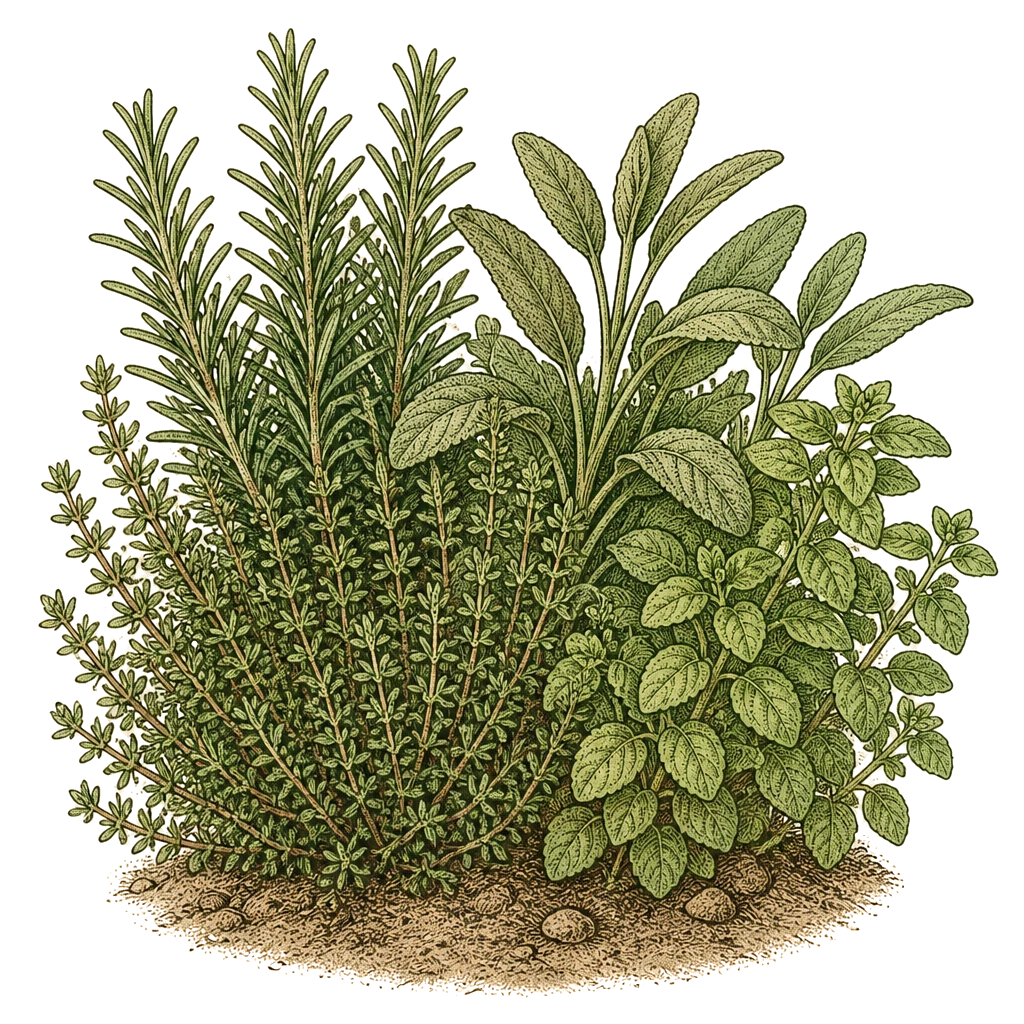
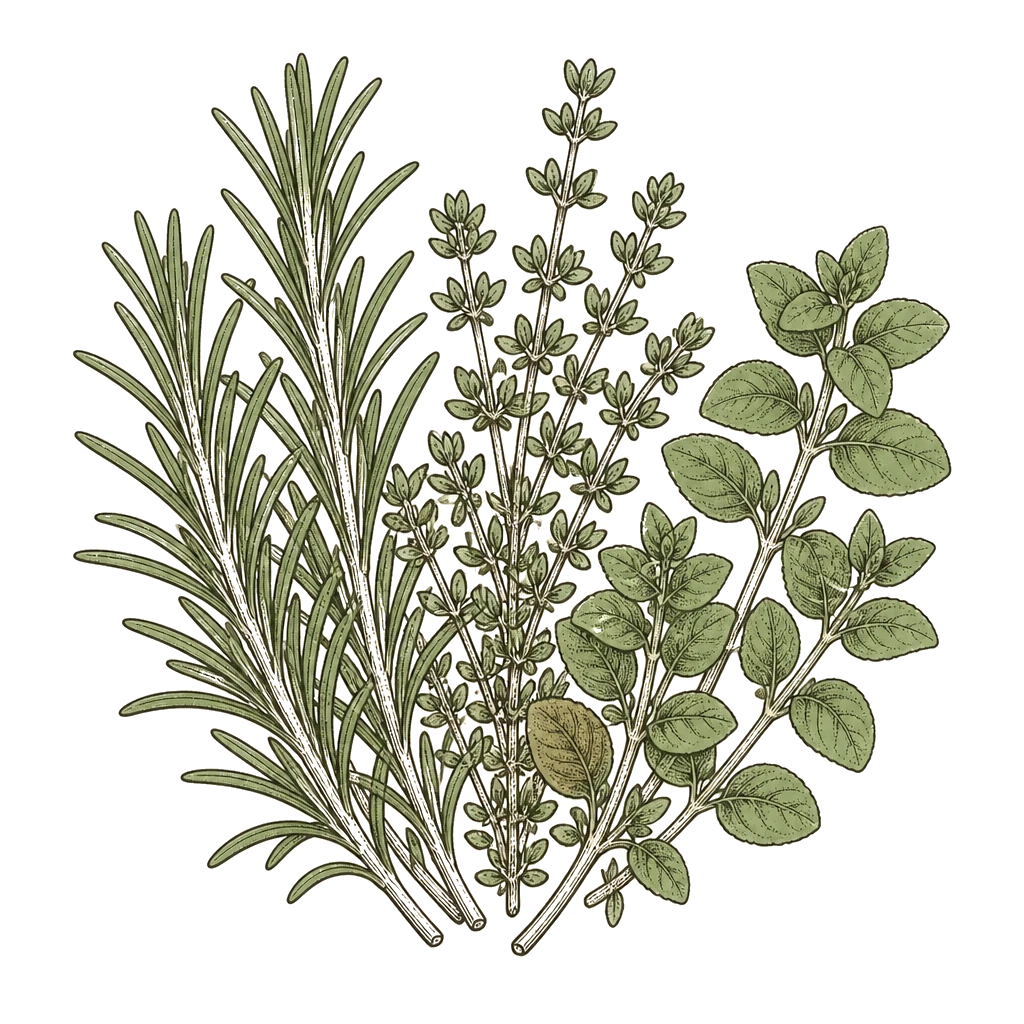
Thyme, rosemary, oregano, and sage all want the same thing from you: a little neglect. These herbs evolved in the rocky, thin soil of the Mediterranean basin, where summer drought is the rule and fertility is low. Overwatering kills more of them than drought ever does. Give them full sun, fast-draining soil, and restraint with the hose, and they will come back for several years in most climates. Where they differ is winter, and the differences are large enough that each one has its own guide: thyme, rosemary, oregano, and sage.
How it works
Rich soil promotes fast, leafy growth and reduces essential oil production, which lowers flavor and aroma. Those oils are what make thyme smell like thyme and oregano taste like oregano, so a fed plant hands you more leaf carrying less of the thing you grew it for. Lean, well-drained soil is the correct baseline here, not a deficiency to amend away, and anywhere from pH 6.0 to 7.5 suits all four without amendment. Basil and mint want the opposite — steady moisture and a more fertile bed — so they do better on their own ground than in this one.
Clay soil is a direct threat. When roots sit in saturated clay, rot sets in before the surface looks wet. If your native soil is heavy clay, plant these herbs in raised beds with coarse grit mixed in rather than making repeated attempts in unamended ground.
The four are also not equally long-lived, and none of them is permanent. Thyme, oregano, and sage all go woody and lose leaf quality after a few years, three to four in oregano’s case, at which point division or replacement beats harder pruning. Treating a kitchen herb bed as a planting you refresh on a cycle, rather than one you install once, is most of the difference between a productive bed and a collection of handsome inedible shrubs.
What to do
Planting. All four establish well from nursery transplants. Rosemary is the exception on propagation: it is slow and unreliable from seed and named cultivars do not come true, so it is grown from cuttings. Thyme and oregano also divide readily from an established clump in spring. Plant at or after your last frost date. These herbs tolerate cold once established, but the seedling stage is the most vulnerable period. Space to the size the plant will reach: 8 to 12 inches for thyme, 10 to 12 for oregano, 18 to 24 for sage and compact rosemary, and four feet or more for the large rosemary cultivars. Every site needs at least 6 hours of direct sun daily. Skimp on sun and the leaves grow, but they grow bland.
Watering. Go by the soil, not the calendar. Wait until the top 2 inches are completely dry, then soak deeply enough to wet the ground 8 inches down and leave it alone until it dries out again. Infrequent does not mean light. Transplants are the exception and want steadier moisture until they push new growth. Clay changes the rhythm rather than the rule: it holds water long after the surface looks dry, so the gap between waterings stretches there instead of shortening. Sage is the mild exception among the four, tolerating drought but producing better with consistent water.
Fertilizing. One light feeding at the start of the growing season is enough, and more than that pushes leaf volume at the expense of flavor. Compost does the job. If you would rather use a granular fertilizer, the University of Minnesota’s figure for garden herbs is 3 ounces of 5-10-5 per 10 feet of row, once a season.
Pruning. Plan on cutting every plant back roughly every 90 days through the growing season. The cut point varies by herb: thyme is sheared lightly after flowering and never into old brown wood, rosemary is cut in small amounts all season and never by more than a fifth at once, oregano comes down by half after its first flowering flush, and sage takes 6 to 8 inches off the top at least twice a season. For general technique, see how to prune vegetables.
Harvest. The kitchen cut is the same cut, taken earlier and smaller. Leaf oil peaks just before flowering on thyme, oregano, and sage, so the best-tasting harvest of the year is the week the buds show color rather than the week you happen to need the herb for dinner. Picking sprigs in between does no harm, though the ceiling on a single cut is not the same for all four: rosemary loses no more than a fifth of its growth at one time, sage no more than half.
Arbor surfaces a pruning reminder every 90 days for each herb you log, keeping the cycle on your task list rather than buried in a calendar note.
Zone and season notes
Winter hardiness is where the four separate, and the spread is wider than the shared label suggests. Sage is the hardiest, good from zone 4a to 10b, with thyme close behind at zones 5 to 9. Oregano holds from zone 5 to 8, though true Greek oregano is only marginally hardy at the cold end of that. Rosemary is the outlier: hardy in zones 8 to 10, surviving zone 7 and sheltered zone 6 gardens with the cultivars ‘Arp’ and ‘Madeline Hill’, and needing container culture and an indoor winter anywhere colder.
Drainage matters more in winter than cold-hardiness ratings do. Excessively wet soil and standing water decrease winter hardiness on their own, independent of temperature. An herb that died over winter usually died of wet roots rather than cold ones.
Late-season cutting is what most often costs a plant its winter. Stop hard cutting 4 to 6 weeks before your first severe freeze, because winter hardiness stays reduced until pruning wounds have healed; in the western North Carolina mountains, NC State puts that cutoff before early September. Winter mulch goes on after the first hard freeze rather than before, since early mulch keeps the soil warm and can decrease hardiness.
At the warm end, the group stops behaving as a group. Sage stays perennial through zone 10b, and rosemary grows into a substantial landscape shrub. Thyme at zone 9 sits at the warm edge of its range, where a hot, humid summer rather than a cold winter is what thins it. Oregano past zone 8 keeps growing and runs to flower instead, so the cut ahead of the opening buds becomes the one that matters. Fast drainage after summer rain still decides more than any of it.
Sources
- University of Minnesota Extension — Growing Herbs in Home Gardens
- Clemson HGIC — Herbs (HGIC 1311)
- Penn State Extension — Growing Herbs in the Garden
- Oregon State University Extension — Growing Herbs
- NC State Extension — Winterizing the Herb Garden
- Colorado State University Extension — Herb Gardening Outline
- Wisconsin Horticulture — Sage, Salvia officinalis
- Wisconsin Horticulture — Rosemary, Salvia rosmarinus