
How to Grow Mint (Without It Taking Over)
Grow mint in a container. Planted in open ground, its creeping underground rhizomes travel in all directions, crowd out neighboring plants, and — as UC ANR extension advisors describe it — become “nearly impossible to eradicate.” That’s not gardening hyperbole; it’s what happens. Containment must be in place before you put the first plant in the ground.
How it works
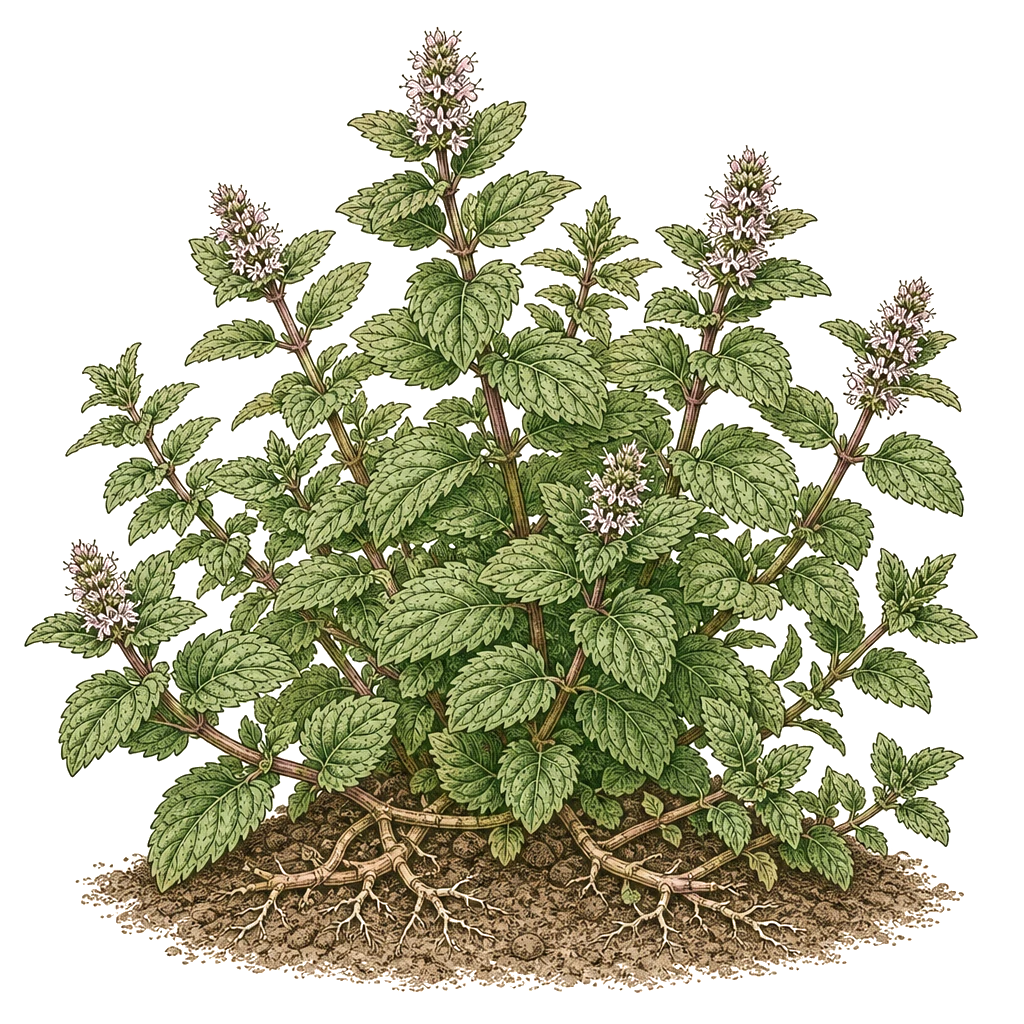
Mint spreads via horizontal underground stems called rhizomes, not by seed. Those rhizomes extend continuously outward, sending up new shoots wherever they surface. Weeding doesn’t solve it: rhizome fragments left in the soil regrow. The only reliable strategy is a physical barrier that intercepts the roots before they can escape.
Spearmint (Mentha spicata) is the standard culinary type — clean, sweet, used in tea, cocktails, and lamb dishes. Peppermint (Mentha x piperita) is a natural hybrid with higher menthol concentration and a sharper bite. Chocolate mint carries a cocoa-like note; apple mint smells faintly fruity but has a particularly aggressive spreading habit and needs its runners trimmed every 3–4 days. Because mint varieties hybridize readily, seeds rarely produce true-to-type plants. Buy transplants, take cuttings from a plant you know, or divide an established clump rather than starting from seed.
What to do
Containment comes first. Three methods work, ranked from most reliable to least:
An above-ground container at least 12–16 inches in diameter is the simplest option. It gives roots room to run without overcrowding, is easy to move or replace when the plant outgrows it, and cuts off any escape route as long as you set the pot on a hard surface so rhizomes can’t exit through drainage holes.
The buried-container method lets you grow mint at soil level while still blocking lateral spread. Sink a bottomless bucket or large nursery pot so it extends 10–15 inches below the soil surface, with the rim sitting a few inches above grade. That raised lip intercepts runners before they root into adjacent soil — UC ANR Solano Master Gardeners note that the raised rim forces runners up and over the container lip where they can be seen and trimmed off. Check the rim weekly and cut anything that crests it.
Root barriers are a distant third. Even a small gap in the barrier lets rhizomes through, and gaps are easy to miss. If you use them, inspect the perimeter every few weeks.
Planting. Start with a transplant or division — skip seeds. See how to transplant seedlings for the basics. Mint does best in 4–6 hours of direct sun daily; it tolerates partial shade but can scorch under intense afternoon sun, so afternoon shade is helpful in zones 9–11. Fill containers with standard potting mix — avoid unamended garden soil, which compacts and impedes drainage, increasing the root-rot risk noted under watering. Space containers 18 inches apart when grouping varieties on a patio. Plant at or just after last frost in cold climates; mild zones can plant almost any time.
Watering. Mint is more water-demanding than most herbs. Water established plants every 4 days under normal conditions; above 90°F, water every 1–2 days and check soil daily — containers dry out fast at high heat. Keep the soil consistently moist but not waterlogged — standing water promotes root disease.
Fertilizing. One application of balanced fertilizer at half the package rate in spring is enough for the entire season. Over-fertilizing is counterproductive: excess nitrogen reduces essential oil concentration, which means more leaf mass with less of the flavor you’re growing it for. Skip fertilizer entirely during winter dormancy.
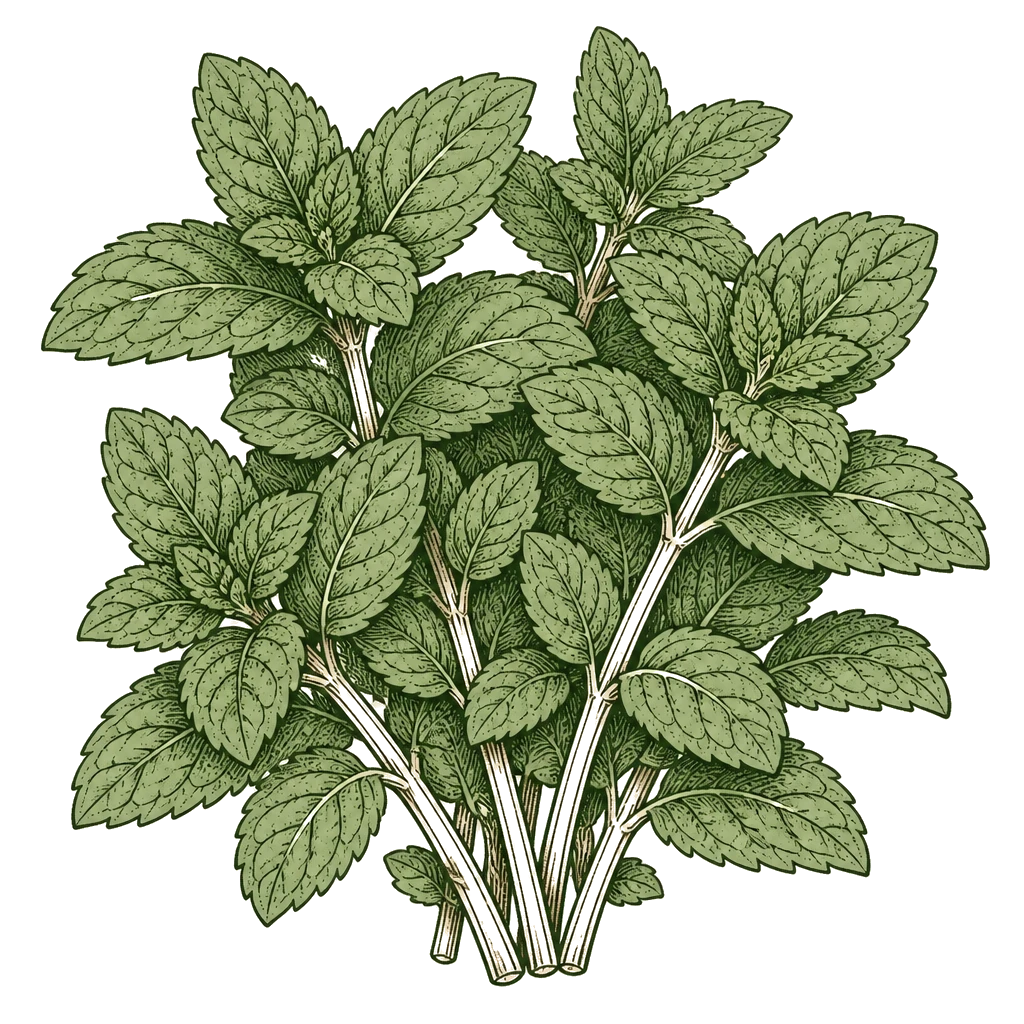
Harvesting. Begin cutting once plants reach 3–4 inches tall. Snip stems just above a leaf pair throughout the season to encourage branching and continuous production. Alternatively, cut the whole plant back to within 1 inch of the ground up to 3 times per season, just before it blooms. Remove flower stalks as they appear — flowering slows leaf production. Cut back by one-third when plants hit 12 inches to keep growth compact rather than leggy. A harvest cycle every 14 days maintains steady yield.
When you track your mint in Arbor, the app surfaces the 14-day harvest reminder in your weekly task list so the plant doesn’t race ahead to flower while your attention is on other beds.
If mint has already escaped. Repeated cutting to ground level — every 2 to 4 weeks through one full growing season — exhausts rhizomes over time. Smother an affected area with cardboard topped by 4–6 inches of wood chip mulch to block light and intercept new shoots. Full removal typically takes two or more seasons; dig and remove every fragment you find, since broken rhizome pieces regrow.
Common problems. Mint rust (Puccinia menthae) shows as orange pustules on the undersides of leaves — remove and destroy affected stems right away and improve air circulation around the container. Spider mites appear in hot, dry spells, leaving leaves stippled and pale; rinse plants with water and increase humidity. For aphids on nearby vegetables, see aphids on vegetables. Yellowing at the crown with soggy soil signals root rot — reduce watering and improve drainage.
Companion planting. Mint placed near tomatoes, cabbage, and peas can reduce pest pressure by disrupting the volatile chemical signals that guide insects to their host plants. OSU Extension’s companion herbs guide documents this for cole-crop pests including cabbage looper and cabbage maggot; Penn State Extension attributes the mechanism to olfactory masking by mint’s volatile oils. The benefit is real — but mint must stay in a container even as a companion. Plant it open in a vegetable bed and you’ve traded a pest problem for a weed problem.
Zone and season notes
Mint is a perennial across USDA zones 3–11, which gives it one of the widest cold-hardiness ranges of any herb in the garden. Plant tissue begins to show damage below 20°F, but the crown and root system survive far colder temperatures when protected by soil or mulch — which is why zone 3 gardeners can grow it reliably.
In zones 3–5, cut plants to ground level after the first hard frost and mulch the container heavily. The roots overwinter and push reliable new growth in spring.
Plants die back in cold winters in zones 6–8 and return strongly in spring. Container-grown mint tends to become root-bound after 2–3 years; divide it when yield starts to drop.
In zones 9–11, mint grows nearly year-round as long as it stays consistently moist. Without a winter dieback to reset the plant, containers fill faster and runners get more persistent — check for escaping rhizomes more often than you would in colder climates.
Sources
- University of Maryland Extension — Growing Mint in a Home Garden
- Utah State University Extension — How to Grow Mint in Your Garden
- UC ANR / UC IPM — Cultural Tips for Growing Mint
- Illinois Extension — Mint | Herbs
- UC ANR Fresno Master Gardeners — So You Want to Grow Mint
- UC ANR Solano Master Gardeners — Contain-Mint
- USU Extension — Mint in the Garden
- University of Minnesota Extension — Companion Planting in Home Gardens
- Oregon State University Extension — Herbs and Flowers in the Vegetable Garden
- Penn State Extension — Herbs Make Good Plant Partners and Companions