
How to Grow Cilantro: Direct Sow and Beat the Bolt
Two things end most cilantro attempts early: sowing when it’s already too warm, and trying to transplant seedlings. Cilantro bolts the moment air temperatures push past 80°F, and its taproot makes transplanting nearly always fatal. Get both right — cool timing, direct-sown in place — and a single planting gives you 45–70 days of leaf before heat ends it, which is exactly why succession sowing is the only strategy that works.
How it works
Cilantro is a cool-season annual with an optimal growing range of 50–85°F. Once temperatures climb past the 80°F threshold, the plant shifts energy from leaf production to flowering. Leaves turn small and feathery, flavor sharpens, and then the harvest window closes. No amount of extra watering prevents this. The bolting trigger is heat, not drought stress. Keeping the soil moist matters — dry roots accelerate bolting at the margins — but irrigation cannot hold a plant in leaf production when daytime temperatures are consistently high. The fix is timing, not watering.
The taproot is the other hard constraint. Cilantro forms a long central root almost immediately after germination, and disturbing it — including pulling a seedling from a cell tray — causes the plant to stall or die. Utah State University Extension and Oregon State Extension both state this plainly: cilantro must be direct-sown where it will grow. Starting seeds indoors to get a head start is the setup for a transplant failure.
What to do
Sow direct, sow shallow. Plant seeds ½ inch deep in the bed where they will stay. Soil temperature between 55–68°F is optimal for germination, which takes about 21 days. In spring, sow 4 weeks before your last frost date — cilantro tolerates light frost and survives brief dips to 28°F — then thin seedlings to 6-inch spacing once they are established. For plants you intend to let run to coriander seed, give them 8–10 inches. The guide to direct sowing vegetable seeds covers bed prep and seeding technique in detail.
Succession-sow every 2–3 weeks. No single planting lasts through the entire cool season before bolting or completing its cycle. The only reliable strategy for a continuous supply is staggered short rows through the entire cool season: when one planting bolts, the next is ready to harvest. If you log cilantro in Arbor, it tracks your sowing dates and prompts the next succession planting at the 2–3 week mark throughout your cool-season window, so the interval does not slip between garden visits.
Slow the bolt. Afternoon shade buys time as temperatures climb. Plant in the partial shade of taller crops — the north side of a tomato cage or a trellis — to reduce midday heat stress. Mulching the soil surface with straw keeps root-zone temperatures lower and reduces the soil heat that initiates bolting. Slow-bolt varieties extend the window further: Calypso is the slowest-bolting of the commonly available types; Santo and Slow Bolt are reliably available at most garden centers; Leisure is the fastest-maturing at 40 days and useful when you need quick successive harvests.
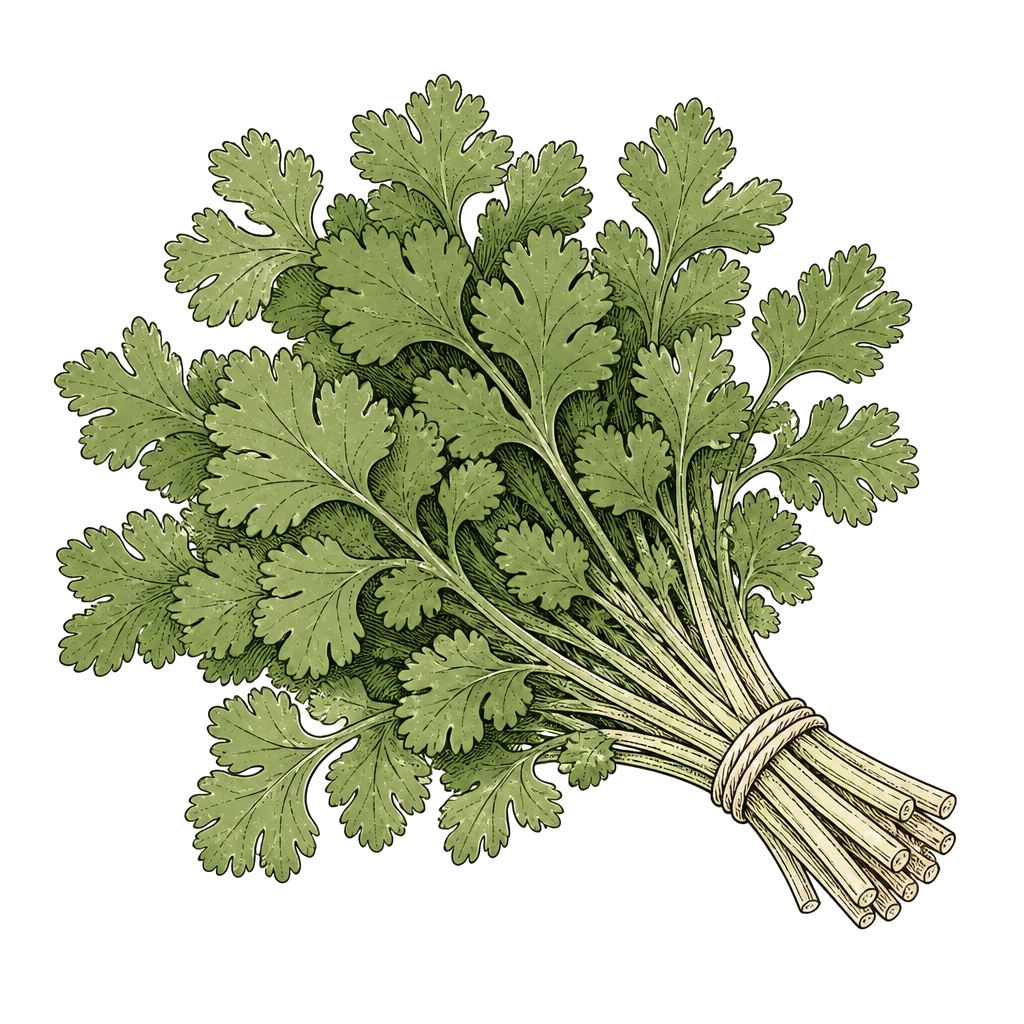
Harvest outer leaves early and often. At 45–70 days from sowing, leaves are ready — faster with quick-maturing varieties. Cut individual outer leaves once they reach 4–6 inches, leaving the central growing point intact. For a faster harvest, trim the whole plant to 1–2 inches above the soil; plants sometimes regrow, though not once daytime temperatures are consistently above 80°F — if you have already hit that mark, sow a fresh succession rather than waiting. Regular harvesting signals the plant to stay in leaf production longer, delaying the shift to bolting.
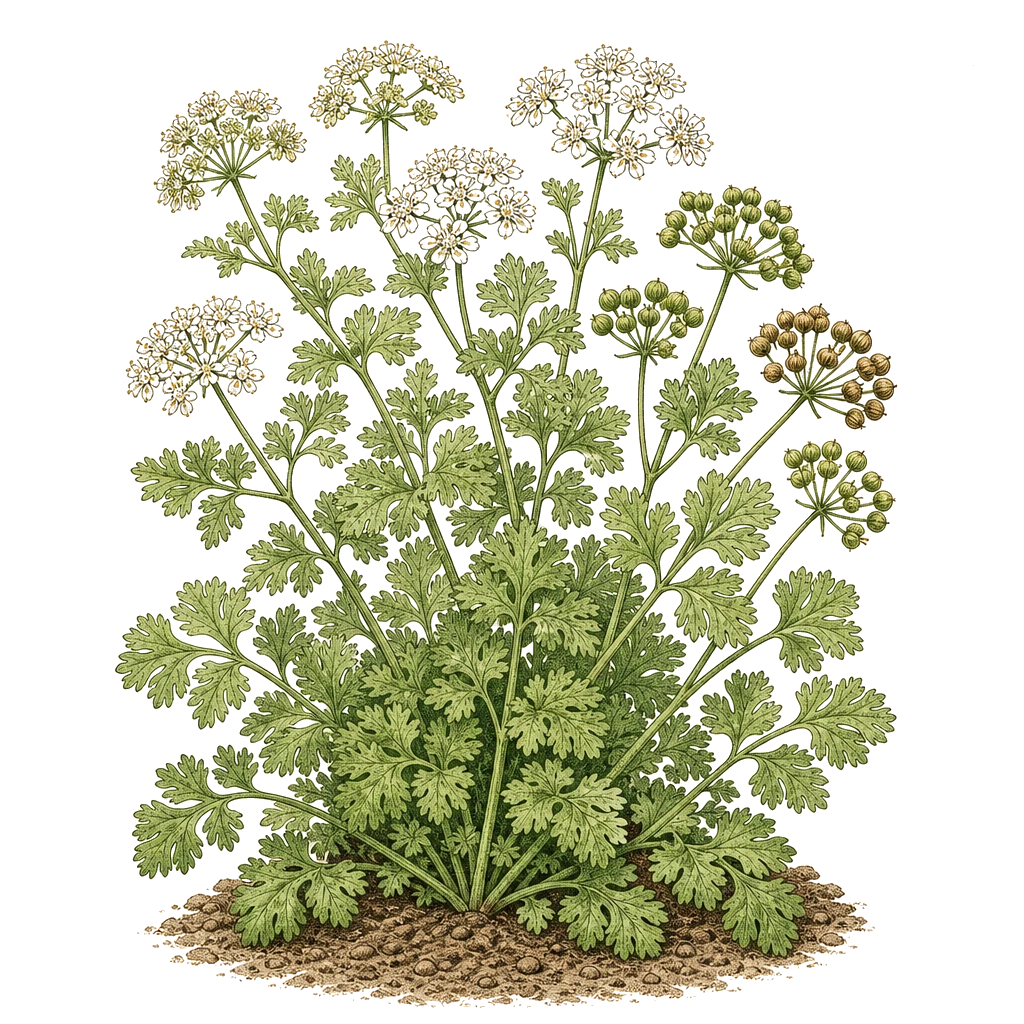
Let bolted plants finish for coriander seed. When plants send up flower stalks, there is no point pulling them. Allow the flower clusters (umbels) to complete their cycle: the full seed-to-seed timeline from a spring sowing runs about 100 days. When the seed heads turn from green to tan or brown, cut them into a paper bag and let them dry indoors until the seeds release easily. Coriander seed has distinct culinary uses from fresh cilantro leaves, and both harvests are worth capturing from the same planting.
Cilantro pairs naturally with lettuce in the garden — both are cool-season crops that prefer similar timing and benefit from afternoon shade as temperatures rise in spring. Aphids occasionally colonize cilantro stems; a hard spray of water knocks most off. For a full treatment protocol, see aphids on vegetables.
Zone and season notes
In zones 3–4, the spring window is the primary opportunity. Sow as soon as soil reaches 55°F — often early May — and make successive sowings every 2–3 weeks through early June before summer heat arrives. A fall window is unlikely given early first-frost dates in these zones.
In zones 5–7 (Upper Midwest, Northeast, Mid-Atlantic, Pacific Northwest), cilantro is a two-window crop. Sow in early spring 4 weeks before your last frost date; then sow again in late summer at least 6–8 weeks before your first fall frost to catch the cooling nights of September and October before the ground freezes.
Zones 7–8 (Upper South, transition zone) have a shorter spring window before summer heat arrives. Fall planting — starting in late August or early September — typically yields better leaf production than spring because temperatures are falling rather than rising, giving plants a longer cool runway.
In warm-winter zones (9–11), summer is off-limits entirely. Texas A&M AgriLife Extension and UF/IFAS both recommend an October–February planting window for the Gulf Coast and Southwest. Cilantro functions as a fall-through-spring crop here, and in frost-free winters plants may continue producing through January with little attention.
Coastal Pacific gardens from California through Oregon and Washington can grow cilantro through much of the year. The moderate maritime climate reduces heat stress, though spring and fall remain the most consistent windows for leaf production, particularly in gardens a few miles inland from the coast where summer heat arrives sooner.
Cilantro bolts for the same underlying reasons as lettuce and other cool-season greens — rising heat combined with lengthening days pushes the plant toward reproduction. The bolting article for lettuce and greens explains that mechanism in more detail.
Sources
- Utah State University Extension — Cilantro/Coriander in the Garden
- Oregon State University Extension — How to grow cilantro for leaves or coriander seeds
- University of Maryland Extension — Cilantro/Coriander
- Penn State Extension — Cilantro, a Unique Culinary Herb
- Texas A&M AgriLife Extension — Cilantro (Easy Gardening series)
- University of Wisconsin Horticulture Extension — Cilantro/Coriander, Coriandrum sativum
- UF/IFAS Gardening Solutions — Cilantro
- Clemson HGIC — The Cilantro-Coriander Connection
- Michigan State University Extension — The short, sweet life of cilantro
- Illinois Extension — Cilantro