
How to Grow Dill
Dill produces harvestable fronds in about 40 days from direct sowing, but it won’t cooperate with transplanting — the taproot breaks easily, and nursery transplants often bolt within days of going in the ground. Sow seeds where they’ll stay, in full sun, at or after last frost, and plan to resow every 2 to 3 weeks rather than nursing a single planting through summer heat.
How it works
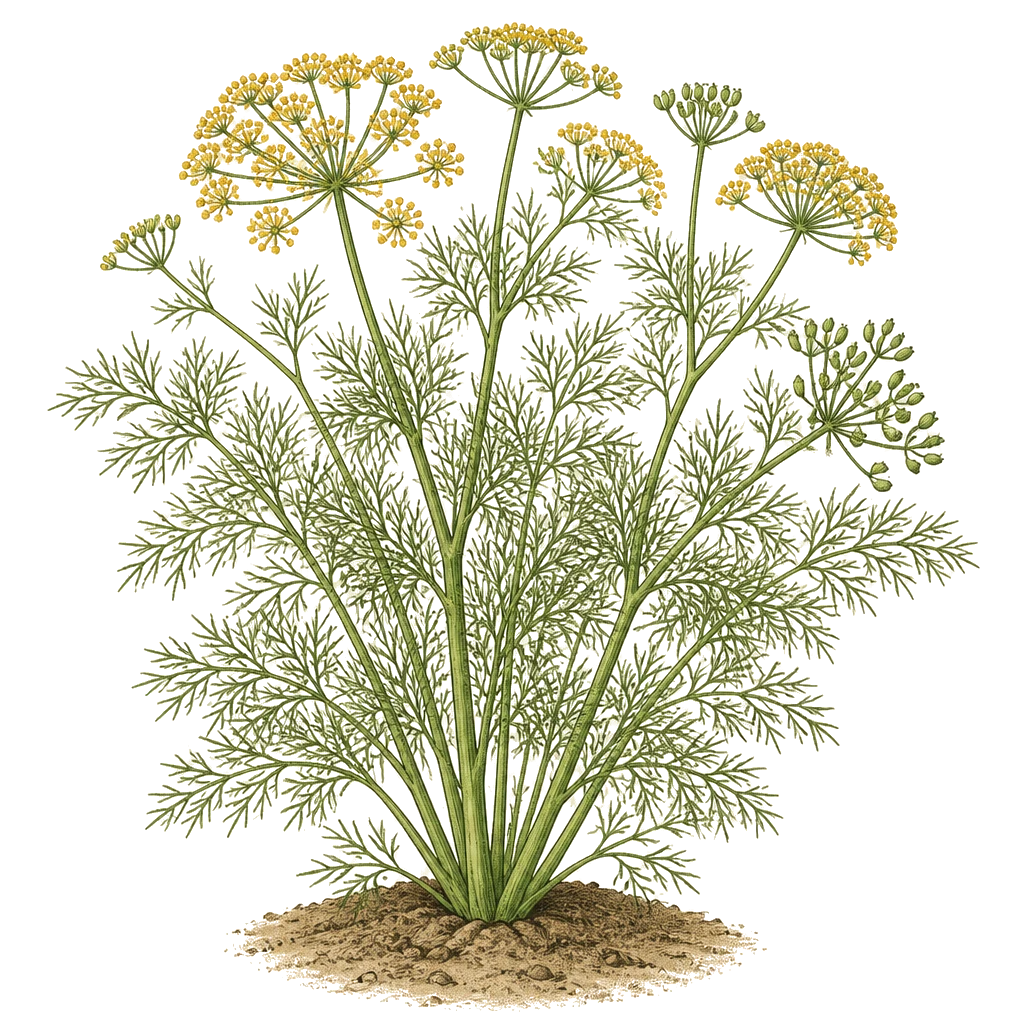
Dill is a fast-maturing annual in the carrot family (Apiaceae). Its long taproot anchors the plant firmly but also makes it essentially impossible to move without setback — University of Minnesota Extension, Penn State Extension, and Texas A&M AgriLife Extension all advise direct sowing only. Seeds typically germinate in 10 to 14 days. Once established, plants race toward flowering. That’s not a disease or a failure; it’s the lifecycle. Heat is the primary trigger: when temperatures climb above 90°F for more than a few consecutive days, dill shifts from leaf production to flowering regardless of how you water or prune it. Frond flavor diminishes as the plant puts its energy into seed production, and leaves become slightly bitter and less tender.
The right response to bolting is not bolt prevention — it’s succession planting. Keeping new sowings a few weeks behind the current planting is the only reliable way to maintain a continuous harvest.
What to do
Direct sow and spacing. Sow in full sun. Loosen the soil deeply so the taproot has room to run, and thin seedlings to 12 inches apart once they reach 2 to 3 inches tall. Full sun means 6 to 8 hours of direct light daily — shaded plants get leggy and bolt faster. Soil pH in the 6.0 to 7.0 range suits dill well with good drainage. For step-by-step seed technique, see how to direct sow vegetable seeds.
Varieties. Bouquet is the standard home-garden choice: reliable, good flavor for fresh use and pickling, widely available. Fernleaf grows compact, bolts more slowly than Bouquet, and suits tighter beds. Mammoth reaches 3 to 4 feet tall and is grown primarily for seed production; if you pinch its flower heads, you lose the point of planting it.
Succession sowing. Make a fresh direct sow every 2 to 3 weeks from your last-frost date through early summer. Illinois Extension’s succession planting chart uses a 4- to 6-week interval for practical home gardens; tighter sowing (every 2 to 3 weeks) gives more overlap between harvests. When one planting bolts, the next is already producing fronds. A few short rows work better than one long row replanted once a month.
Watering and fertilizing. Water established plants every 5 days, and daily once temperatures exceed 85°F — water when the top inch of soil feels dry to the touch. Dill doesn’t tolerate waterlogged roots — soil should feel damp an inch below the surface between waterings, not dry or standing wet. It’s a very light feeder. UMN Extension recommends a single light application of 5-10-5 fertilizer in late spring and nothing more through the season. For Zone 9–11 fall plantings, apply that same single dose in October or November at the start of your cool-season window instead. Over-fertilizing reduces flavor intensity and pushes plants to bolt faster.
Harvesting fronds vs. seeds. Start harvesting when plants reach 6 to 8 inches tall by snipping outer stems, which encourages bushier growth. Harvest fronds roughly every 10 days; cutting developing flower buds as they appear extends the leaf window a bit longer. Once flower clusters open fully, frond production is done for that planting. For seed harvest, wait until flower heads begin to turn tan, then cut the stalks and hang them over a bag or tray to catch seeds as they dry down.
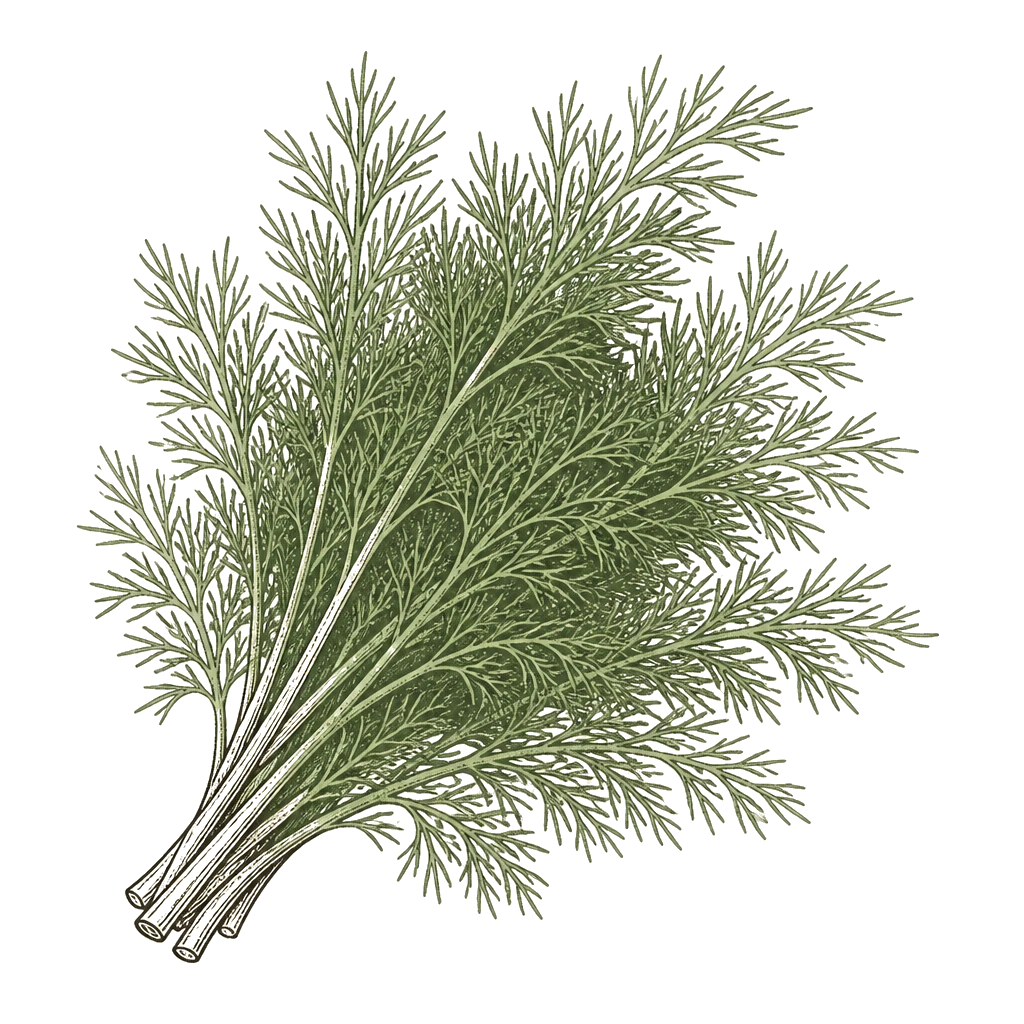
Fresh fronds keep refrigerated, wrapped in a damp paper towel, for up to a week. For dried dill (fronds or seeds), let cut material air-dry fully — about one to two weeks hanging — then store in an airtight jar away from light; flavor holds for up to a year.
Companion planting. Dill grows well alongside lettuce, onions, cucumbers, and corn — WVU Extension lists these as compatible pairings. Keep dill away from fennel: both are in the carrot family, and cross-pollination between them produces poor-quality offspring of either. Keep it away from carrots, where an inhibitory relationship is confirmed by both WVU Extension and UMN Extension. Mature dill can stunt nearby tomatoes, so keep them in separate beds.
Swallowtail caterpillars. Penn State Extension describes dill as an excellent food source for Eastern Black Swallowtail caterpillars (Papilio polyxenes). The caterpillars are black with green and yellow spots and are often mistaken for a pest — they’re not; the light defoliation they cause doesn’t hurt the plant. Many organic gardeners plant a dedicated extra row specifically to support this butterfly. Parsley, another carrot-family member, serves the same function and pairs naturally with dill in the kitchen and garden — see growing parsley.
If you log your dill sow dates in Arbor, it puts a succession-sow reminder on your task list and tracks harvest dates so you know when to start pinching flowers on each planting.
Zone and season notes
Zones 3–5. Start sowing as soon as soil can be worked in spring — often mid-April to early May — and expect 2 to 3 successions before fall frost. July heat brings on bolting fast. A late-August sowing may still yield a short fall harvest if your first frost date allows at least 40 days.
Zones 6–8. April through June is the main sowing window; dill bolts through most of July in these zones. A September sowing produces fall fronds if your first fall frost stays 40 or more days out — check your local frost date before committing the bed.
Zones 9–11. Dill is a cool-season crop in warm-winter regions. Plant in September or October for a fall-through-spring harvest. Summer sowings bolt within days of emergence — don’t attempt frond production from June through August. With succession sowing from fall through early spring, a harvest spanning the cool season from fall into spring is realistic.
Sources
- University of Minnesota Extension — Growing dill in home gardens
- Utah State University Extension — How to Grow Dill in Your Garden
- University of Maryland Extension — Dill
- Illinois Extension — Vegetable Succession Planting Chart
- Texas A&M AgriLife Extension — Dill (EHT-053)
- Penn State Extension — Herb Garden Plants: Dill
- Penn State Extension — Help the Butterflies with Milkweed, Parsley, and Dill
- Clemson HGIC — Black Swallowtail Caterpillar
- WVU Extension — Companion Planting
- University of Minnesota Extension — Companion planting in home gardens