
How to Grow Parsley
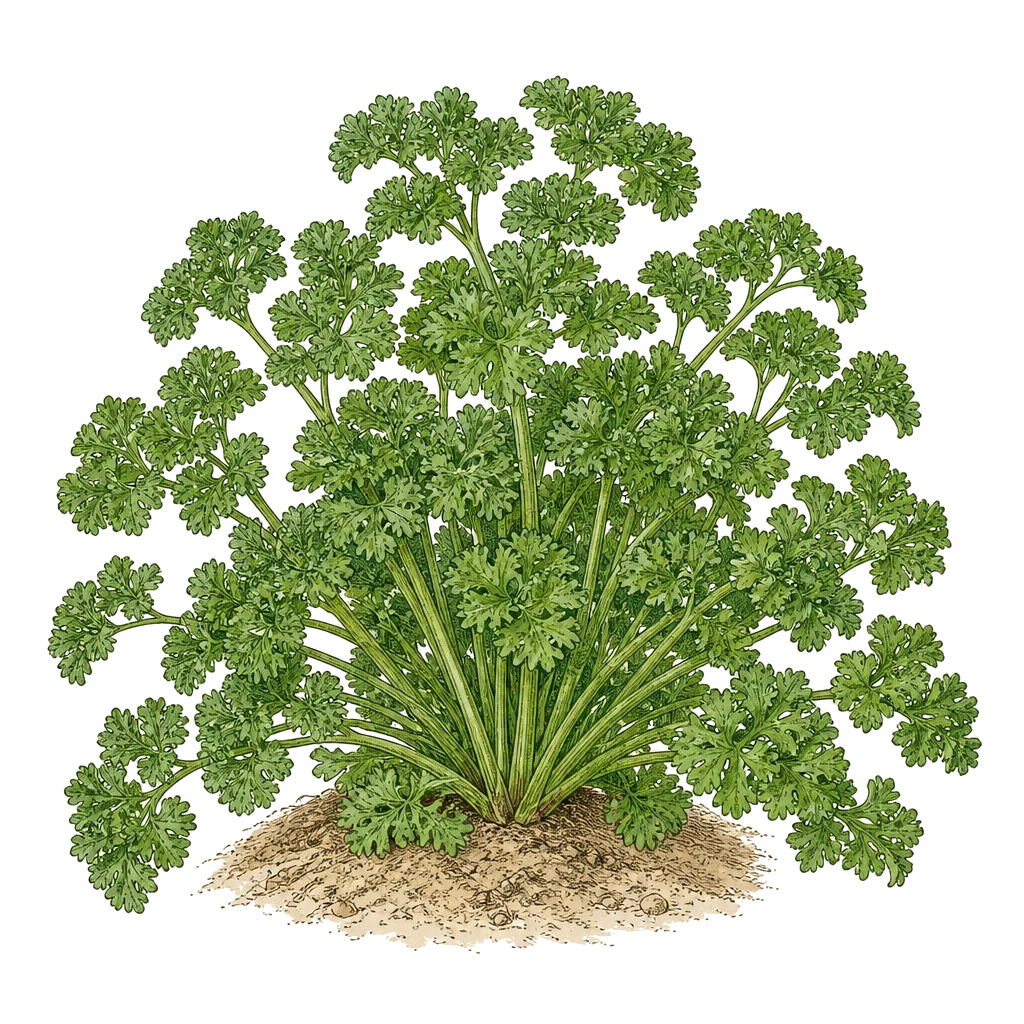
Parsley is a biennial grown as an annual — second-year plants bolt quickly and their leaves turn bitter, so replace them each season rather than carrying them over. The main challenge is germination: seeds take 2 to 4 weeks to sprout, but soaking them in warm water for up to 24 hours before planting shortens the wait. Once established, harvest outer stalks close to the ground and the plant keeps pushing new growth from the center all season.
How it works
Left in place, parsley produces foliage in year one, then flowers, sets seed, and dies in year two. The trouble is that second-year leaves become tough and bitter well before the plant flowers, and bolting begins quickly in spring. University of Minnesota Extension, Illinois Extension, and University of Maryland Extension all recommend treating parsley as an annual and starting fresh transplants each season. Bolting looks like a tall central flower stalk shooting up from the crown — when that appears, harvest any remaining outer leaves right away and pull the plant; cutting it back will not reverse the process.
The two main types differ in the kitchen, not in the garden. Flat-leaf (Italian) parsley has a stronger, more complex flavor and is the standard choice for cooking. Curly parsley’s finely crimped leaves are milder and serve mainly as garnish. Both types share the same growing requirements, soil preferences, and harvest technique.
Parsley also functions as a host plant for Black Swallowtail butterfly caterpillars (Papilio polyxenes). These caterpillars — banded black and green with yellow dots — feed on plants in the Apiaceae (carrot) family, which includes parsley, dill, and fennel. Penn State Extension and Clemson HGIC both note that many gardeners plant a dedicated extra row specifically to support this butterfly. If caterpillars appear, move them to a sacrificial patch rather than treating them as a pest.
What to do
Start seeds indoors 9 weeks before your last frost date. Before sowing, soak seeds in warm water for up to 24 hours — University of Minnesota Extension and Texas A&M AgriLife both recommend this step, and it shortens the wait. Even with soaking, expect 2 to 4 weeks before sprouts emerge; fresher seeds germinate faster. For the full indoor starting process, see how to start seeds indoors.
Transplant 2 weeks after your last frost date. Set plants 8 inches apart in well-drained soil with a pH of 6.0 to 7.0. Harden off seedlings before setting them out permanently. For guidance on transplanting, see how to transplant seedlings. Parsley tolerates partial shade better than most garden herbs — partial to full sun works well, and afternoon shade benefits plants in zones 7–11 where full-sun summers push plants toward early bolting.
To direct-sow instead, wait until soil temperature reaches at least 50°F, press seeds to the soil surface and cover with ¼ inch of fine soil, and thin to 8 inches apart once seedlings reach 2 inches tall. Germination still takes 2 to 4 weeks; indoor starting is preferred in zones 3–6 where the season is short.
Watering. Water every 4 days once established, applying enough to moisten the top 2 inches of soil, and skip after 0.5 inches of rain. Consistent moisture is most important during germination, when drying out can stall or kill seedlings. Mulch around established plants to hold moisture and keep roots cool through summer.
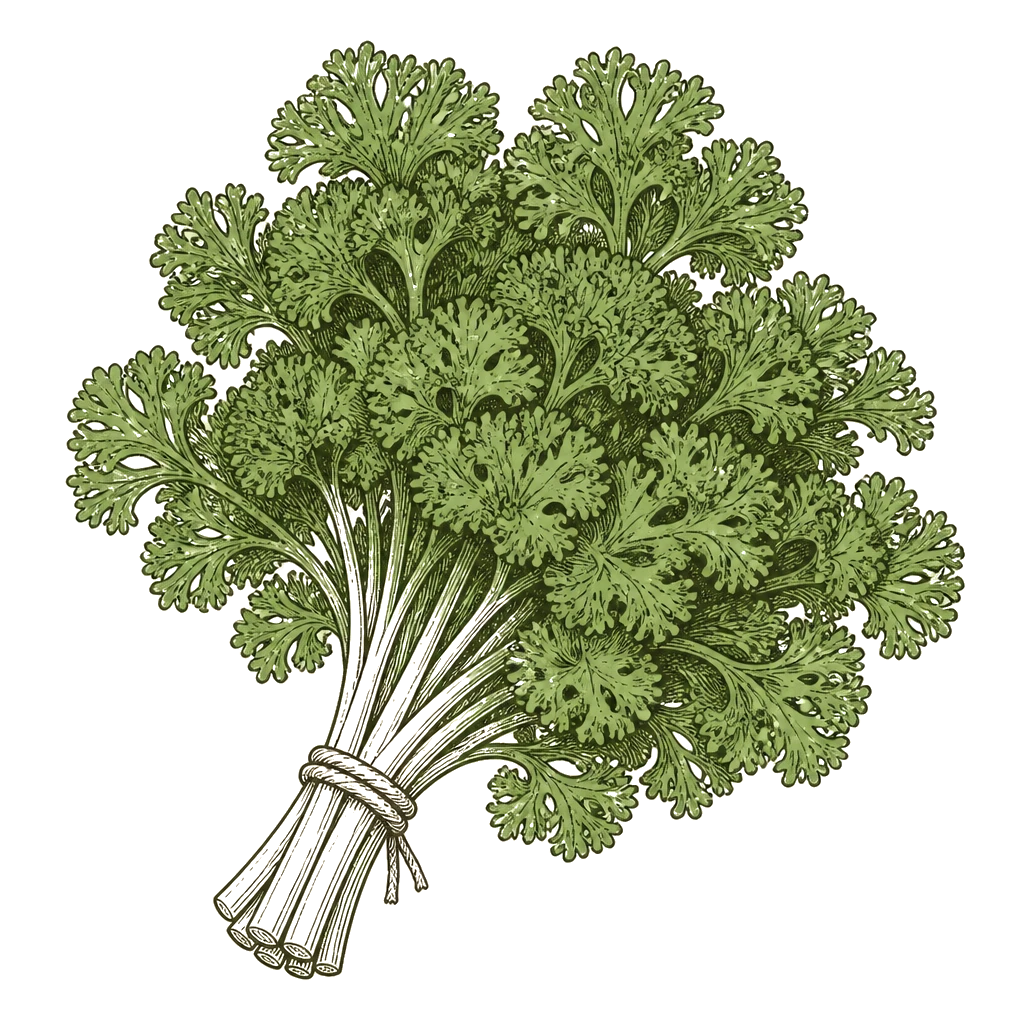
Harvesting. Begin around 70 days from seed — or 4 to 6 weeks after transplanting. Always cut outer stalks close to the base, not the center stems. Removing outer growth lets the center push new leaves continuously. A 14-day harvest cycle keeps plants productive and prevents stalks from becoming woody. If you log your parsley plants in Arbor, it queues a harvest reminder on that 14-day schedule, adjusted for where the plant is in its season.
Fertilize lightly every 4 to 6 weeks once plants are established, using a balanced organic fertilizer (such as 5-5-5 or 5-10-5) at about half the label rate. Parsley is a moderate feeder — consistent light feeding outperforms a single heavy application.
Parsley grows well alongside tomatoes and chives, and does well near carrots too.
Common problems. Parsley is generally low-maintenance, but a few issues come up. Aphids cluster on stems and undersides of leaves — knock them off with a firm stream of water and repeat every few days. Crown rot signals overwatering or poor drainage; let soil dry slightly between waterings and ensure beds drain freely. If caterpillars appear (Black Swallowtail larvae — banded black and green with yellow dots), move them to a sacrificial patch rather than treating; see the note on swallowtail biology in the “How it works” section.
Zone and season notes
Zones 3–5. Transplant after the last frost date. Parsley handles light frosts once established — Oregon State University Extension calls it one of the most cold-hardy herbs for home gardens. Harvest continues until hard frost kills the plant. Tissue damage begins around 26°F, so move container-grown plants indoors before overnight temperatures drop to that level.
Zones 6–8. Parsley may survive winter under a layer of mulch and push new growth in early spring. Use that early harvest quickly. Second-year plants bolt within weeks once the growing season warms, and leaf quality drops sharply. Set out fresh transplants by late spring for reliable production through the season.
Zones 9–11. Treat parsley as a cool-season crop, similar to cilantro. Plant in early fall, harvest through winter and early spring, and expect the plant to bolt or decline when summer heat arrives. Sustained temperatures above 85°F cause rapid leaf quality deterioration. In mild coastal climates, parsley can be nearly year-round; in hot inland areas, plan a fall restart each season rather than trying to carry summer plants through.
Sources
- University of Minnesota Extension — Growing parsley in home gardens
- Illinois Extension — Parsley
- University of Maryland Extension — Parsley
- Iowa State University Extension — Growing, Harvesting, and Drying Herbs
- Rutgers NJAES — Parsley commercial vegetable recommendations
- Texas A&M AgriLife Extension — Parsley
- Oregon State University Extension — Five cold-hardy herbs to grow at home
- Penn State Extension — Help the Butterflies with Milkweed, Parsley, and Dill
- Clemson HGIC — Black Swallowtail Caterpillar
- Illinois Extension — Backyard Science: The Black Swallowtail Caterpillar