
How to Grow Chives
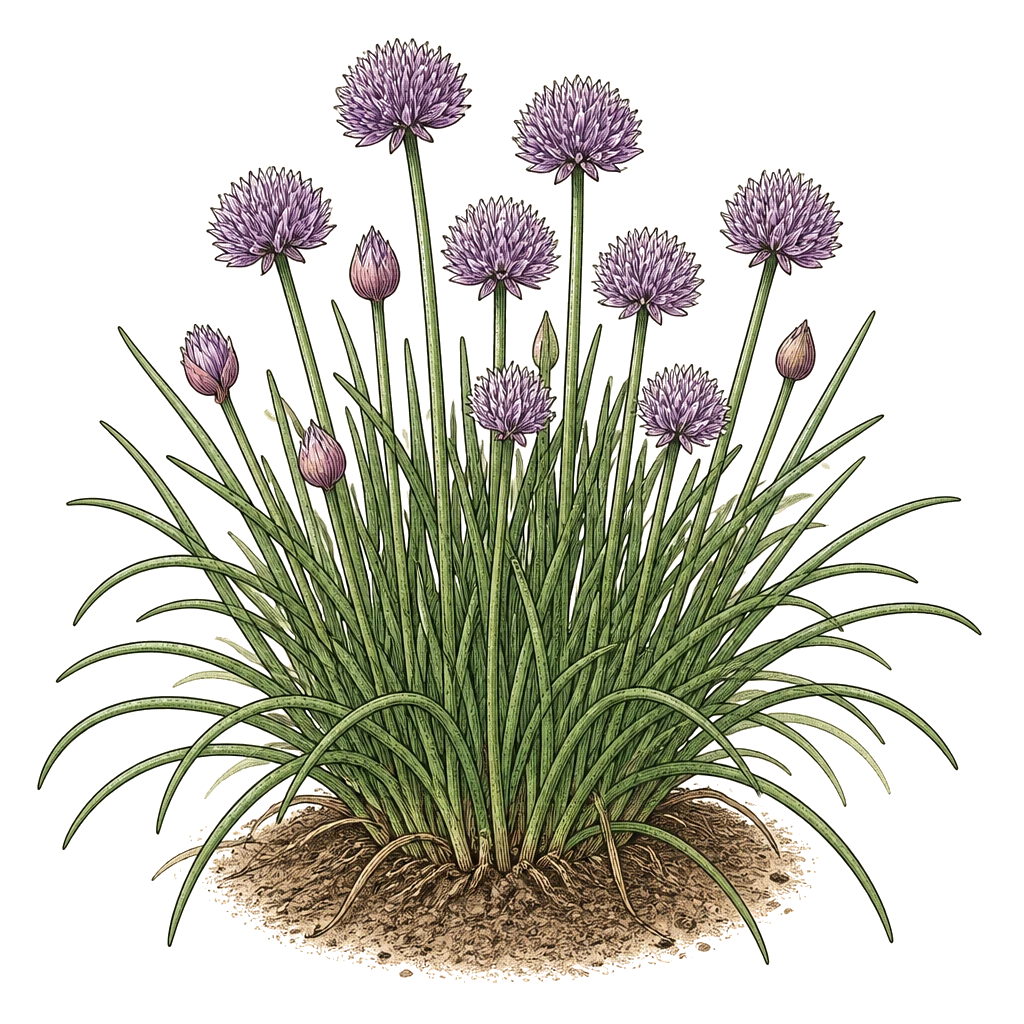
Chives are cold-hardy perennials in USDA zones 3–9 — plant them once and the same clump returns each spring for years. The one technique that separates productive chives from scraggly ones: cut leaves back to 1–2 inches from the soil, never from the tips. Two species are commonly grown: common chives (Allium schoenoprasum), with hollow, grass-like leaves and mild onion flavor, and garlic chives (Allium tuberosum), with flat, solid leaves and distinct garlic flavor.
How it works
Chives grow from tight clusters of small bulbs just below the soil surface. After each cutting, new leaves emerge from the bulb base — which is exactly why the harvest technique matters. Snipping from the tips leaves the lower leaf sheath intact but signals the plant to elongate existing leaves rather than sprout fresh ones. Cutting to within an inch or two of the base resets the growth cycle and keeps leaf production continuous.
Common chives bloom in late spring with lavender-purple flowers. Garlic chives bloom later, typically in July and August, with fragrant white flowers. Both types produce edible flowers. University of Minnesota Extension notes that chive flowers carry mild onion flavor and can be sprinkled on soups and salads; garlic chive flowers carry the garlic flavor of the leaves. For cleaner presentation, separate the petals from the green base of the flower head before using them.
Fertilizer is where gardeners commonly overdo it with chives. University of Minnesota Extension recommends a single light application of 5-10-5 in spring as growth resumes — that is all. Over-fertilizing produces weaker-tasting leaves, the same mechanism that dilutes essential oils in any herb pushed into fast growth.
What to do
Starting plants. The fastest route is planting rooted clumps divided from an established plant, or purchasing nursery transplants. If starting from seed, sow indoors 8 weeks before your last frost date; chive seeds take 4–6 weeks to reach transplant size. For more on seed starting, see the guide to starting seeds indoors. You can also direct-sow at the last frost date. Space plants 6 inches apart in well-drained soil with a pH of 6.0–7.0. Chives prefer full sun but tolerate partial shade, with full sun producing the best leaf flavor.
Watering. Water established plants every 5 days under normal conditions. In hot weather above 90°F, or for container-grown plants, check soil moisture every 2–3 days — the soil should feel barely damp an inch below the surface, not wet and not bone dry. Chives have shallow bulb roots, so moderate consistent moisture works better than deep infrequent soaking. They tolerate some drought once established, but letting the soil dry out completely between waterings will slow new leaf production.
Harvesting. Cut leaves back to 1–2 inches from the soil, not from the tips. Plan to harvest every 14 days — that interval keeps the plant cycling new growth without letting it go straggly. Take no more than one-third of the plant at a single cutting. Once flowers appear, cut spent flower stalks to the soil line; this prevents self-seeding and keeps the plant focused on leaves.
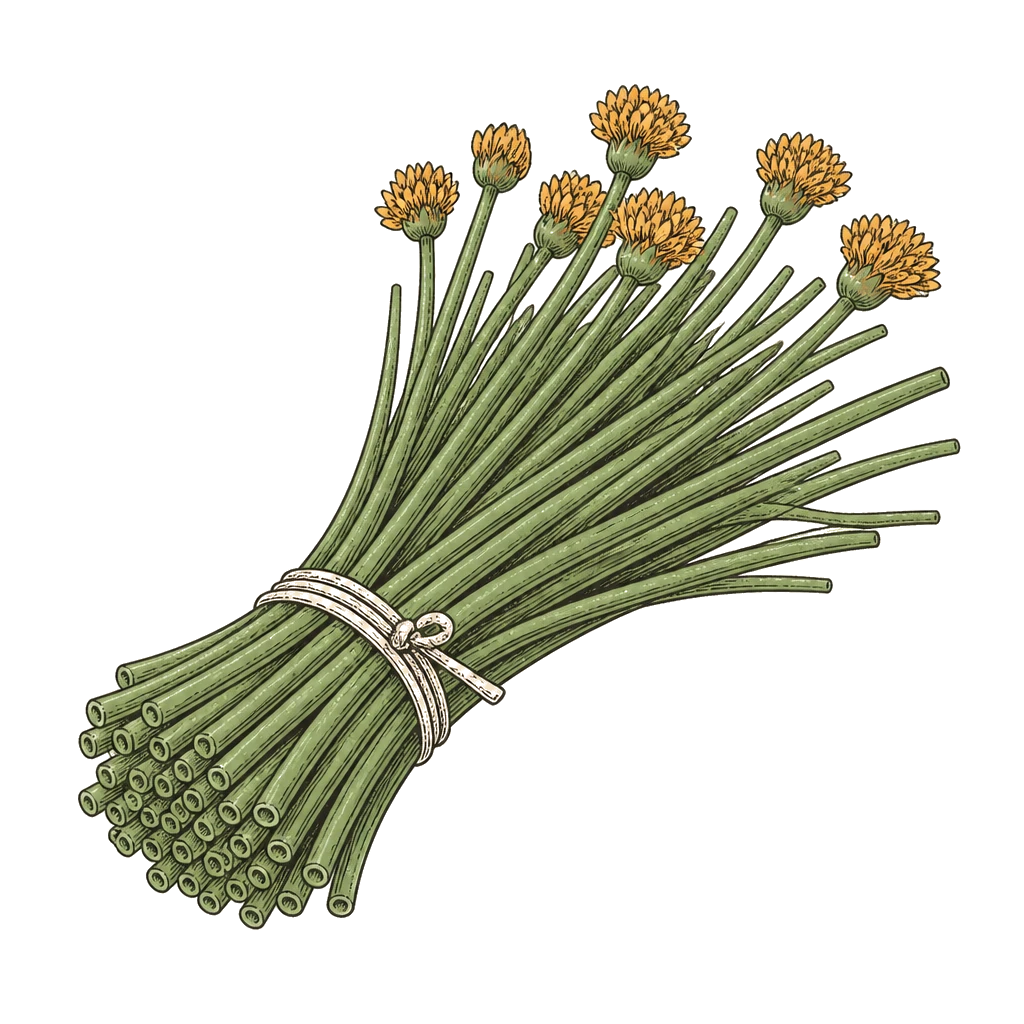
Garlic chives need vigilant deadheading. University of New Hampshire Extension notes they self-seed aggressively — missing even one season can seed an entire bed, and eradication once established takes several years of hand-pulling. Remove spent flower heads before seeds drop. If you’re unsure you can keep up with deadheading, grow garlic chives in a container with a solid bottom to contain seeds.
Log your chives in Arbor and it adds a harvest task to your weekly list every 14 days, matching the plant’s productive cycle so the interval does not slip through the season.
Fertilizing. Work about ½ tablespoon of 5-10-5 granular fertilizer shallowly into the soil around each clump once each spring as growth resumes — chives have shallow bulb roots, so don’t dig deeply. No additional feeding is needed during the season. Skip entirely during winter dormancy.
Dividing. Clumps get crowded every 3–4 years and leaf production drops. Divide in spring by digging the whole clump, splitting it into several sections, and replanting at 6-inch spacing. After dividing, let the plant reestablish for several weeks before harvesting again. Divisions establish much faster than seeds and are the primary propagation method.
Companion planting. Chives grow well alongside carrots, tomatoes, lettuce, beets, and roses. Keep them away from beans and peas, which they may inhibit. As members of the Allium family — the same family as garlic and onions — they follow the same companion-planting profile.
Common problems. Chives are rarely troubled by pests or disease. The most common issues are thrips (which leave silvery streaking on the leaves) and downy mildew during cool, wet springs — both minor in healthy, well-spaced plants. Yellowing without visible pests is usually normal summer dormancy in warm zones or drought stress; check the watering step and zone notes for your region.
Zone and season notes
In zones 3–5, chives die back completely to the ground in winter and are among the first herbs to emerge in spring, often weeks before the soil is warm enough for most vegetables. Young foliage can be nipped below 20°F, but established clumps are cold-hardy through zone 3 winters and need no special protection — late cold snaps after spring emergence rarely cause lasting damage. Leave dead foliage in place through winter for mild crown insulation; cut it back in early spring before new growth pushes through.
The longer growing season in zones 6–8 means more harvest cycles than colder zones — clumps may hold some green leaves through mild winters and die back only during hard freezes.
In zones 9 and warmer, chives may go dormant in summer heat — leaves yellow and die back without any frost involved. This is normal behavior and not a sign of disease or root failure. Keep soil from drying out completely during dormancy and the clump will re-sprout when temperatures cool in fall. Garlic chives bloom in late summer in these zones, so deadheading before seeds set is especially important to prevent spread.
Sources
- University of Minnesota Extension — Growing Chives in Home Gardens
- Utah State University Extension — How to Grow Chives in Your Garden
- Illinois Extension — Chives
- University of Maryland Extension — Chives
- University of New Hampshire Extension — How to Grow Garlic Chives (Allium tuberosum)
- University of Minnesota Extension — Edible Flowers
- Illinois Extension — Edible Flowers Can Add Unique Color and Spice
- Oregon State University Extension — Five Cold-Hardy Herbs to Grow at Home