
How to Grow Garlic
Garlic goes in the ground in fall, not spring. Before buying bulbs, settle which type suits your climate: hardneck for cold northern zones, softneck for mild winters and anyone who needs bulbs to last well into the following year. The crop averages about 240 days from fall planting to summer harvest.
How it works
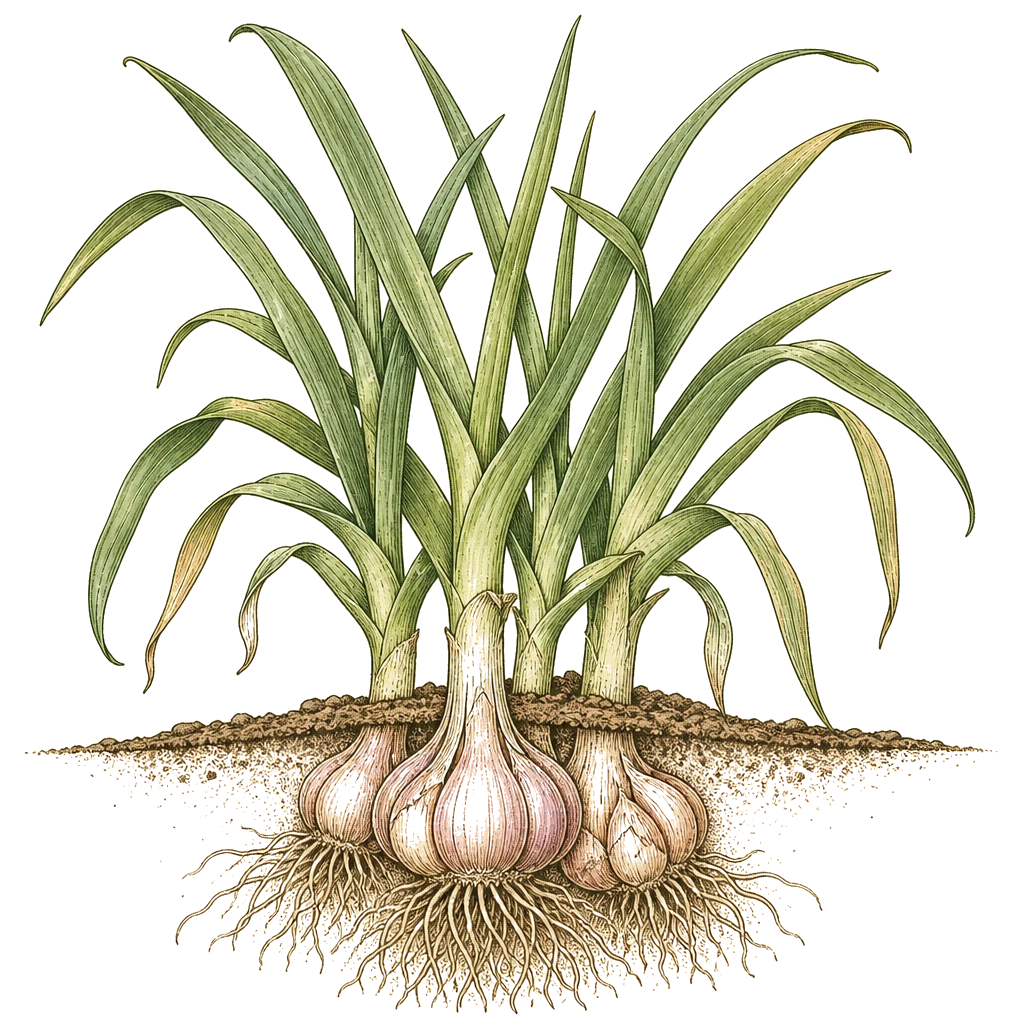
Cloves planted in fall push roots before the ground freezes, go dormant through winter, then put on their main growth in spring. Garlic needs a full-sun site — at least 6 hours of direct sunlight daily; shade suppresses bulb development even when planting and timing are correct. Spring-planted garlic grows, but the bulbs are significantly smaller and often poorly formed because garlic needs cold vernalization to develop separate cloves rather than a single fused mass. Fall planting is not optional.
The hardneck-vs-softneck distinction matters beyond flavor. Hardneck varieties — Rocambole, Purple Stripe, Porcelain types — are cold-hardy and perform best in Zones 3–6. They produce a flowering stalk called a scape that must be removed in late spring. Under cool storage conditions they hold for 2–4 months. Softneck varieties — Artichoke, Silverskin types — handle mild winters reliably, thrive in Zone 7 and warmer, produce no scapes, and store 6–8 months when properly cured. If you’re in a warm-winter zone and want garlic on hand through fall and winter, softneck is the practical pick.
What to do
Buy certified seed garlic from a local nursery or reputable mail-order supplier. Grocery-store garlic is often treated with sprout inhibitors and may be an imported variety unadapted to your climate. Break heads into individual cloves and plant only large, firm ones — within any variety, larger cloves produce larger bulbs. Discard any that are soft, shrunken, or moldy.
Prepare the bed before planting. Garlic needs loose, well-drained soil — it rots in standing water or compacted ground. Work 2–3 inches of compost into the top 8 inches and avoid low spots where water pools after rain.
Plant 3–4 weeks before the ground freezes — see when to plant vegetables for regional timing. Set each clove pointed end up, 2 inches deep and 6 inches apart, in rows 12 inches apart.
Mulch immediately. Spread 4–6 inches of clean straw over the bed right after planting. Avoid hay — it carries weed seeds. Mulch moderates soil temperature through winter, prevents freeze-thaw heaving, and suppresses weeds through the long growing season.
Fertilize twice. Work a granular balanced fertilizer into the bed at fall planting, following the package rate. Side-dress again as soon as green shoots emerge in early spring — scatter the fertilizer along the row and scratch it in lightly. Stop feeding once scapes appear or by early June in northern gardens, when energy should shift to the bulb rather than continued leaf growth.
Keep soil evenly moist through spring — about 1 inch of water per week from rain or irrigation. Garlic does not need supplemental watering over winter once the ground freezes.
Scapes on hardneck varieties are worth about half your bulb. University of Maine Cooperative Extension research found that leaving scapes in place reduces final bulb size by up to 48%. Remove them when they complete their first full curl — waiting until they elongate further still costs about 9% of bulb size compared to prompt removal. Scapes are edible: use them in stir-fries, pestos, or pickled preparations. If you track your garlic planting in Arbor, it adds a scape-removal task to your list when the timing approaches so the window doesn’t slip past.
Stop watering 2–3 weeks before harvest. Wet soil at harvest time promotes storage rot and shortens storage life.
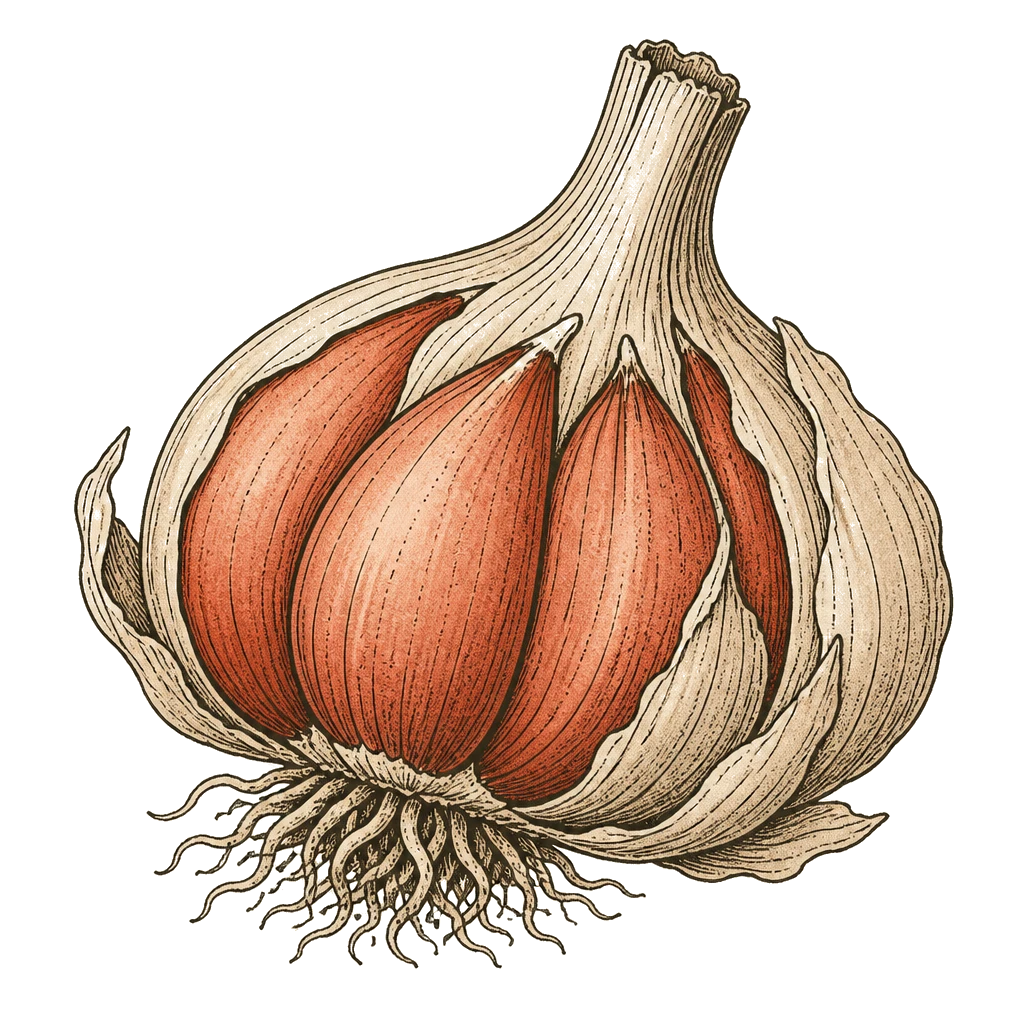
To harvest, loosen soil with a garden fork 2–3 inches from the base of each plant before lifting — pulling straight up without loosening often snaps the neck, which shortens storage life. Harvest when roughly half the leaves have browned from the bottom up; at that point the wrappers are still intact and the cloves are fully sized. Waiting until more than half the leaves have browned risks wrapper breakdown.
Hang bulbs in loose bundles or spread on screens in a shaded, well-ventilated spot for 3–4 weeks to cure. After curing, trim roots and cut stems 1–2 inches above the bulb. Softneck tops can be braided.
Store in a cool, dry, well-ventilated spot. Mesh bags or slatted bins allow air circulation. Do not seal garlic in plastic bags or refrigerate — both conditions accelerate sprouting and mold. Softneck holds 6–8 months; hardneck generally 2–4 months, with some varieties approaching 6 months under consistently cool, dry conditions.
Zone and season notes
Zone 3–5: Hardneck varieties are the natural fit. Plant mid-September through October; mulch with 4–6 inches of straw immediately after planting to prevent freeze-thaw heaving. Scapes appear in late May or June; harvest in July.
Zone 6–7: Either type works well. Plant October through November. Softneck is worth considering if storage life is a priority. Harvest in June or July.
Zone 8: Softneck Artichoke types are standard. They handle mild winters reliably where hardneck varieties may not get enough sustained cold to bulb well. Plant November through early December; harvest April–May.
Zone 9–10: Plant late October through January, once soil temperatures cool. Stick to softneck varieties — hardneck types generally need more winter cold than these climates reliably deliver. Harvest in late spring before soil temperatures rise.
Sources
- UMN Extension — Growing Garlic in Home Gardens
- UMD Extension — Growing Garlic in a Home Garden
- OSU Extension — Fall Is the Best Time to Plant Garlic
- Iowa State Extension — Growing Garlic in the Home Garden
- Penn State Extension — Growing Garlic: Fall Planting
- University of Maine Cooperative Extension — Growing Garlic in Maine (Bulletin #2063)
- Ohio State CFAES — Growing Garlic in the Garden
- Rutgers NJAES — FS1233: Growing Garlic in the Home Garden