
How to Grow Tomatillos: Planting Through Harvest
Plant a single tomatillo and you’ll get flowers, husks, and not much fruit inside them. Tomatillos aren’t self-fruitful the way tomatoes are: each plant needs pollen from a different tomatillo, and bees to move it. So set out at least two, same variety or different ones. Past that: 6 hours of sun, 24 to 36 inches between plants, about an inch of water a week, and 60 to 75 days from transplant to first fruit.
How it works
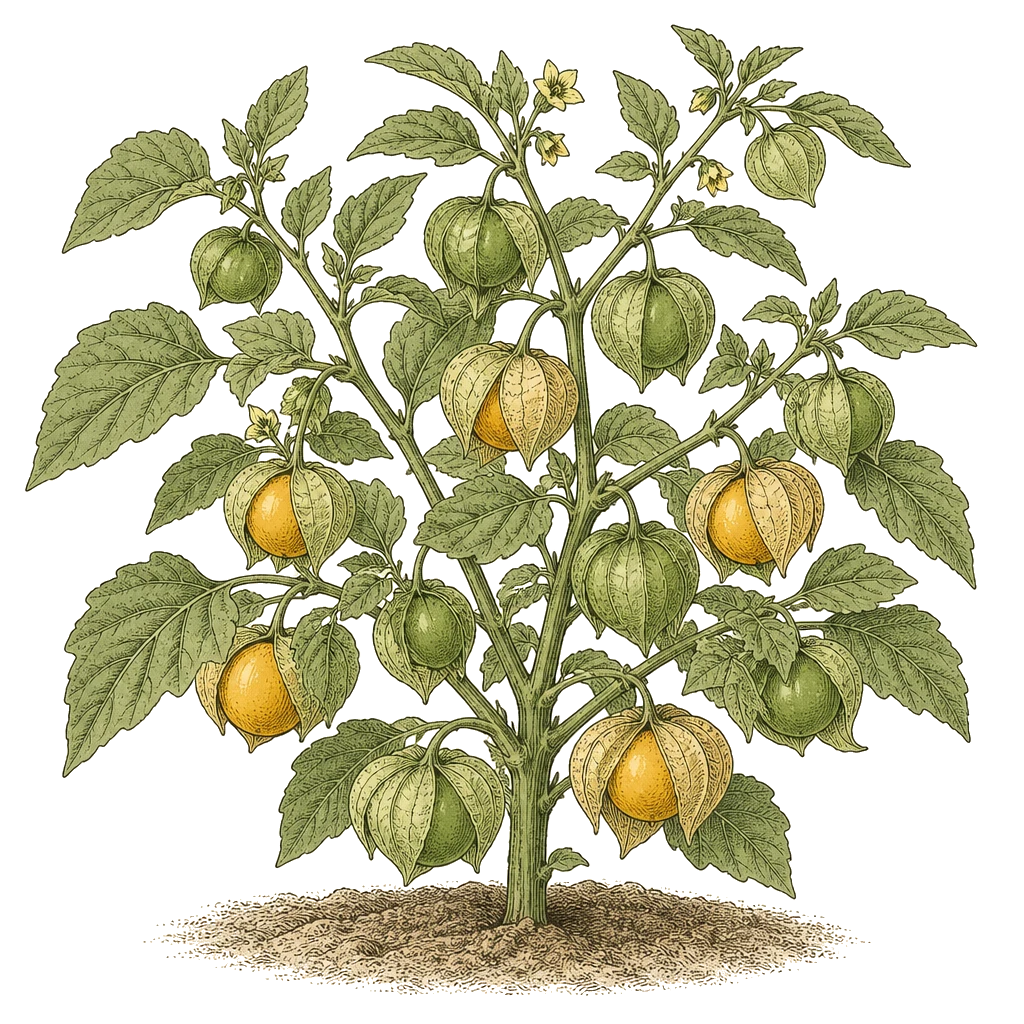
Tomatillos are nightshades like tomatoes and peppers, but the resemblance stops at the flower. A tomato flower fertilizes itself before it opens. A tomatillo flower can’t: it needs pollen carried in from a second tomatillo plant by bees and other insects, which is why one plant so often produces husks with little or no fruit inside. Two plants of the same variety are enough; two of different varieties work too. Temperature can undo the second plant’s work anyway: above 90°F or below 55°F, flowers drop before they set fruit. Empty husks on a two-plant planting point to a heat wave or a cold snap, not another missing plant.
Left alone, tomatillos sprawl to 3 to 4 feet tall and about as wide. A cage or trellis keeps the fruit up off the ground.
Fruit set has a second lever besides pollination, and it’s nitrogen. Over-fertilizing is a common cause of a leafy, floppy plant that’s slow to bear fruit: the extra nitrogen pushes growth into leaves at the expense of flowers, so a fruitless tomatillo usually needs less feeding, not more.
What to do
Mid-season with one plant and a crop of empty husks, the fix is still a second plant — and it only has to bloom, not fruit. Once the new plant is flowering, the older one’s later flowers have pollen to work with and can set. Husks that already formed won’t fill. Whether the new plant ripens a crop of its own depends on the calendar: that takes 60 to 75 days from the day you set it out, so check the count against your average first frost date.
Starting seed and setting plants out
Start seed 5 to 6 weeks before you plan to set plants out — published ranges run from 4 to 8 weeks, and the middle of that range is the safe call. Hold the seed tray at 75 to 85°F until seedlings emerge, then ease down near 70°F. Set transplants out only after frost danger has passed and the soil has warmed past 60°F. Utah State Extension (the state university’s public advice service) found transplants reach first fruit four to five weeks earlier than direct-seeded plants. Space 24 inches apart if you’re caging, 36 if sprawling, and keep the pair in the same bed so insects work both. A 4×8 bed has room for three caged plants down its length, or two sprawling ones, so either way you clear the two-plant minimum. Set the cage at planting. A mature plant can’t be caged once it sprawls.
Watering and feeding
Water deeply and infrequently — about an inch a week, up to 2 inches in heat or sand, letting the soil dry slightly between waterings — and irrigate mornings or use drip so foliage dries before night. Side-dress each plant with 1 tablespoon of 21-0-0 at four weeks after transplanting and again at eight, watering it in. That means scattering the fertilizer on the soil a few inches out from the stem rather than digging it in. If you don’t have 21-0-0, another high-nitrogen fertilizer works, but follow its own label rate rather than the tablespoon above; nitrogen is the first of the three numbers on the bag. Skip the eight-week dose if the plant is already tall, dark, and leafy with few flowers, since more nitrogen there only delays fruit. Without a soil test telling you otherwise, leave phosphorus and potassium alone and choose a low- or no-phosphorus product.
Harvest and storage
Pick when the fruit fills its husk and the husk just begins to split, drying green toward tan. The split is the signal; the husk needn’t be fully tan. A ripe one feels firm, not hard, and pulls free with a light tug. First fruit arrives 60 to 75 days after transplanting and picking runs on from there to around 100 days, for about 2 to 3 pounds per plant. Once a green variety starts to yellow or purple it goes soft and loses the tartness that makes it worth growing, so pick those while the fruit is still green.
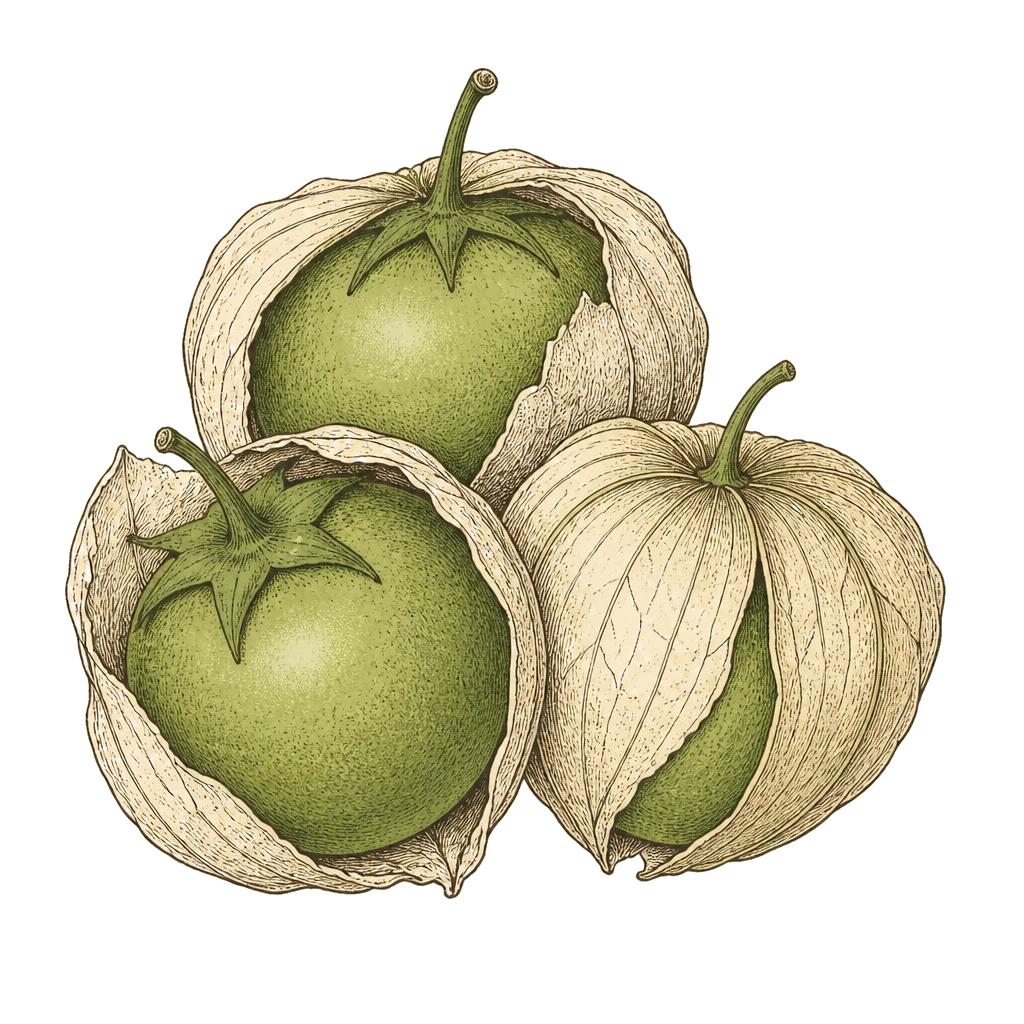
Tomatillos need no curing. Hold fruit in a cool, well-ventilated spot at 42 to 60°F and 60 to 80% relative humidity. South Dakota State Extension warns that fruit held below 41°F develops chilling injury — pitting and spoilage — so don’t chase a colder number expecting longer life. In a refrigerator, keep husk-on fruit in a paper bag, where it holds 1 to 2 weeks before quality drops.
The three-lined potato beetle
Watch for the three-lined potato beetle, the tomatillo’s signature pest: an orange beetle with three black stripes on its wing covers, whose larvae hide under their own excrement. Defoliation runs heavier on tomatillo than on tomato or potato. Clear nightshade-family weeds near the bed; they act as alternative hosts for the beetle. Beetles emerge any time from May to August, so cover young plants at transplanting with a row cover, a lightweight fabric laid over the bed. Pull the cover at first flower — a covered plant is sealed away from the insects it needs for pollinating and sets nothing. If beetle numbers build, look plants over and handpick daily. Weekly checks fall behind fast. If you already spray for Colorado potato beetle nearby, check the label before assuming it covers this species too.
Zone and season notes
In short-season and cold-winter zones, use transplants. Four to five weeks of head start can be the difference between a full harvest and one cut short by frost.
Warm-winter and long-season gardeners get more slack on timing but face beetle pressure for longer. The three-lined potato beetle overwinters as an adult or pupa in the soil and emerges anywhere from May to August to mate and lay eggs, so you’re watching for them most of the growing season. If you log a note like “three-lined potato beetle on tomatillos” in Arbor, it flags the sighting and puts a beetle check back on your list the following week. That keeps the beetles from getting a month’s head start while your attention is on the fruit. Rotate tomatillos away from tomatoes, peppers, and potatoes each year; the beetle overwinters in the soil where those crops grew.
Sources
- Utah State University Extension — How to Grow Tomatillos in Your Garden
- University of Minnesota Extension — Growing tomatillos and ground cherries in home gardens
- South Dakota State University Extension — Tomatillo: How to Grow It
- South Dakota State University Extension — Tomatillos: Harvest and Storage
- N.C. Cooperative Extension (Wilkes County Center) — Growing Tomatillos in the Home Garden
- South Dakota State University Extension — Three-Lined Potato Beetles Are Eating My Tomatillos!
- Utah State University Extension IPM — Three-Lined Potato Beetle