
Squash Bugs: Catch the Eggs Before They Hatch
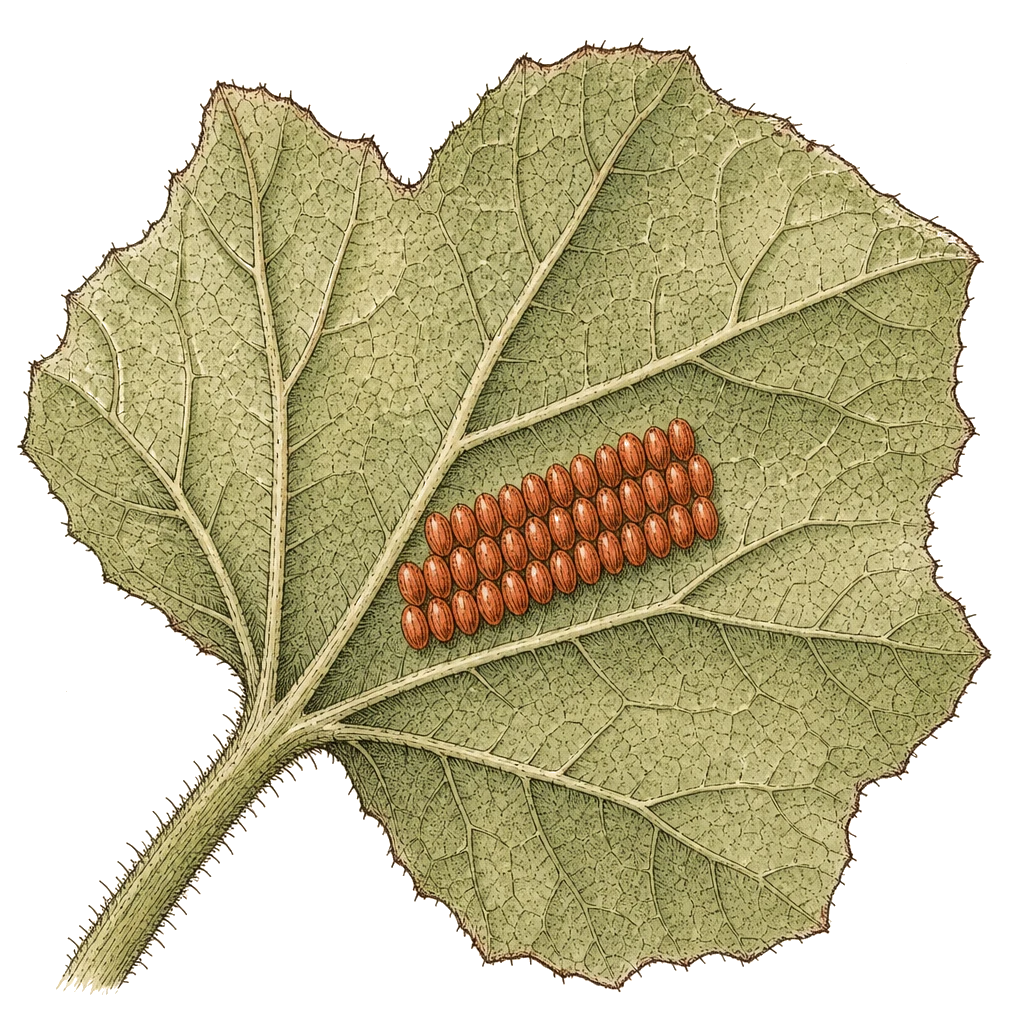
Squash bugs are beaten by timing, not firepower. Scout the undersides of leaves for their bronze egg clusters and crush them on sight, handpick the gray adults and nymphs into soapy water, and lay a board by the plants overnight to collect the stragglers. Sprays only land on young nymphs; adults and older nymphs shrug almost everything off, so a week of vigilance early beats a stronger bottle later. Keep the plant base clear of debris and loose mulch too, which is exactly where they shelter.
What’s actually happening
The squash bug, Anasa tristis, is a flat-backed insect roughly 1/2 to 3/4 inch long (often cited at 5/8), gray to nearly black, with faint orange bars along its abdomen. Adults overwinter under debris, boards, and dead leaves near last year’s squash, then emerge in late spring for the new crop. They go after winter squash and pumpkins hardest, summer squash less, and only rarely cucumbers or melons.
The eggs are the thing to learn. They’re shiny, copper-colored, about 1/16 inch, laid in neat clusters on leaf undersides, often in the V where two veins meet. They hatch in roughly a week into pale-green nymphs that gray up through five stages to adulthood — a full generation takes about six to eight weeks.
What they do to a plant is worse than ordinary chewing, because squash bugs don’t chew — they stab and inject, killing cells and clogging the vessels that carry water up the vine, so a plant can wilt and collapse even while it still looks healthy above the feeding site. This is also where standard garden advice cuts the wrong way: Colorado State found squash bug damage is worse on mulched plants than bare soil, because mulch hands them cover. Mulch still earns its keep on squash for moisture and powdery mildew control, but where these bugs are a known problem, pull it back from the stem base and check underneath when you scout.
What to do
Scout and squash, early and often. Through the first weeks of the season, check leaf undersides at least weekly and rub out every egg cluster you find — it’s far less work than dealing with the nymphs later. Handpick adults and nymphs into soapy water. A board or piece of cardboard laid flat by the plants overnight gives the adults a place to gather; lift it each morning and collect them.
Where squash bugs turn up every year, get ahead of them. Floating row covers over young plants keep egg-laying adults off entirely; pull them once the plants flower so pollinators can reach the blossoms. Roll any fruit resting on the ground and crush the bugs sheltering underneath. At season’s end, clear the old vines and debris thoroughly, one of the most effective ways to cut how many adults survive to next spring.
Log the first eggs you spot (“squash bug eggs on the zucchini”) and Arbor flags it urgent, prompts you to add a scouting task for this week and a follow-up a week or two out so the second look doesn’t get forgotten, and keeps the date on record — which matters here, because next year the bugs will show up at roughly the same point in your season.
If you do spray, timing is the whole game. Registered products (insecticidal soap, oil, or pyrethrins organic; carbaryl or permethrin conventional) work on small nymphs and barely touch adults or older nymphs. Aim at the base where they cluster and treat when eggs first hatch — roughly a week after you spot a fresh cluster — then repeat if a new hatch appears. One check before you spray: a squash bug carrying tiny white eggs on its back is parasitized by a beneficial tachinid fly — leave it alone. Planting dill, parsley, fennel, or buckwheat nearby gives those flies the nectar that keeps them around.
When to worry and when not to
A handful of squash bugs on a big, established winter squash isn’t an emergency; a vigorous plant tolerates some feeding. The danger window is seedlings and young plants, which are hit hardest and can be set back badly or lost. The other is the stretch before fruit set, when a sudden wilt costs you the harvest. On the fruit, their feeding leaves sunken, corky scars that can let rot in. Watch the young plants closely, and on mature ones act when egg clusters start multiplying or leaves begin to flag, not over every adult you spot.
Zone and season notes
Squash bugs lean harder on warm gardens. After a mild winter more adults survive to start the spring, and Colorado State notes that warmer regions carry heavier pressure overall. Where the season runs long enough, a second generation matures in late summer, so a planting that looked clean in June can be overrun by August — scout straight through the season, not just at the start, and take on a later second planting only if you’ll cover it young and scout it weekly.
In cold-winter zones the rhythm is tighter and more predictable: one main generation, with egg-laying that usually starts in early-to-mid June. That makes two moves especially worth it up north — getting row covers on before mid-June, and stripping out every bit of vine and debris at season’s end so fewer adults make it through to spring.
Sources
- Colorado State University Extension — Squash Bug: Management in Home Gardens (Fact Sheet 5.609)
- University of Minnesota Extension — Squash bugs
- University of California Statewide IPM Program — Squash Bugs
- Wisconsin Horticulture, Division of Extension — Squash Bug, Anasa tristis
- University of Florida IFAS Extension — Squash Bug, Anasa tristis (EENY-077)
- University of Illinois Extension — Squash Bug