
Snails and Slugs: What Works and What's a Myth
There’s no single trick that clears snails and slugs, but a few stacked together will. Strip out their daytime shelter and surface moisture, hunt or trap them at night, and ring the beds you care about with a copper barrier or a scatter of iron-phosphate bait. Before any of that, confirm the culprit: the silvery slime trail is the giveaway, since earwigs and caterpillars chew look-alike holes. And skip two famous duds — table salt just damages your soil, and crushed eggshells don’t stop a thing.
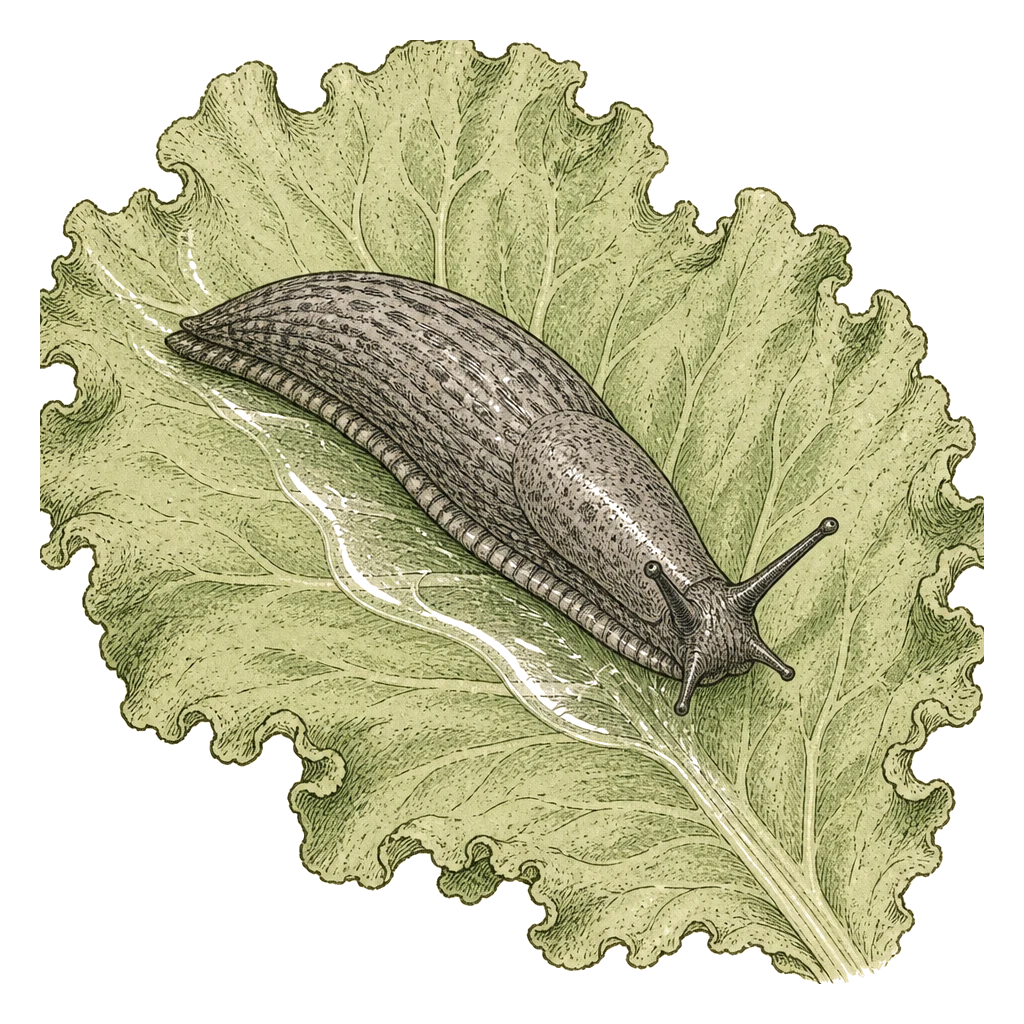
What’s actually happening
Both are mollusks, gliding on one muscular foot that secretes the mucus you later see dried into a trail. They feed after dark and on overcast, foggy days, then retreat by daylight into anything cool and damp: boards, dense ground cover, the underside of a low leaf. That’s why you find ragged, smooth-edged holes and shredded seedlings but rarely catch anyone in the act.
They rebuild fast from the damp margins of a garden. A single brown garden snail, the species that dominates mild-winter gardens, lays about 80 eggs at a time and can do it six times a year, though it takes roughly two years to mature. Slugs move quicker: many reach maturity in three to six months and lay eggs in batches of 3 to 40, tucked under leaves and into soil cracks.
This is why the common mistake is treating the animal instead of the habitat. UC’s IPM program is blunt: baits alone won’t control snails and slugs in a garden offering plenty of shelter, food, and moisture. The bait kills some, but the hiding spots refill the bed by the weekend. Take away the daytime shelter and the standing surface moisture and you’ve done more than any pellet will.
What to do
Start by making the bed inhospitable. Clear the boards, stones, weedy fringes, and debris where they shelter, and put susceptible plantings in your most open, sunlit spot. Then fix the water: switch overhead sprinklers to drip, or at least move watering to early morning so the surface dries by nightfall — Oregon State is explicit that evening watering sets the table for them.
Trap and handpick next; it works and costs nothing. Water a problem bed in the late afternoon to draw them up, then go out after dark with a flashlight and drop what you find into soapy water nightly until the numbers drop, then weekly. A board laid flat on 1-inch runners gives them a place to gather overnight — flip it each morning and clear it. Beer or yeast-water traps work too, but only within a few feet and need topping up every couple of days — a supplement, not a perimeter.
Nightly checks are the part that slips once the population drops. If you log a note like “slugs shredding the bean seedlings,” Arbor flags it as urgent and prompts you to put a nightly check on this week’s list; it also records the date, so next spring’s timing is already in your history.
For beds you want to protect outright, a copper barrier is the most durable exclusion: a 4- to 6-inch band around a raised bed, or a vertical strip at least 2 inches tall set an inch into the soil. (UC frames the copper-slime reaction as the believed mechanism, not settled fact.) Dry diatomaceous earth heaped in a band an inch high and three wide does similar work, but it quits the moment it gets wet, which is most of the time in snail weather.
If you still need to knock a population down, reach for an iron-phosphate bait (Sluggo, Slug Magic). It’s far safer around kids, pets, birds, and fish than metaldehyde, and several formulations are organic-listed. It stays active up to two weeks through rain. The slowness is by design: snails stop feeding almost immediately but take several days to a week to die. Scatter it in the evening on moist ground where they travel, never piled and never on the plants. Ferric sodium EDTA baits work the same way and kill in about three days instead of seven, if you don’t need the organic label. Avoid metaldehyde around food crops or pets — it’s the riskier chemistry for the same job.
When to worry and when not to
A few snails on an established, knee-high plant aren’t worth a night hunt — mature plants shrug off a lot of chewing. The real stakes are seedlings, fresh transplants, and low fruit like ripening strawberries resting on the soil. Protect the young and the low; tolerate the rest.
Zone and season notes
Which pest dominates flips with climate, and so does the timing.
In cold, wet regions, slugs are the main event. They ride cool, damp spring weather, and how bad a year gets tracks how many survived the winter. Penn State ties the gray garden slug to those wet spring stretches. The highest-leverage move in a cold-winter garden, Oregon State notes, is a fall cleanup-and-bait pass: knock down the adults before they lay the eggs that seed next spring’s outbreak.
In mild-winter regions and southern coastal areas, snails take over, the brown garden snail above all, and stay active nearly year-round. They pause only to seal themselves onto walls and tree trunks and wait out hot, dry spells. Baiting during that summer dormancy is wasted; wait until they’re moving again.