
How to Grow Eggplant
Eggplant needs a long, warm season that most vegetables don’t require. Start seeds indoors 8 weeks before your last frost date, then hold off on transplanting until nighttime temperatures are consistently above 50°F — best results come when nights are above 60°F. That’s typically 3 weeks after last frost in most climates. Plants that go into cold soil stall, and they rarely recover the vigor they would have built in warm conditions.
How it works
Daytime temperatures of 80–90°F and nights around 70°F are where eggplant grows best. Below those ranges, growth slows noticeably. At 33°F, tissue damage begins — a temperature that arrives well before a true hard freeze. This heat dependence explains why cold transplant soil is so damaging: a plant in cold soil establishes slowly and never recovers that lost time.
Days to maturity runs 65–80 days from transplant, or 100–120 days from seed. Every week lost to cold stress early in the season compresses the harvest window at the other end. In short-season climates, that arithmetic can mean the difference between a full harvest and almost none.
Watering consistency shapes fruit quality. Irregular wet-dry cycles — not just drought — produce bitter fruit.
What to do
Siting. Choose a spot with full sun — at least 6 hours of direct sun per day. Eggplant produces little fruit in partial shade, even when every other condition is right.
Starting seeds. Sow indoors 8 weeks before your last frost date, 1/4 inch deep. Keep the germination medium at 70°F — eggplant germinates poorly in cool soil, even indoors. See the starting seeds indoors guide for setup and timing.
Transplanting. Wait until nighttime lows are reliably above 50°F and the soil has genuinely warmed, usually 3 weeks after last frost. Space transplants 18 inches apart within rows, with 30 inches between rows. If plants have already set flower buds, pinch them at transplant time: directing energy to root and stem growth first produces a stronger plant before fruiting begins. See transplanting seedlings for hardening-off and transplant mechanics.
Feeding. Work a balanced fertilizer such as 10-10-10 into the top 3–4 inches of soil at transplant. Once fruit begins to set, switch to a high-potassium fertilizer such as 5-10-10 and side-dress at the rate on the label. Too much nitrogen at fruiting drives leafy growth at the expense of fruit.
Watering. Water at the base of the plant every 3 days during active growth. When daytime temperatures stay above 90°F, increase to every 1–2 days. Consistent soil moisture matters more for eggplant than for most vegetables — steady watering is what keeps the fruit from turning bitter.
Flea beetles. These are the number-one threat to young eggplant. Small, fast-jumping beetles riddle leaves with tiny round holes and can kill seedlings outright. Apply row covers at transplant and keep them on until plants reach about 12 inches tall with 6 or more true leaves — at that size, feeding damage rarely kills the plant. Once flowers appear, remove covers during warm parts of the day so pollinators can reach the blooms. The flea beetle guide covers identification and management steps.
Rotation. Verticillium wilt is the most common eggplant disease — a soilborne fungus with no cure once established in the bed. The only reliable management is crop rotation: do not plant eggplant, tomatoes, peppers, or potatoes in the same bed for 3–4 years. Plan the rotation before you pick a planting spot, not after.
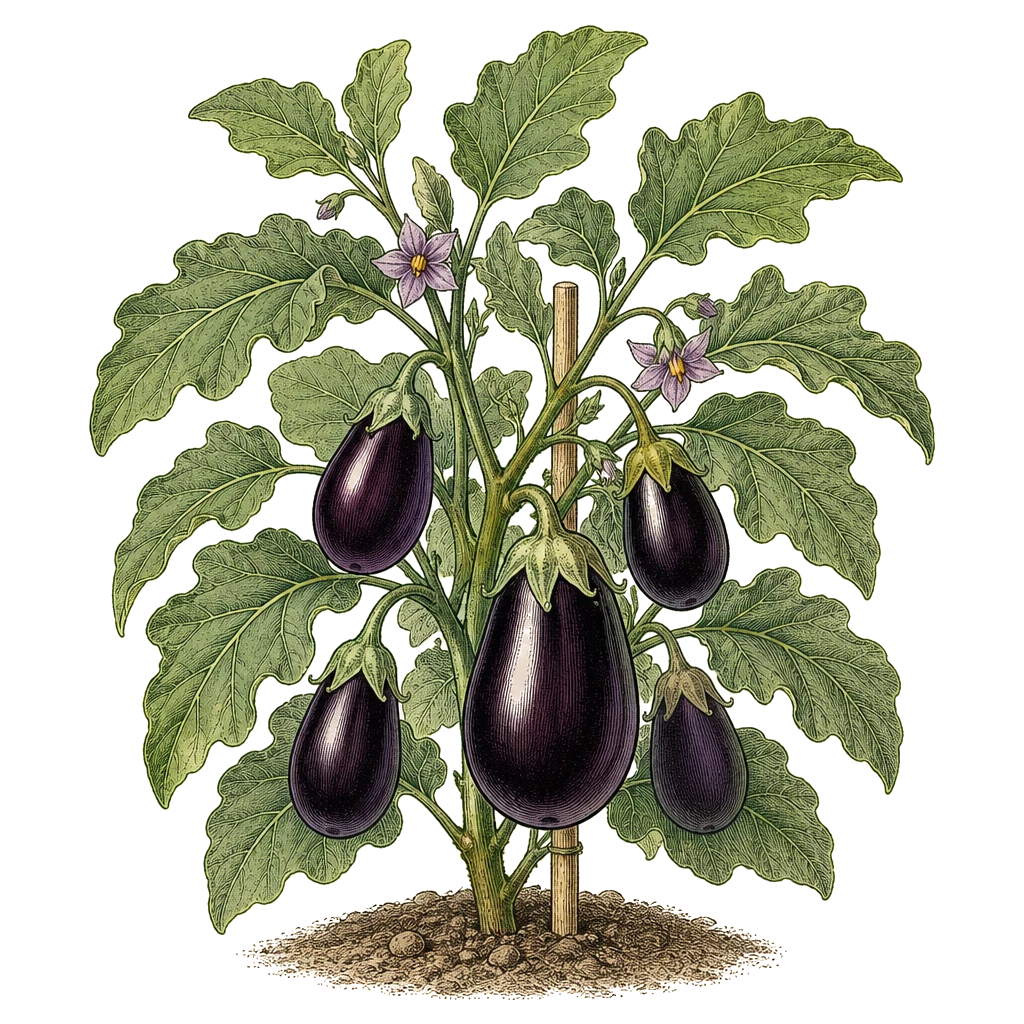
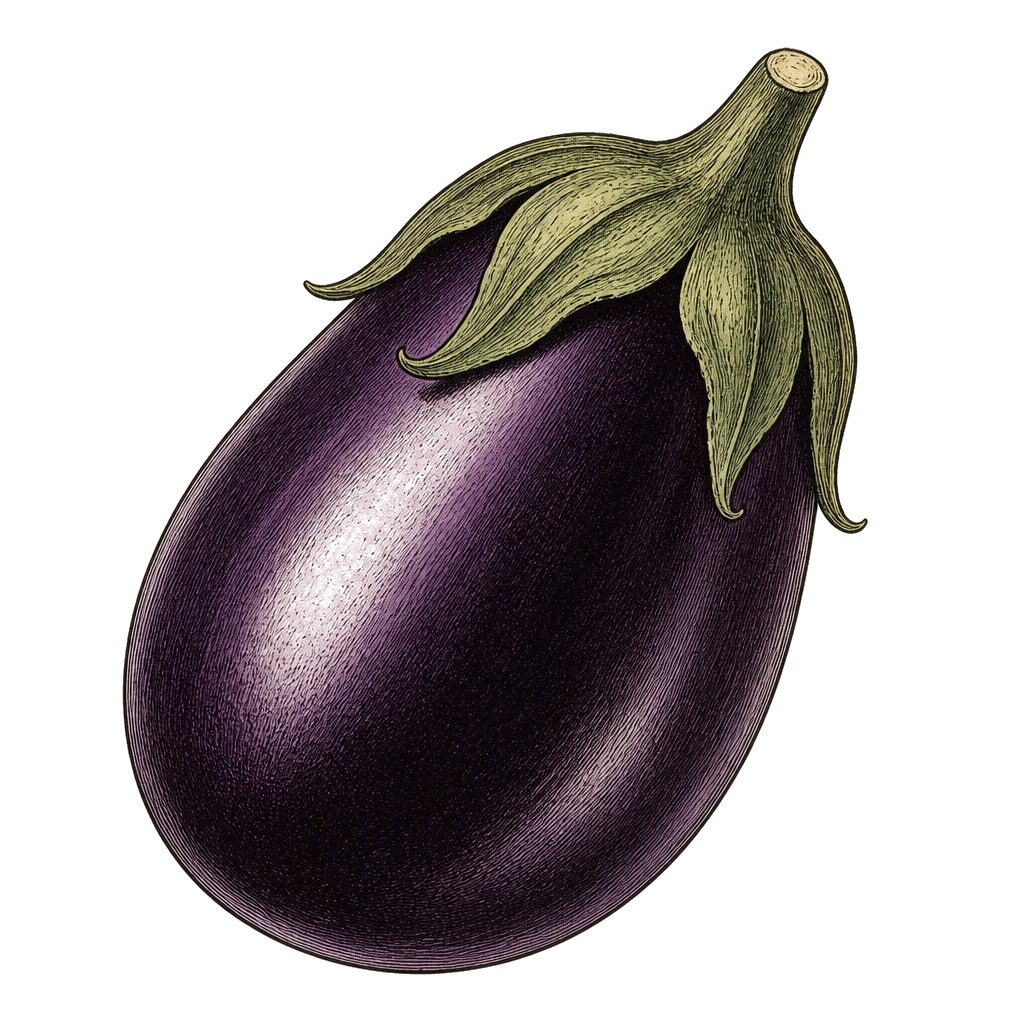
Harvest. Pick when the skin is still glossy. Dull or bronze-tinged skin means the fruit is overripe, and overripe eggplant is bitter and seedy. Standard varieties are ready at 6–8 inches; Japanese and Italian types at 5–6 inches. Harvesting early — at 3–5 inches — improves flavor and keeps the plant producing. Check every 7 days during the harvest window and pick promptly: eggplant won’t drop fruit on its own, so anything left too long will sit and overripen.
Zone and season notes
Zones 3–5. The short growing window is the central challenge. Choose early-maturing varieties, under 70 days from transplant — Orient Express and Little Fingers both mature in about 68 days. Use black plastic mulch to pre-warm the soil before transplanting, and keep row covers on until temperatures are stable. When you add eggplant to your garden in Arbor, it queues a mulch task early in the season; dark mulch warms soil in cooler climates and retains moisture in all of them, which matters more for eggplant than for most other vegetables.
Zones 6–7. Standard timing works for most varieties. Flea beetle pressure tends to be highest in the cool window right after transplant, so row covers are worth using even when the season isn’t short.
Zones 8–9. The longer season allows a wider variety selection and fruit production that extends well into fall. Verticillium wilt pressure is higher in warm soils, so rotation discipline — 3–4 years away from other nightshades — carries more weight in these zones.
Zones 10–11. Year-round production is possible with consistent irrigation. Temperatures above 95°F can cause flower drop; afternoon shade or regular deep watering helps during peak heat periods.
Sources
- University of Minnesota Extension — Growing Eggplant in Home Gardens
- University of Maryland Extension — Growing Eggplant in a Home Garden
- Utah State University Extension — Eggplant in the Garden
- Iowa State University Extension — Growing Eggplant in the Home Garden
- Illinois Extension — Eggplant
- Washington State University Extension — Growing Eggplant in Home Gardens (FS149E)
- University of Georgia Cooperative Extension — Home Garden Eggplant (C1028)
- South Dakota State University Extension — Eggplant: How to Grow It
- Michigan State University Extension — How to Grow Eggplant
- Penn State Extension — Eggplant in the Garden and the Kitchen
- Oregon State University Horticulture — Eggplant
- Clemson Cooperative Extension HGIC — Eggplant